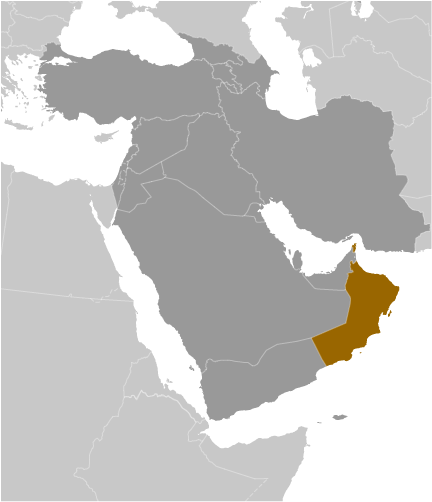

| Oman Sultanate of Oman Saltanat Uman Joined United Nations: 7 October 1971 Human Rights as assured by their constitution Click here Updated 14 March 2013 |

| CAPITAL |
| POPULATION |
| CHIEF OF STATE |
| SELECTION PROCESS |
Muscat
3,090,150
note: includes 577,293 non-nationals (July 2012 est.)
note: includes 577,293 non-nationals (July 2012 est.)
The monarch is hereditary
Next scheduled election: None
Next scheduled election: None
HEAD OF GOVERNMENT
SELECTION PROCESS
According to the Omani Basic Law, the Sultan is both the Chief
of State and Head of Government
of State and Head of Government
| DECLARATION OF HUMAN RIGHTS |
| ETHNIC GROUPS |
Arab, Baluchi, South Asian (Indian, Pakistani, Sri Lankan, Bangladeshi), African
| RELIGIONS |
Ibadhi Muslim 75%, other (includes Sunni Muslim, Shi'a Muslim, Hindu) 25%
| GOVERNMENT STRUCTURE |
Monarchy with 5 regions (manatiq, singular - mintaqat) and 4 governorates (muhafazat, singular - muhafazat); Legal system is based
on English common law and Islamic law; ultimate appeal to the monarch; has not accepted compulsory ICJ jurisdiction
Executive: The monarch is hereditary
Legislative: Bicameral Majlis Oman consists of Majlis al-Dawla or upper chamber (71 seats; members appointed by the monarch;
has advisory powers only) and Majlis al-Shura or lower chamber (84 seats; members elected by popular vote to serve four-year
terms; body has some limited power to propose legislation, but otherwise has only advisory powers)
elections: last held 15 October 2011 (next to be held in October 2015)
Judicial: Supreme Court
note: the nascent civil court system, administered by region, has judges who practice secular and Shari'a law
on English common law and Islamic law; ultimate appeal to the monarch; has not accepted compulsory ICJ jurisdiction
Executive: The monarch is hereditary
Legislative: Bicameral Majlis Oman consists of Majlis al-Dawla or upper chamber (71 seats; members appointed by the monarch;
has advisory powers only) and Majlis al-Shura or lower chamber (84 seats; members elected by popular vote to serve four-year
terms; body has some limited power to propose legislation, but otherwise has only advisory powers)
elections: last held 15 October 2011 (next to be held in October 2015)
Judicial: Supreme Court
note: the nascent civil court system, administered by region, has judges who practice secular and Shari'a law
| LANGUAGES |
Arabic (official), English, Baluchi, Urdu, Indian dialects
| BRIEF HISTORY |
The present-day Saltanat Umān, lies in south-eastern Arabia. While traditional Oman also includes the present-day United Arab
Emirates, their prehistoric remains differ from those of Oman proper, particularly after the end of the Early Iron Age. Archaeological
exploration in the Arabian peninsula has been sparse; indigenous written sources are limited to the many inscriptions and coins from
southern Arabia. Existing material consists primarily of written sources from other traditions (such as Egyptians, Greeks, Persians,
Romans, etc.) and oral traditions later recorded by Islamic scholars. The study of Pre-Islamic Arabia is important to Islamic studies
as it provides the context for the development of Islam. There are epigraphic Old South Arabian sources from about the 9th century
BC, and Old North Arabian one from about the 6th century BC. From the 3rd century AD, Arabian history becomes more tangible
with the rise of the Himyarite Kingdom, and with the appearance of the Qahtanis in the Levant and the gradual assimilation of the
Nabateans by the Qahtanis in the early centuries AD, a tendency of expansion that finally culminated in the explosive Muslim
conquests of the 7th century. Oman adopted Islam in the 7th century A.D., during the lifetime of the prophet Muhammad. Ibadism
became the dominant religious sect in Oman by the 8th century A.D. Oman is the only country in the Islamic world with a majority
Ibadi population. Ibadhism is known for its "moderate conservatism." One distinguishing feature of Ibadism is the choice of ruler by
communal consensus and consent. Several millennia ago, Arab tribes migrated eastward to Oman, coinciding with the increasing
presence in the region of peoples from present-day Iran. In the sixth century, Arabs succeeded in repelling encroachments of these
ethnic groups; the conversion of Arab tribes to Islam in the seventh century resulted in the displacement of the settlers from Iran.
The introduction of Ibadism vested power in the imam, the leader nominated by the ulema. The Ibadis had five imamates before the
founding of the Al Said dynasty. The first imamate in the ninth century became the example of the ideal Ibadi state. But Oman was
nonetheless conquered by several foreign powers; Oman was controlled by the Qarmatians between 931-932 and then again
between 933-934. Between 972 and 1050, Oman was part of the domain of the Iranian Buyyids, and between 1053 and 1154,
Oman was part of the Great Seljuk empire. In 1154, the indigenous Nabhani dynasty took control of Oman, and the Nabhani kings
ruled Oman until 1470, with an interruption of 37 years between 1406 and 1443. Muscat was taken by the Portuguese on 1 Apr
1515, and was held until 26 Jan 1650, although the Ottomans controlled Muscat between 1550-1551 and 1581-1588. In about
the year 1600, Nabhani rule was temporarily restored to Oman, although that lasted only to 1624, when fifth imamate, which is also
known as the Yarubid Imamate. The Yarubid Imamate, recaptured Muscat from the Portuguese in 1650 after a colonial presence
on the northeastern coast of Oman dating to 1508. The Yarubid dynasty expanded, acquiring former Portuguese colonies in East
Africa and engaging in the slave trade. By 1719 dynastic succession led to the nomination of Saif ibn Sultan II. His candidacy
prompted a rivalry among the ulama and a civil war between the two major tribes, the Hinawi and the Ghafiri, with the Ghafiri
supporting Saif ibn Sultan II. He assumed power in 1748 after the leaders of both factions had been killed in battle, but the rivalry
continued, with the factionalization working in favor of the Iranians, who occupied Muscat and Suhar in 1743. The Iranians had
occupied the coast before--indeed the coast was often the possession of various empires. These empires brought order to the
religious and ethnic diversity of the population of this cosmopolitan region. Yet the intervention on behalf of an unpopular dynasty
brought about a revolt. The leader of the revolt, Ahmad ibn Said al Said, was elected sultan of Muscat upon the expulsion of the
Persians. The position of Sultan of Muscat would remain in the possession of the Al Said clan even when the imamate of Oman
remained out of reach. The Al Said clan became a royal dynasty when Ahmad ibn Said Al Said was elected imam following the
expulsion of the Iranians from Muscat in 1744. Like its predecessors, Al Said dynastic rule has been characterized by a history of
internecine family struggle, fratricide, and usurpation. Imam Azzam understood that to unify the country a strong, central authority
had to be established with control over the interior tribes of Oman. His rule was jeopardized by the British, who interpreted his
policy of bringing the interior tribes under the central government as a move against their established order. In resorting to military
means to unify Oman, Imam Azzam alienated members of the Ghafiri tribes, who revolted in the 1870-71 period. The British gave
Imam Azzam's rival, Turki ibn Said Al Said, financial and political support. Turki ibn Said succeeded in defeating the forces of Imam
Azzam, who was killed in battle outside Matrah in January 1871. Oman was the object of Franco-British rivalry throughout the 18th
century. During the 19th century, Oman and the United Kingdom concluded several treaties of friendship and commerce. In 1908
the British entered into an agreement of friendship. Their traditional association was confirmed in 1951 through a new treaty of
friendship, commerce, and navigation by which the United Kingdom recognized the Sultanate of Oman as a fully independent state.
During the late 19th and early 20th centuries, the sultan in Muscat faced rebellion by members of the Ibadi sect residing in the
interior of Oman, centered around the town of Nizwa, who wanted to be ruled exclusively by their religious leader, the Imam of
Oman. This conflict was resolved temporarily by the Treaty of Seeb, which granted the imam autonomous rule in the interior
Imamate of Oman, while recognising the nominal sovereignty of the sultan elsewhere. The conflict flared up again in 1954, when the
new imam led a sporadic 5-year rebellion against the sultan's efforts to extend government control into the interior. The insurgents
were defeated in 1959 with British help. In 1970, Qaboos bin Said Al Said ousted his father, Sa'id bin Taymur, who later died in
exile in London. Al Said has ruled as sultan ever since. Since his accession in 1970, Sultan Qaboos has balanced tribal, regional,
and ethnic interests in composing the national administration. In November 1996, Sultan Qaboos presented his people with the
"Basic Statutes of the State," Oman's first written "constitution". It guarantees various rights within the framework of Qur'anic and
customary law. It partially resuscitated long dormant conflict-of-interest measures by banning cabinet ministers from being officers of
public shareholding firms. Perhaps most importantly, the Basic Statutes provide rules for setting Sultan Qaboos' succession. Oman
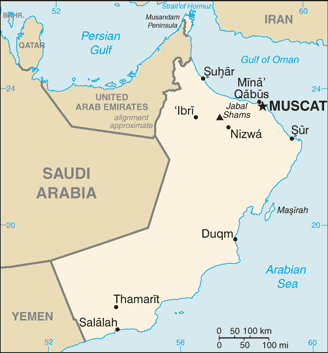
occupies a strategic location on the Strait of Hormuz at the entrance to the Persian Gulf, 35 miles directly opposite Iran. Oman has
concerns with regional stability and security, given tensions in the region, the proximity of Iran and Iraq, and the potential threat of
political Islam. Oman maintained its diplomatic relations with Iraq throughout the Gulf War while supporting the United Nations
allies by sending a contingent of troops to join coalition forces and by opening up to pre-positioning of weapons and supplies. Oman
also has long been an active participant in efforts to achieve Middle East peace. Oman and the United States have been parties to a
military co-operation agreement since 1980, which they revised and renewed in 2000. Following the September 11, 2001 attacks
on the United States, the Omani Government at all levels pledged and provided impressive support to the U.S.-led coalition against
terrorism. Oman has signed most United Nations-sponsored anti-terrorism treaties. Al Said's extensive modernization program has
opened the country to the outside world and has preserved a long-standing political and military relationship with the United
Kingdom. Oman's moderate, independent foreign policy has sought to maintain good relations with all Middle Eastern countries. In
November 2010, the United Nations Development Programme (UNDP) listed Oman, from among 135 countries worldwide, as the
nation most-improved during the preceding 40 years. According to international indices, Oman is one of the most developed and
stable countries in the Arab world. The 2011 Omani protests were a series of protests in the Gulf country of Oman. They are a part
of the revolutionary wave popularly known as the Arab Spring. The protesters are demanding salary increases, creating more jobs
and fighting corruption. Protests in Sohar centred around the Globe Roundabout. The sultan's responses included the dismissal of a
third of the governing cabinet. The Omani protests were crushed by the regime, although reforms were offered. Sultan Qaboos bin
Said then said that the Shura Council would get some legislative powers, while he also promised the initiation of programmes to
create more jobs and to fight corruption. Following the protests, about 520,000 people registered for the election, which saw an
increase of 388,000 from 2007. According to the Oman News Agency, there were 1,300 candidates, 77 of whom were women,
more than any previous election. Voting districts that have a population of 30,000 or more choose two MPs, while others have one
MP. There were 105 polling stations. The voter turnout was 76%.
Source: Wikipedia: History of Oman
Emirates, their prehistoric remains differ from those of Oman proper, particularly after the end of the Early Iron Age. Archaeological
exploration in the Arabian peninsula has been sparse; indigenous written sources are limited to the many inscriptions and coins from
southern Arabia. Existing material consists primarily of written sources from other traditions (such as Egyptians, Greeks, Persians,
Romans, etc.) and oral traditions later recorded by Islamic scholars. The study of Pre-Islamic Arabia is important to Islamic studies
as it provides the context for the development of Islam. There are epigraphic Old South Arabian sources from about the 9th century
BC, and Old North Arabian one from about the 6th century BC. From the 3rd century AD, Arabian history becomes more tangible
with the rise of the Himyarite Kingdom, and with the appearance of the Qahtanis in the Levant and the gradual assimilation of the
Nabateans by the Qahtanis in the early centuries AD, a tendency of expansion that finally culminated in the explosive Muslim
conquests of the 7th century. Oman adopted Islam in the 7th century A.D., during the lifetime of the prophet Muhammad. Ibadism
became the dominant religious sect in Oman by the 8th century A.D. Oman is the only country in the Islamic world with a majority
Ibadi population. Ibadhism is known for its "moderate conservatism." One distinguishing feature of Ibadism is the choice of ruler by
communal consensus and consent. Several millennia ago, Arab tribes migrated eastward to Oman, coinciding with the increasing
presence in the region of peoples from present-day Iran. In the sixth century, Arabs succeeded in repelling encroachments of these
ethnic groups; the conversion of Arab tribes to Islam in the seventh century resulted in the displacement of the settlers from Iran.
The introduction of Ibadism vested power in the imam, the leader nominated by the ulema. The Ibadis had five imamates before the
founding of the Al Said dynasty. The first imamate in the ninth century became the example of the ideal Ibadi state. But Oman was
nonetheless conquered by several foreign powers; Oman was controlled by the Qarmatians between 931-932 and then again
between 933-934. Between 972 and 1050, Oman was part of the domain of the Iranian Buyyids, and between 1053 and 1154,
Oman was part of the Great Seljuk empire. In 1154, the indigenous Nabhani dynasty took control of Oman, and the Nabhani kings
ruled Oman until 1470, with an interruption of 37 years between 1406 and 1443. Muscat was taken by the Portuguese on 1 Apr
1515, and was held until 26 Jan 1650, although the Ottomans controlled Muscat between 1550-1551 and 1581-1588. In about
the year 1600, Nabhani rule was temporarily restored to Oman, although that lasted only to 1624, when fifth imamate, which is also
known as the Yarubid Imamate. The Yarubid Imamate, recaptured Muscat from the Portuguese in 1650 after a colonial presence
on the northeastern coast of Oman dating to 1508. The Yarubid dynasty expanded, acquiring former Portuguese colonies in East
Africa and engaging in the slave trade. By 1719 dynastic succession led to the nomination of Saif ibn Sultan II. His candidacy
prompted a rivalry among the ulama and a civil war between the two major tribes, the Hinawi and the Ghafiri, with the Ghafiri
supporting Saif ibn Sultan II. He assumed power in 1748 after the leaders of both factions had been killed in battle, but the rivalry
continued, with the factionalization working in favor of the Iranians, who occupied Muscat and Suhar in 1743. The Iranians had
occupied the coast before--indeed the coast was often the possession of various empires. These empires brought order to the
religious and ethnic diversity of the population of this cosmopolitan region. Yet the intervention on behalf of an unpopular dynasty
brought about a revolt. The leader of the revolt, Ahmad ibn Said al Said, was elected sultan of Muscat upon the expulsion of the
Persians. The position of Sultan of Muscat would remain in the possession of the Al Said clan even when the imamate of Oman
remained out of reach. The Al Said clan became a royal dynasty when Ahmad ibn Said Al Said was elected imam following the
expulsion of the Iranians from Muscat in 1744. Like its predecessors, Al Said dynastic rule has been characterized by a history of
internecine family struggle, fratricide, and usurpation. Imam Azzam understood that to unify the country a strong, central authority
had to be established with control over the interior tribes of Oman. His rule was jeopardized by the British, who interpreted his
policy of bringing the interior tribes under the central government as a move against their established order. In resorting to military
means to unify Oman, Imam Azzam alienated members of the Ghafiri tribes, who revolted in the 1870-71 period. The British gave
Imam Azzam's rival, Turki ibn Said Al Said, financial and political support. Turki ibn Said succeeded in defeating the forces of Imam
Azzam, who was killed in battle outside Matrah in January 1871. Oman was the object of Franco-British rivalry throughout the 18th
century. During the 19th century, Oman and the United Kingdom concluded several treaties of friendship and commerce. In 1908
the British entered into an agreement of friendship. Their traditional association was confirmed in 1951 through a new treaty of
friendship, commerce, and navigation by which the United Kingdom recognized the Sultanate of Oman as a fully independent state.
During the late 19th and early 20th centuries, the sultan in Muscat faced rebellion by members of the Ibadi sect residing in the
interior of Oman, centered around the town of Nizwa, who wanted to be ruled exclusively by their religious leader, the Imam of
Oman. This conflict was resolved temporarily by the Treaty of Seeb, which granted the imam autonomous rule in the interior
Imamate of Oman, while recognising the nominal sovereignty of the sultan elsewhere. The conflict flared up again in 1954, when the
new imam led a sporadic 5-year rebellion against the sultan's efforts to extend government control into the interior. The insurgents
were defeated in 1959 with British help. In 1970, Qaboos bin Said Al Said ousted his father, Sa'id bin Taymur, who later died in
exile in London. Al Said has ruled as sultan ever since. Since his accession in 1970, Sultan Qaboos has balanced tribal, regional,
and ethnic interests in composing the national administration. In November 1996, Sultan Qaboos presented his people with the
"Basic Statutes of the State," Oman's first written "constitution". It guarantees various rights within the framework of Qur'anic and
customary law. It partially resuscitated long dormant conflict-of-interest measures by banning cabinet ministers from being officers of
public shareholding firms. Perhaps most importantly, the Basic Statutes provide rules for setting Sultan Qaboos' succession. Oman
occupies a strategic location on the Strait of Hormuz at the entrance to the Persian Gulf, 35 miles directly opposite Iran. Oman has
concerns with regional stability and security, given tensions in the region, the proximity of Iran and Iraq, and the potential threat of
political Islam. Oman maintained its diplomatic relations with Iraq throughout the Gulf War while supporting the United Nations
allies by sending a contingent of troops to join coalition forces and by opening up to pre-positioning of weapons and supplies. Oman
also has long been an active participant in efforts to achieve Middle East peace. Oman and the United States have been parties to a
military co-operation agreement since 1980, which they revised and renewed in 2000. Following the September 11, 2001 attacks
on the United States, the Omani Government at all levels pledged and provided impressive support to the U.S.-led coalition against
terrorism. Oman has signed most United Nations-sponsored anti-terrorism treaties. Al Said's extensive modernization program has
opened the country to the outside world and has preserved a long-standing political and military relationship with the United
Kingdom. Oman's moderate, independent foreign policy has sought to maintain good relations with all Middle Eastern countries. In
November 2010, the United Nations Development Programme (UNDP) listed Oman, from among 135 countries worldwide, as the
nation most-improved during the preceding 40 years. According to international indices, Oman is one of the most developed and
stable countries in the Arab world. The 2011 Omani protests were a series of protests in the Gulf country of Oman. They are a part
of the revolutionary wave popularly known as the Arab Spring. The protesters are demanding salary increases, creating more jobs
and fighting corruption. Protests in Sohar centred around the Globe Roundabout. The sultan's responses included the dismissal of a
third of the governing cabinet. The Omani protests were crushed by the regime, although reforms were offered. Sultan Qaboos bin
Said then said that the Shura Council would get some legislative powers, while he also promised the initiation of programmes to
create more jobs and to fight corruption. Following the protests, about 520,000 people registered for the election, which saw an
increase of 388,000 from 2007. According to the Oman News Agency, there were 1,300 candidates, 77 of whom were women,
more than any previous election. Voting districts that have a population of 30,000 or more choose two MPs, while others have one
MP. There were 105 polling stations. The voter turnout was 76%.
Source: Wikipedia: History of Oman
| ECONOMIC OVERVIEW |
Oman is a middle-income economy that is heavily dependent on dwindling oil resources. Because of declining reserves and a rapidly
growing labor force, Muscat has actively pursued a development plan that focuses on diversification, industrialization, and
privatization, with the objective of reducing the oil sector's contribution to GDP to 9% by 2020 and creating more jobs to employ
the rising numbers of Omanis entering the workforce. Tourism and gas-based industries are key components of the government's
diversification strategy. However, increases in social welfare benefits, particularly since the Arab Spring, will challenge the
government's ability to effectively balance its budget if oil revenues decline. By using enhanced oil recovery techniques, Oman
succeeded in increasing oil production, giving the country more time to diversify, and the increase in global oil prices through 2011
provided the government greater financial resources to invest in non-oil sectors.
Source: CIA World Factbook (select Oman)
growing labor force, Muscat has actively pursued a development plan that focuses on diversification, industrialization, and
privatization, with the objective of reducing the oil sector's contribution to GDP to 9% by 2020 and creating more jobs to employ
the rising numbers of Omanis entering the workforce. Tourism and gas-based industries are key components of the government's
diversification strategy. However, increases in social welfare benefits, particularly since the Arab Spring, will challenge the
government's ability to effectively balance its budget if oil revenues decline. By using enhanced oil recovery techniques, Oman
succeeded in increasing oil production, giving the country more time to diversify, and the increase in global oil prices through 2011
provided the government greater financial resources to invest in non-oil sectors.
Source: CIA World Factbook (select Oman)
| POLITICAL CLIMATE |
Politics of Oman takes place in a framework of an absolute monarchy whereby the Sultan of Oman is not only head of state, but
also the head of government. Chief of state and government is the hereditary sultan, Qābūs ibn Saˤīd as-Saˤīd, who appoints a
cabinet to assist him. In the early 1990s, the sultan instituted an elected advisory council, the Majlis ash-Shura, though few Omanis
were eligible to vote.
The sultan is a direct descendant of the 19th century ruler, Usman Sa'id bin Sultan, who first opened relations with the United States
in 1833. The Sultanate has neither political parties nor legislature, although the bicameral representative bodies provide the
government with advice. The sultan does not designate a successor when alive. Instead, the ruling family tries to unanimously
designate a new sultan after his death. If they do not designate a new ruler after three days, then they open a letter left to them by
the deceased sultan, containing a recommendation for a new sultan. It is assumed that the ruling family will agree on this person as
the successor.
Oman's judicial system traditionally has been based on the Shari'a--the Qur'anic laws and the oral teachings of the Islamic Prophet
Muhammad. Traditionally, Shari'a courts fell under the jurisdiction of the Ministry of Justice, Awqaf, and Islamic Affairs. Oman's
first criminal code was not enacted until 1974. The current structure of the criminal court system was established in 1984 and
consists of a magistrate court in the capital and four additional magistrate courts in Sohar, Sur, Salalah, and Nizwa. In the less-
populated areas and among the nomadic bedouin, tribal custom often is the law.
The 2011 Omani protests were a series of protests in the Gulf country of Oman. They are a part of the revolutionary wave
popularly known as the Arab Spring. The protesters are demanding salary increases, creating more jobs and fighting corruption.
Protests in Sohar centred around the Globe Roundabout. The sultan's responses included the dismissal of a third of the governing
cabinet. The Omani protests were crushed by the regime, although reforms were offered. Sultan Qaboos bin Said then said that the
Shura Council would get some legislative powers, while he also promised the initiation of programmes to create more jobs and to
fight corruption. Following the protests, about 520,000 people registered for the election, which saw an increase of 388,000 from
2007. According to the Oman News Agency, there were 1,300 candidates, 77 of whom were women, more than any previous
election. Voting districts that have a population of 30,000 or more choose two MPs, while others have one MP. There were 105
polling stations. The voter turnout was 76%.
Source: Wikipedia: Politics of Oman
also the head of government. Chief of state and government is the hereditary sultan, Qābūs ibn Saˤīd as-Saˤīd, who appoints a
cabinet to assist him. In the early 1990s, the sultan instituted an elected advisory council, the Majlis ash-Shura, though few Omanis
were eligible to vote.
The sultan is a direct descendant of the 19th century ruler, Usman Sa'id bin Sultan, who first opened relations with the United States
in 1833. The Sultanate has neither political parties nor legislature, although the bicameral representative bodies provide the
government with advice. The sultan does not designate a successor when alive. Instead, the ruling family tries to unanimously
designate a new sultan after his death. If they do not designate a new ruler after three days, then they open a letter left to them by
the deceased sultan, containing a recommendation for a new sultan. It is assumed that the ruling family will agree on this person as
the successor.
Oman's judicial system traditionally has been based on the Shari'a--the Qur'anic laws and the oral teachings of the Islamic Prophet
Muhammad. Traditionally, Shari'a courts fell under the jurisdiction of the Ministry of Justice, Awqaf, and Islamic Affairs. Oman's
first criminal code was not enacted until 1974. The current structure of the criminal court system was established in 1984 and
consists of a magistrate court in the capital and four additional magistrate courts in Sohar, Sur, Salalah, and Nizwa. In the less-
populated areas and among the nomadic bedouin, tribal custom often is the law.
The 2011 Omani protests were a series of protests in the Gulf country of Oman. They are a part of the revolutionary wave
popularly known as the Arab Spring. The protesters are demanding salary increases, creating more jobs and fighting corruption.
Protests in Sohar centred around the Globe Roundabout. The sultan's responses included the dismissal of a third of the governing
cabinet. The Omani protests were crushed by the regime, although reforms were offered. Sultan Qaboos bin Said then said that the
Shura Council would get some legislative powers, while he also promised the initiation of programmes to create more jobs and to
fight corruption. Following the protests, about 520,000 people registered for the election, which saw an increase of 388,000 from
2007. According to the Oman News Agency, there were 1,300 candidates, 77 of whom were women, more than any previous
election. Voting districts that have a population of 30,000 or more choose two MPs, while others have one MP. There were 105
polling stations. The voter turnout was 76%.
Source: Wikipedia: Politics of Oman
| INTERNATIONAL DISPUTES |
Boundary agreement reportedly signed and ratified with UAE in 2003 for entire border, including Oman's Musandam Peninsula and
Al Madhah exclave, but details of the alignment have not been made public.
Al Madhah exclave, but details of the alignment have not been made public.


| REFUGEES AND INTERNALLY DISPLACED PERSONS (IDPS) |
None reported.
| ILLICIT DRUGS |
None reported.
| HUMAN RIGHTS STATEMENTS, ANALYSIS AND CRITIQUES |
2011 Human Rights Report: Oman
Bureau of Democracy, Human Rights, and Labor
2011 Country Reports on Human Rights Practices
May 25, 2012
The Sultanate of Oman is a hereditary monarchy with a population of 2.7 million, including approximately 816,000 nonnationals. Sultan
Qaboos Al-Said has ruled since 1970. The sultan has sole authority to enact laws through royal decree, although ministries draft laws
and citizens provide input through a Majlis al-Shura (Consultative Council). On October 15, citizens chose among 1,100 candidates
running for seats on the 84-member Consultative Council. The 29-member Council of Ministers advises the sultan on government
decisions. The two-house Majlis Oman (Oman Council) is composed of the Majlis al-Dawla (State Council), whose 83 members are
appointed by the sultan, and the Majlis al-Shura. On October 19, a new law granted the Oman Council new powers that expand its policy
review function to include approving, rejecting, and amending legislation and convoking ministers of agencies that provide direct citizen
services. Security forces reported to civilian authorities.
Oman experienced a series of relatively peaceful public protests throughout the spring, with demonstrators demanding economic and
political reforms. There were lengthy sit-ins in the three largest cities, including some significant acts of civil disobedience. One man died
and several were injured when security forces clashed with disorderly protesters in the city of Sohar on February 27. On April 1,
another man died under similar circumstances. Security forces arrested and detained hundreds of demonstrators throughout the country
for illegal weapons possession, arson, destruction of property, vandalism, and blocking roads. There was one reported incident, which
may have been politically motivated, of two human rights activists kidnapped and beaten by unknown persons.
The principal human rights problems were the inability of citizens to change their government, limits on freedom of speech, and societal
mores that discriminate against women.
Other ongoing human rights concerns included restrictions on freedoms of press and association, instances of domestic violence,
isolated reports that some employers placed expatriate laborers in conditions of forced labor or abuse, and lack of independent
inspections of prisons and detention centers.
Security force impunity was not a significant problem in the country. Security personnel and other government officials generally were
held accountable for their actions.
Click here to read more »
Bureau of Democracy, Human Rights, and Labor
2011 Country Reports on Human Rights Practices
May 25, 2012
The Sultanate of Oman is a hereditary monarchy with a population of 2.7 million, including approximately 816,000 nonnationals. Sultan
Qaboos Al-Said has ruled since 1970. The sultan has sole authority to enact laws through royal decree, although ministries draft laws
and citizens provide input through a Majlis al-Shura (Consultative Council). On October 15, citizens chose among 1,100 candidates
running for seats on the 84-member Consultative Council. The 29-member Council of Ministers advises the sultan on government
decisions. The two-house Majlis Oman (Oman Council) is composed of the Majlis al-Dawla (State Council), whose 83 members are
appointed by the sultan, and the Majlis al-Shura. On October 19, a new law granted the Oman Council new powers that expand its policy
review function to include approving, rejecting, and amending legislation and convoking ministers of agencies that provide direct citizen
services. Security forces reported to civilian authorities.
Oman experienced a series of relatively peaceful public protests throughout the spring, with demonstrators demanding economic and
political reforms. There were lengthy sit-ins in the three largest cities, including some significant acts of civil disobedience. One man died
and several were injured when security forces clashed with disorderly protesters in the city of Sohar on February 27. On April 1,
another man died under similar circumstances. Security forces arrested and detained hundreds of demonstrators throughout the country
for illegal weapons possession, arson, destruction of property, vandalism, and blocking roads. There was one reported incident, which
may have been politically motivated, of two human rights activists kidnapped and beaten by unknown persons.
The principal human rights problems were the inability of citizens to change their government, limits on freedom of speech, and societal
mores that discriminate against women.
Other ongoing human rights concerns included restrictions on freedoms of press and association, instances of domestic violence,
isolated reports that some employers placed expatriate laborers in conditions of forced labor or abuse, and lack of independent
inspections of prisons and detention centers.
Security force impunity was not a significant problem in the country. Security personnel and other government officials generally were
held accountable for their actions.
Click here to read more »
21 October 2011
Committee on the Elimination of Discrimination against Women
Fiftieth session
Geneva, 3 – 21 October 2011
Concluding observations of the Committee on the Elimination of Discrimination against Women
Oman
A. Introduction
2. The Committee commends the State party for the submission of its initial report. The Committee also commends the State party for
the written replies to the list of issues and questions raised by the pre-session working group and for the oral presentation and responses
to the questions posed by the Committee. The Committee regrets, however, that the report lacks sex disaggregated statistical data and
was overdue.
3. The Committee commends the State party for its high-ranking delegation headed by the Minister of Social Development, composed of
men (7) and women (6), which included representatives of various Government ministries and of national committees. The Committee
expresses its appreciation for the frank, open and constructive dialogue held between the delegation and the members of the Committee.
B. Positive aspects
4. The Committee notes the State party’s positive record in adhering to international human rights conventions and its willingness to
reform its domestic legislation in accordance with its international law obligations. In this context, it notes the measures taken by the
State party to address the issue of trafficking in human beings and welcomes the Human Trafficking Act promulgated by Royal Decree
No. 126/2008 on combating trafficking in human beings, which defines the offence of human trafficking and prescribes penalties in
accordance with the Palermo Protocol.
5. The Committee welcomes the State party’s expressed willingness to review its reservations to CEDAW, particularly its general
reservation with a view to narrowing its content and/or withdrawing it. The Committee also notes the consideration, by the State party,
of its possible accession to the Optional Protocol of the Convention.
C. Principal areas of concern and recommendations
9. While recalling the State party’s obligation to systematically and continuously implement all the provisions of the Convention, the
Committee views the concerns and recommendations identified in the present concluding observations as requiring the priority attention
of the State party between now and the submission of the next periodic report. Consequently, the Committee calls upon the State party
to focus on those areas in its implementation activities and to report on action taken and results achieved in its next periodic report. It
also calls upon the State party to submit the present concluding observations to all relevant ministries, to the Parliament and the judiciary,
in order to ensure their effective implementation.
Legislature
10. While reaffirming that the Government has the primary responsibility and is particularly accountable for the full implementation of the
State party’s obligations under the Convention, the Committee stresses that the Convention is binding on all branches of the State
apparatus (executive, legislative and judiciary ) and it invites the State party to encourage the Consultative Council, in line with its
procedures, where appropriate, to take the necessary steps with regard to the implementation of these concluding observations and the
Government’s next r eporting process under the Convention.
Click here to read more »
Committee on the Elimination of Discrimination against Women
Fiftieth session
Geneva, 3 – 21 October 2011
Concluding observations of the Committee on the Elimination of Discrimination against Women
Oman
A. Introduction
2. The Committee commends the State party for the submission of its initial report. The Committee also commends the State party for
the written replies to the list of issues and questions raised by the pre-session working group and for the oral presentation and responses
to the questions posed by the Committee. The Committee regrets, however, that the report lacks sex disaggregated statistical data and
was overdue.
3. The Committee commends the State party for its high-ranking delegation headed by the Minister of Social Development, composed of
men (7) and women (6), which included representatives of various Government ministries and of national committees. The Committee
expresses its appreciation for the frank, open and constructive dialogue held between the delegation and the members of the Committee.
B. Positive aspects
4. The Committee notes the State party’s positive record in adhering to international human rights conventions and its willingness to
reform its domestic legislation in accordance with its international law obligations. In this context, it notes the measures taken by the
State party to address the issue of trafficking in human beings and welcomes the Human Trafficking Act promulgated by Royal Decree
No. 126/2008 on combating trafficking in human beings, which defines the offence of human trafficking and prescribes penalties in
accordance with the Palermo Protocol.
5. The Committee welcomes the State party’s expressed willingness to review its reservations to CEDAW, particularly its general
reservation with a view to narrowing its content and/or withdrawing it. The Committee also notes the consideration, by the State party,
of its possible accession to the Optional Protocol of the Convention.
C. Principal areas of concern and recommendations
9. While recalling the State party’s obligation to systematically and continuously implement all the provisions of the Convention, the
Committee views the concerns and recommendations identified in the present concluding observations as requiring the priority attention
of the State party between now and the submission of the next periodic report. Consequently, the Committee calls upon the State party
to focus on those areas in its implementation activities and to report on action taken and results achieved in its next periodic report. It
also calls upon the State party to submit the present concluding observations to all relevant ministries, to the Parliament and the judiciary,
in order to ensure their effective implementation.
Legislature
10. While reaffirming that the Government has the primary responsibility and is particularly accountable for the full implementation of the
State party’s obligations under the Convention, the Committee stresses that the Convention is binding on all branches of the State
apparatus (executive, legislative and judiciary ) and it invites the State party to encourage the Consultative Council, in line with its
procedures, where appropriate, to take the necessary steps with regard to the implementation of these concluding observations and the
Government’s next r eporting process under the Convention.
Click here to read more »
Six Sentenced to Prison in Oman for Criticism of Government Online
Sep 10 2012 - 12:29pm
The prison sentences reportedly handed down to six men in Oman for criticizing the government online are another worrying sign of
escalating efforts by the government to tighten its control online and offline following Arab Spring-inspired unrest. Oman must reverse
the sentences against the six men, and repeal all laws that criminalize defamation.
The men received sentences of between one year and 18 months for “violating internet technology regulations” and were each fined
1,000 rial ($2,600).
Oman is rated Not Free in Freedom House’s Freedom in the World and Freedom of the Press surveys, and imposes some of the heaviest
restrictions on publications and the press in the Arab world. Internet freedom is seriously limited, as the government exercises extensive
control over content, periodically shutting down sites it deems politically or sexually offensive. In the last few months, scores of Omanis
received prison sentences for expressing dissent online and offline. Last month, 12 Omanis were sentenced to prison for participating in
an “illegal gathering,” and eight others were sentenced to prison for internet posts critical of the recent crackdown and lackluster job
creation. In July 2012, 10 Omanis were sentenced to up to 18 months in prison on charges of posting social media comments that
insulted Sultan Qaboos.
Click here to read more »
Sep 10 2012 - 12:29pm
The prison sentences reportedly handed down to six men in Oman for criticizing the government online are another worrying sign of
escalating efforts by the government to tighten its control online and offline following Arab Spring-inspired unrest. Oman must reverse
the sentences against the six men, and repeal all laws that criminalize defamation.
The men received sentences of between one year and 18 months for “violating internet technology regulations” and were each fined
1,000 rial ($2,600).
Oman is rated Not Free in Freedom House’s Freedom in the World and Freedom of the Press surveys, and imposes some of the heaviest
restrictions on publications and the press in the Arab world. Internet freedom is seriously limited, as the government exercises extensive
control over content, periodically shutting down sites it deems politically or sexually offensive. In the last few months, scores of Omanis
received prison sentences for expressing dissent online and offline. Last month, 12 Omanis were sentenced to prison for participating in
an “illegal gathering,” and eight others were sentenced to prison for internet posts critical of the recent crackdown and lackluster job
creation. In July 2012, 10 Omanis were sentenced to up to 18 months in prison on charges of posting social media comments that
insulted Sultan Qaboos.
Click here to read more »
7 March 2013
URGENT ACTION
SENTENCES UPHELD FOR EIGHT OMANI ACTIVISTS
The Omani Supreme Court has upheld sentences against eight activists, while referring the cases of eight others for retrial. On the basis
of information received by Amnesty International, all 16 activists appear to be held solely for peacefully exercising their rights to freedom
of expression and assembly and therefore to be prisoners of conscience.
On 25 February the Supreme Court in Oman upheld the sentences of five activists: Ali al-Muqbali, Mohammed al-Habsi, Abdullah al-
Siyabi, Hilal al-Busa’idi and Abdullah al-Abdali. The latter four were charged with insulting the Sultan and breaching the internet law, and
now face one year’s imprisonment and fines amounting to 1,000 Omani riyals (around US$2,600) each. Ali al-Muqbali faces one year’s
imprisonment for breaching the internet law.
On 4 March, eight of the 11 activists that were sentenced for unlawful gathering in August 2012 had their appeals accepted by the
Supreme Court, and their cases were sent back to the Muscat Appeal Court for retrial. These eight activists are Sa’eed al-Hashemi,
lawyer Basma al-Kiyumi, Basimah al-Rajihi, Nasser al-Ghilani, Abdullah al-Ghilani, Badr al-Jabri, Mukhtar al-Hina’i and Mahmoud al-
Jamoudi. The appeals of the other three– Mohammed al-Fazari, Mahmoud al-Ruwahi and Khaled al-Nofali– were rejected, and their
sentences of six months’ imprisonment and a fine of 200 Omani riyals upheld. Some activists believe that their appeals may have been
rejected on technical grounds and, as such, they may be able to resubmit their appeals to the Supreme Court. The eight are currently
detained, but are to apply for release on bail in the meantime.
The 16 activists were among the 31 people who went on hunger strike in February 2013 in protest at the delay by the Supreme Court in
hearing some of their appeals. They suspended their hunger strike on or around 24 February 2013 after they were informed that some of
their appeals would be heard. In separate trials between 26 June and 16 September 2012, at least 36 activists had been convicted on
charges such as insulting the Sultan, using the internet to publish defamatory material, unlawful gathering and publishing harmful and
provocative material. Most began serving their sentences immediately after they were upheld.
Click here to read more »
URGENT ACTION
SENTENCES UPHELD FOR EIGHT OMANI ACTIVISTS
The Omani Supreme Court has upheld sentences against eight activists, while referring the cases of eight others for retrial. On the basis
of information received by Amnesty International, all 16 activists appear to be held solely for peacefully exercising their rights to freedom
of expression and assembly and therefore to be prisoners of conscience.
On 25 February the Supreme Court in Oman upheld the sentences of five activists: Ali al-Muqbali, Mohammed al-Habsi, Abdullah al-
Siyabi, Hilal al-Busa’idi and Abdullah al-Abdali. The latter four were charged with insulting the Sultan and breaching the internet law, and
now face one year’s imprisonment and fines amounting to 1,000 Omani riyals (around US$2,600) each. Ali al-Muqbali faces one year’s
imprisonment for breaching the internet law.
On 4 March, eight of the 11 activists that were sentenced for unlawful gathering in August 2012 had their appeals accepted by the
Supreme Court, and their cases were sent back to the Muscat Appeal Court for retrial. These eight activists are Sa’eed al-Hashemi,
lawyer Basma al-Kiyumi, Basimah al-Rajihi, Nasser al-Ghilani, Abdullah al-Ghilani, Badr al-Jabri, Mukhtar al-Hina’i and Mahmoud al-
Jamoudi. The appeals of the other three– Mohammed al-Fazari, Mahmoud al-Ruwahi and Khaled al-Nofali– were rejected, and their
sentences of six months’ imprisonment and a fine of 200 Omani riyals upheld. Some activists believe that their appeals may have been
rejected on technical grounds and, as such, they may be able to resubmit their appeals to the Supreme Court. The eight are currently
detained, but are to apply for release on bail in the meantime.
The 16 activists were among the 31 people who went on hunger strike in February 2013 in protest at the delay by the Supreme Court in
hearing some of their appeals. They suspended their hunger strike on or around 24 February 2013 after they were informed that some of
their appeals would be heard. In separate trials between 26 June and 16 September 2012, at least 36 activists had been convicted on
charges such as insulting the Sultan, using the internet to publish defamatory material, unlawful gathering and publishing harmful and
provocative material. Most began serving their sentences immediately after they were upheld.
Click here to read more »
Oman: Free Reform Activists
24 on Hunger Strike to Protest Unfair Convictions
February 22, 2013
(Beirut) – Omani authorities immediately should release and expunge the convictions of a group of reform activists jailed solely for
exercising their rights to freedom of expression and association. Twenty-four members of the group who are serving prison terms have
been on hunger strike since February 9, 2013, to draw attention to their plight.
Authorities convicted and sentenced a total of 35 activists to between six months and 18 months in prison in 2012 on various charges
including “defaming the Sultan,” “illegal gathering,” and violating Oman’s cybercrimes law through their Facebook posts and Twitter
comments. None of the charges involve recognizable crimes by international standards, Human Rights Watch said. Several of the 35
managed to avoid arrest and have gone into hiding or fled Oman, and two others remain free pending appeal, according to one of the
activists now abroad.
“Omani authorities are trying to suffocate the pro-reform movement by imprisoning these activists with laws that violate international
standards, but the activists are refusing to be silent,” said Joe Stork, deputy Middle East director at Human Rights Watch. “These men
and women should not have to spend one more day in prison for their peaceful calls to reform.”
Nabhan bin Salem al-Hanshi, one of the 35 convicted activists, who fled Oman while at liberty during his trial, told Human Rights Watch
that the activists are hoping to draw attention to their plight to persuade Oman’s Supreme Court to hear appeals of their cases, which it
has so far refused to do. The activists believe that their trials during the second half of 2012, before Muscat’s Court of First Instance
and an appeals court, were marred by interference from Oman’s security services.
The hunger strikers include the well-known activists Sa`id al-Hashemi, Basma al-Kayoumi, Mukhtar al-Hana’i, and Basima al-Rajhi. Local
media have reported that al-Hashemi, who suffers from chronic injuries due to an incident in 2011 in which unknown assailants
kidnapped and tortured him, was briefly hospitalized as a result of his hunger strike, and that several others are in declining health.
Malek al-Abri, a member of Oman's elected Shura Council, a body with legislative powers as a result of reforms in 2011, told media
agencies on February 19 that the Supreme Court will hear the appeals of the activists and issue its judgment on March 4, though there
has been no official announcement from the court.
A delegation from Oman’s National Human Rights Commission (NHRC), whose members are appointed directly by Sultan Qabus bin
Sa`id Al Sa`id, visited the activists on February 19 and urged them to end their hunger strike, the Times of Oman reported. The
commission spoke against the activists in June, saying that “[t]here is a difference between freedom of opinion as a right and the
practice of this right on the ground….”
Al-Hanshi, who said he is in regular contact with families of the other activists, told Human Rights Watch that the detainees repeatedly
have told family members about poor prison conditions, including a lack of cleanliness and inadequate food.
Click here to read more »
24 on Hunger Strike to Protest Unfair Convictions
February 22, 2013
(Beirut) – Omani authorities immediately should release and expunge the convictions of a group of reform activists jailed solely for
exercising their rights to freedom of expression and association. Twenty-four members of the group who are serving prison terms have
been on hunger strike since February 9, 2013, to draw attention to their plight.
Authorities convicted and sentenced a total of 35 activists to between six months and 18 months in prison in 2012 on various charges
including “defaming the Sultan,” “illegal gathering,” and violating Oman’s cybercrimes law through their Facebook posts and Twitter
comments. None of the charges involve recognizable crimes by international standards, Human Rights Watch said. Several of the 35
managed to avoid arrest and have gone into hiding or fled Oman, and two others remain free pending appeal, according to one of the
activists now abroad.
“Omani authorities are trying to suffocate the pro-reform movement by imprisoning these activists with laws that violate international
standards, but the activists are refusing to be silent,” said Joe Stork, deputy Middle East director at Human Rights Watch. “These men
and women should not have to spend one more day in prison for their peaceful calls to reform.”
Nabhan bin Salem al-Hanshi, one of the 35 convicted activists, who fled Oman while at liberty during his trial, told Human Rights Watch
that the activists are hoping to draw attention to their plight to persuade Oman’s Supreme Court to hear appeals of their cases, which it
has so far refused to do. The activists believe that their trials during the second half of 2012, before Muscat’s Court of First Instance
and an appeals court, were marred by interference from Oman’s security services.
The hunger strikers include the well-known activists Sa`id al-Hashemi, Basma al-Kayoumi, Mukhtar al-Hana’i, and Basima al-Rajhi. Local
media have reported that al-Hashemi, who suffers from chronic injuries due to an incident in 2011 in which unknown assailants
kidnapped and tortured him, was briefly hospitalized as a result of his hunger strike, and that several others are in declining health.
Malek al-Abri, a member of Oman's elected Shura Council, a body with legislative powers as a result of reforms in 2011, told media
agencies on February 19 that the Supreme Court will hear the appeals of the activists and issue its judgment on March 4, though there
has been no official announcement from the court.
A delegation from Oman’s National Human Rights Commission (NHRC), whose members are appointed directly by Sultan Qabus bin
Sa`id Al Sa`id, visited the activists on February 19 and urged them to end their hunger strike, the Times of Oman reported. The
commission spoke against the activists in June, saying that “[t]here is a difference between freedom of opinion as a right and the
practice of this right on the ground….”
Al-Hanshi, who said he is in regular contact with families of the other activists, told Human Rights Watch that the detainees repeatedly
have told family members about poor prison conditions, including a lack of cleanliness and inadequate food.
Click here to read more »
Oman offers support for freedom of expression
10 March 2013
Information Minister Dr Abdulmunim bin Mansour al Hasani received here yesterday a delegation from the Arab Journalist Union (AJU)
currently visiting the Sultanate under the leadership of Mu’ayad al Lami, First Deputy Chairman of the AJU, and Hatim Zakaria,
Secretary-General of the AJU. The meeting was attended by Awadh bin Said Baqwair, Chairman of Oman Journalist Association (OJA),
and Salim bin Hamad al Jahwari, Deputy Chairman of OJA.
The minister said that the Arab Journalist Association is witnessing a stage of transformation as it has succeeded in reflecting
developments in the Arab arena and responding to them. He also spoke about the importance of co-operation between OJA and AJA in
formulating stands towards the promotion of new trends in media. The minister reaffirmed the Sultanate’s support to the Arab Journalist
Association in serving the goals of journalism and achieving high levels of professionalism.
Al Lami, who is also the dean of Iraqi journalists, expressed his gratitude to the Sultanate for its support to the AJA. He commended the
renaissance of Oman under the wise policies of His Majesty Sultan Qaboos, as well the Sultanate’s constructive role in the Arab world
and the region. Al Lami pointed out that the Sultanate offers support for freedom of expression and the growth of media and journalism,
an evidence to the success of the country’s renaissance.
The AJA delegation was also received by Dr Ibrahim bin Ahmed al Kindi, CEO of Oman Establishment for Press, Publication and
Advertising (OEPPA). The meeting was attended by Saif al Mahrooqi, Editor-in-Chief of Oman, Arabic sister daily of the Observer, and
Fahmi bin Khalid al Harthy, Editor-in-Chief of the Observer. The meeting dealt with ways of fostering ties between the two papers.
Click here to read more »
10 March 2013
Information Minister Dr Abdulmunim bin Mansour al Hasani received here yesterday a delegation from the Arab Journalist Union (AJU)
currently visiting the Sultanate under the leadership of Mu’ayad al Lami, First Deputy Chairman of the AJU, and Hatim Zakaria,
Secretary-General of the AJU. The meeting was attended by Awadh bin Said Baqwair, Chairman of Oman Journalist Association (OJA),
and Salim bin Hamad al Jahwari, Deputy Chairman of OJA.
The minister said that the Arab Journalist Association is witnessing a stage of transformation as it has succeeded in reflecting
developments in the Arab arena and responding to them. He also spoke about the importance of co-operation between OJA and AJA in
formulating stands towards the promotion of new trends in media. The minister reaffirmed the Sultanate’s support to the Arab Journalist
Association in serving the goals of journalism and achieving high levels of professionalism.
Al Lami, who is also the dean of Iraqi journalists, expressed his gratitude to the Sultanate for its support to the AJA. He commended the
renaissance of Oman under the wise policies of His Majesty Sultan Qaboos, as well the Sultanate’s constructive role in the Arab world
and the region. Al Lami pointed out that the Sultanate offers support for freedom of expression and the growth of media and journalism,
an evidence to the success of the country’s renaissance.
The AJA delegation was also received by Dr Ibrahim bin Ahmed al Kindi, CEO of Oman Establishment for Press, Publication and
Advertising (OEPPA). The meeting was attended by Saif al Mahrooqi, Editor-in-Chief of Oman, Arabic sister daily of the Observer, and
Fahmi bin Khalid al Harthy, Editor-in-Chief of the Observer. The meeting dealt with ways of fostering ties between the two papers.
Click here to read more »
Oman- UPDATE: Imprisoned human rights defenders end hunger strike
2013-02-26
The Gulf Centre for Human Rights (GCHR) has received reliable information that imprisoned human rights defenders, including Basma
Al-Kiyumi, Bassima Al-Rajhi, Saeed Al-Hashemi, Hamad Al-Kharusi, and Bassam Abu Qasida, have decided on 24 February 2013 to end
their hunger strike which they commenced on 9 February 2013 at Samail Central Prison and has caused a dramatic deterioration in their
health.
The decision to stop the hunger strike came after the imprisoned human rights defenders were given assurances by the High Court in
relation to setting up dates for hearings to consider their appeals that they have submitted against the sentences.
The imprisoned human rights defenders said in a statement issued on the same day: "As confirmation of our free will, We prisoners of
opinion and expression announce the suspension of our strike after we received assurances today 24/02/2013 from the High Court in
relation to setting dates for hearings to consider our appeals. This happened after 15 days of continuous strike. We thank all women,
men and institutions from within and outside the Sultanate who stood with us in supporting the demands of truth and justice, equality
and that Oman is the inspiration for our actions."
On 20 February 2013, the GCHR together with another 20 human rights organizations expressed their full and complete solidarity with
all Omani human rights defenders who are in detention, especially those undertaking hunger strikes. The full statement is available at the
following link:
http://www.gc4hr.org/news/view/346
For further information about the case please see our most recent appeal:
http://www.gc4hr.org/news/view/339
Once more the GCHR calls on Sultan Qaboos and the Omani government to:
1. Immediately and unconditionally release all human rights defenders who were detained as a result of their legitimate participation of
their rights to freedom of expression and assembly; and drop all charges related to the exercise of these rights;
2. Take all necessary measures to ensure the physical and psychological integrity and security of all detainees;
3. Ensure the ability of human rights defenders, activists, and journalists in Oman to carry out their legitimate work freely and without
fear of reprisal or judicial harassment.
Click here to read more »
2013-02-26
The Gulf Centre for Human Rights (GCHR) has received reliable information that imprisoned human rights defenders, including Basma
Al-Kiyumi, Bassima Al-Rajhi, Saeed Al-Hashemi, Hamad Al-Kharusi, and Bassam Abu Qasida, have decided on 24 February 2013 to end
their hunger strike which they commenced on 9 February 2013 at Samail Central Prison and has caused a dramatic deterioration in their
health.
The decision to stop the hunger strike came after the imprisoned human rights defenders were given assurances by the High Court in
relation to setting up dates for hearings to consider their appeals that they have submitted against the sentences.
The imprisoned human rights defenders said in a statement issued on the same day: "As confirmation of our free will, We prisoners of
opinion and expression announce the suspension of our strike after we received assurances today 24/02/2013 from the High Court in
relation to setting dates for hearings to consider our appeals. This happened after 15 days of continuous strike. We thank all women,
men and institutions from within and outside the Sultanate who stood with us in supporting the demands of truth and justice, equality
and that Oman is the inspiration for our actions."
On 20 February 2013, the GCHR together with another 20 human rights organizations expressed their full and complete solidarity with
all Omani human rights defenders who are in detention, especially those undertaking hunger strikes. The full statement is available at the
following link:
http://www.gc4hr.org/news/view/346
For further information about the case please see our most recent appeal:
http://www.gc4hr.org/news/view/339
Once more the GCHR calls on Sultan Qaboos and the Omani government to:
1. Immediately and unconditionally release all human rights defenders who were detained as a result of their legitimate participation of
their rights to freedom of expression and assembly; and drop all charges related to the exercise of these rights;
2. Take all necessary measures to ensure the physical and psychological integrity and security of all detainees;
3. Ensure the ability of human rights defenders, activists, and journalists in Oman to carry out their legitimate work freely and without
fear of reprisal or judicial harassment.
Click here to read more »
Human rights commission team to meet prisoners
Mon, 18 February 2013
MUSCAT — The National Human Rights Commission formed a specialised team to visit prisoners convicted in cases of slander who
went on a hunger strike. The team was there to understand the causes of the hunger strike and the persons who are observing it. The
team held a meeting with officials at the Directorate General of Prisons who co-operated considerably with the human rights
commission’s team, which came out with a comprehensive report about the visit. From its meeting with the prisoners who went on
hunger strike, the commission’s team gathered that they wished to convey a message to justice authorities to consider their petitions to
the Supreme Court.
After listening to all the prisoners’ comments, the commission’s team made contacts with the departments concerned. The National
Human Rights Commission requests all those on hunger strike to stop the strike. It confirms that no one should interfere with the
proceedings of justice and that, out of its conviction in the absolute autonomy of the judiciary, the judicial authorities will spare no effort
in performing their national duty and legal obligations, in total impartiality, fairness and honesty. The Sultanate considers the humane
treatment of prisoners as a basic human right and it is implementing many programmes in its prisons for the reform and rehabilitation of
inmates.
Following this deep conviction in human rights, the Central Jail in Samayil is keeping a specialised psychiatric clinic to take care of
prisoners and to handle many cases of complex nature. The prisoners are also engaged in activities of constructive nature to help boost
the morale of prisoners. The prisoners of the Sultanate have workshops where the prisoners practise their skills in making products for
which special exhibitions are held from time to time to benefit the society.
Click here to read more>>
Mon, 18 February 2013
MUSCAT — The National Human Rights Commission formed a specialised team to visit prisoners convicted in cases of slander who
went on a hunger strike. The team was there to understand the causes of the hunger strike and the persons who are observing it. The
team held a meeting with officials at the Directorate General of Prisons who co-operated considerably with the human rights
commission’s team, which came out with a comprehensive report about the visit. From its meeting with the prisoners who went on
hunger strike, the commission’s team gathered that they wished to convey a message to justice authorities to consider their petitions to
the Supreme Court.
After listening to all the prisoners’ comments, the commission’s team made contacts with the departments concerned. The National
Human Rights Commission requests all those on hunger strike to stop the strike. It confirms that no one should interfere with the
proceedings of justice and that, out of its conviction in the absolute autonomy of the judiciary, the judicial authorities will spare no effort
in performing their national duty and legal obligations, in total impartiality, fairness and honesty. The Sultanate considers the humane
treatment of prisoners as a basic human right and it is implementing many programmes in its prisons for the reform and rehabilitation of
inmates.
Following this deep conviction in human rights, the Central Jail in Samayil is keeping a specialised psychiatric clinic to take care of
prisoners and to handle many cases of complex nature. The prisoners are also engaged in activities of constructive nature to help boost
the morale of prisoners. The prisoners of the Sultanate have workshops where the prisoners practise their skills in making products for
which special exhibitions are held from time to time to benefit the society.
Click here to read more>>
| Click map for larger view |
| Click flag for Country Report |



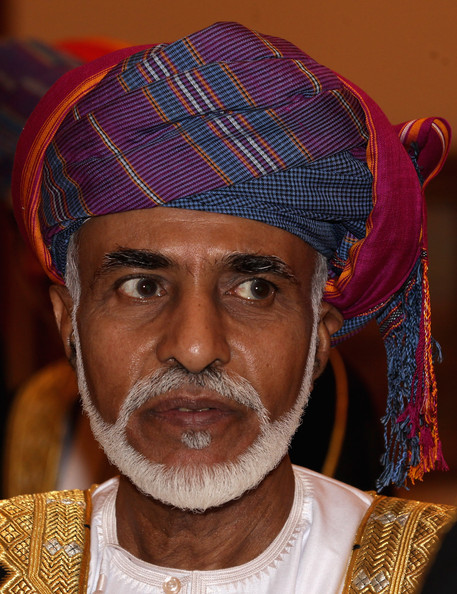
Qaboos bin Said al-Said
Sultan since 23 July 1970 and
Prime Minister since 23 July 1972
Sultan since 23 July 1970 and
Prime Minister since 23 July 1972
| TRAFFICKING IN PERSONS |
None reported.

Qaboos bin Said al-Said
Sultan since 23 July 1970 and
Prime Minister since 23 July 1972
Sultan since 23 July 1970 and
Prime Minister since 23 July 1972