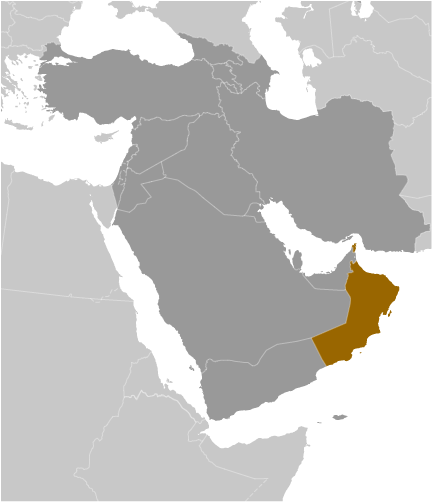
Sultanate of Oman is located in the Middle East of the Asian Continent, with a population of 3,090,150, making it the 136th
largest national population. Its capital and largest city is Muscat with a total population of 734,697. The country
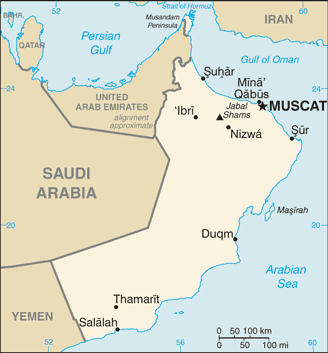
encompasses 309,500 square kilometers making it the 71st largest country in total area. It shares boundaries with the Strait
of Hormuz, Gulf of Oman, Arabian Sea, Yemen, Saudi Arabia, and United Arab Emirates that likewise contains the Omani
exclaves of the Musandam Peninsula and Al Madhah.
Sultan and Prime Minister Qaboos bin Said al-Said is recognized as the Chief of State and Head of Government and
achieves that status through heredity and holds that position for life or abdication. Its form of government is a monarchy
and they celebrate the creation of their constitution on 6th of November 1996.
The languages commonly or officially spoken are Arabic, English, Baluchi, Urdu and Indian dialects. It counts among its
major religions Ibadhi Muslim, Sunni Muslim, Shi'a Muslim and Hindu. As sources of mass communication it has 3 AM, 9
FM, 2 Short Wave and 19 Television stations.
Major geographical features are Jabal Shams, its highest point at 2,980 meters and Arabian Sea, its lowest point at 0 meters.
Its principal waterway is the Arabian Sea, which measures 2,092 kilometers of coastline.
Major industries providing for the bulk of their Gross Domestic Product (GDP) are crude oil production and refining,
natural and liquefied natural gas production; construction, cement, copper, steel, chemicals and optic fiber. Its official
currency is Omani Rial.
Here’s something you may not know about Oman. The first Arabic country to have women police officers was Oman.
largest national population. Its capital and largest city is Muscat with a total population of 734,697. The country
encompasses 309,500 square kilometers making it the 71st largest country in total area. It shares boundaries with the Strait
of Hormuz, Gulf of Oman, Arabian Sea, Yemen, Saudi Arabia, and United Arab Emirates that likewise contains the Omani
exclaves of the Musandam Peninsula and Al Madhah.
Sultan and Prime Minister Qaboos bin Said al-Said is recognized as the Chief of State and Head of Government and
achieves that status through heredity and holds that position for life or abdication. Its form of government is a monarchy
and they celebrate the creation of their constitution on 6th of November 1996.
The languages commonly or officially spoken are Arabic, English, Baluchi, Urdu and Indian dialects. It counts among its
major religions Ibadhi Muslim, Sunni Muslim, Shi'a Muslim and Hindu. As sources of mass communication it has 3 AM, 9
FM, 2 Short Wave and 19 Television stations.
Major geographical features are Jabal Shams, its highest point at 2,980 meters and Arabian Sea, its lowest point at 0 meters.
Its principal waterway is the Arabian Sea, which measures 2,092 kilometers of coastline.
Major industries providing for the bulk of their Gross Domestic Product (GDP) are crude oil production and refining,
natural and liquefied natural gas production; construction, cement, copper, steel, chemicals and optic fiber. Its official
currency is Omani Rial.
Here’s something you may not know about Oman. The first Arabic country to have women police officers was Oman.
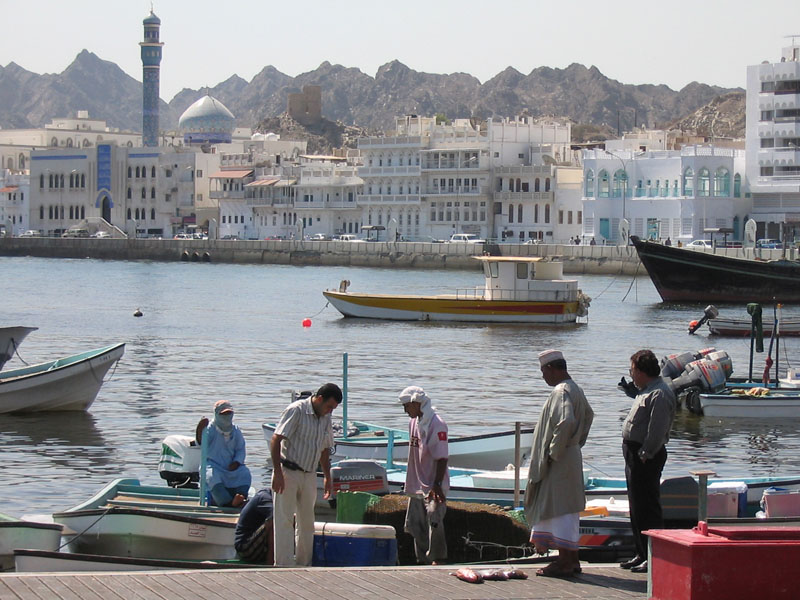
| Dawn in Muscat |
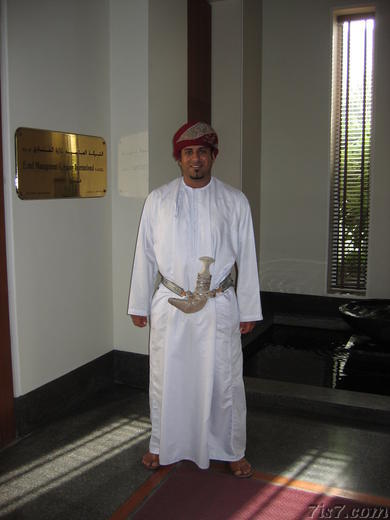
| Omani traditional dress |
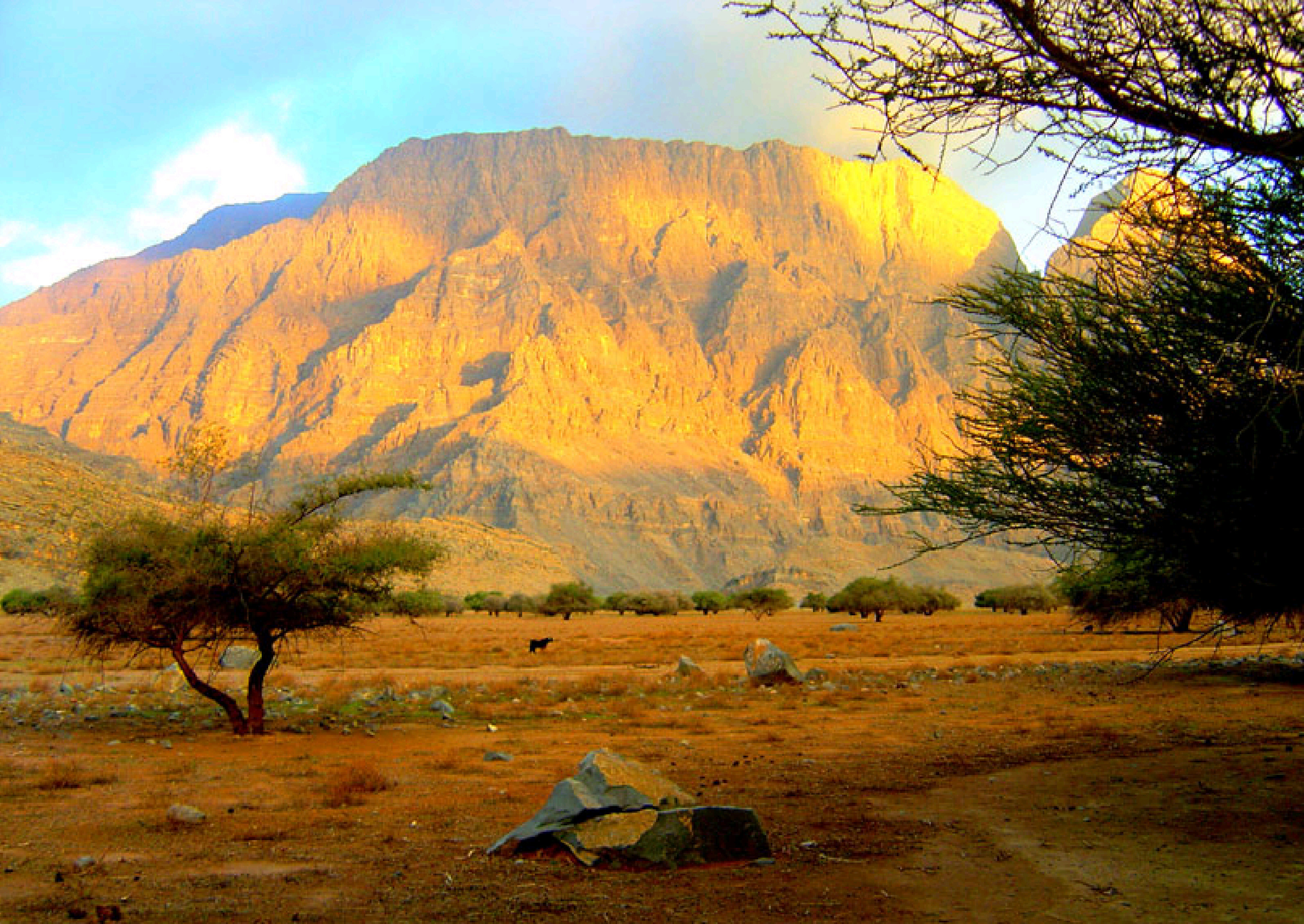
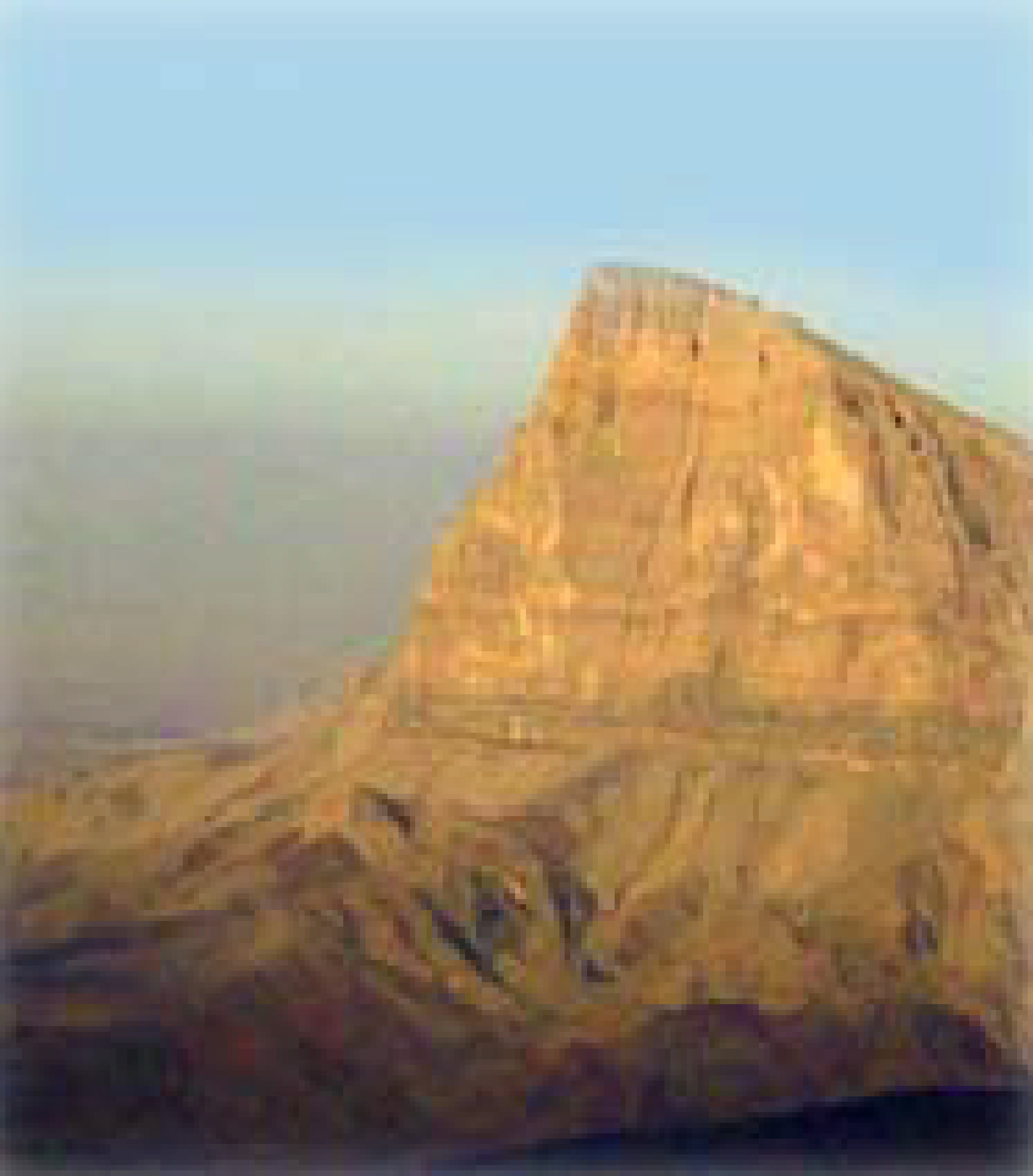
| Golden Mountain close to Kasab |
| Omani Mishkak- skewered meat grilled on charcoal |
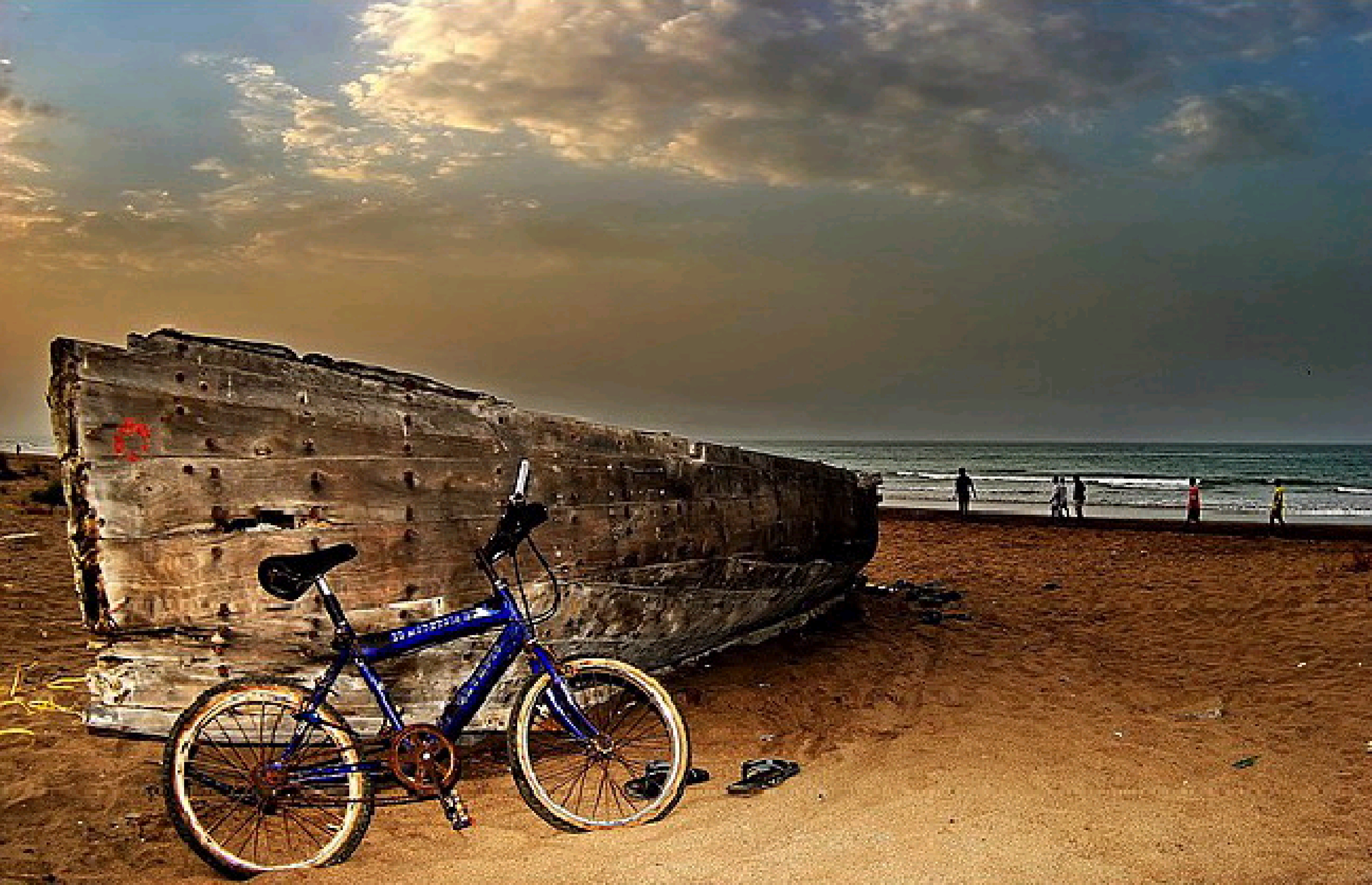
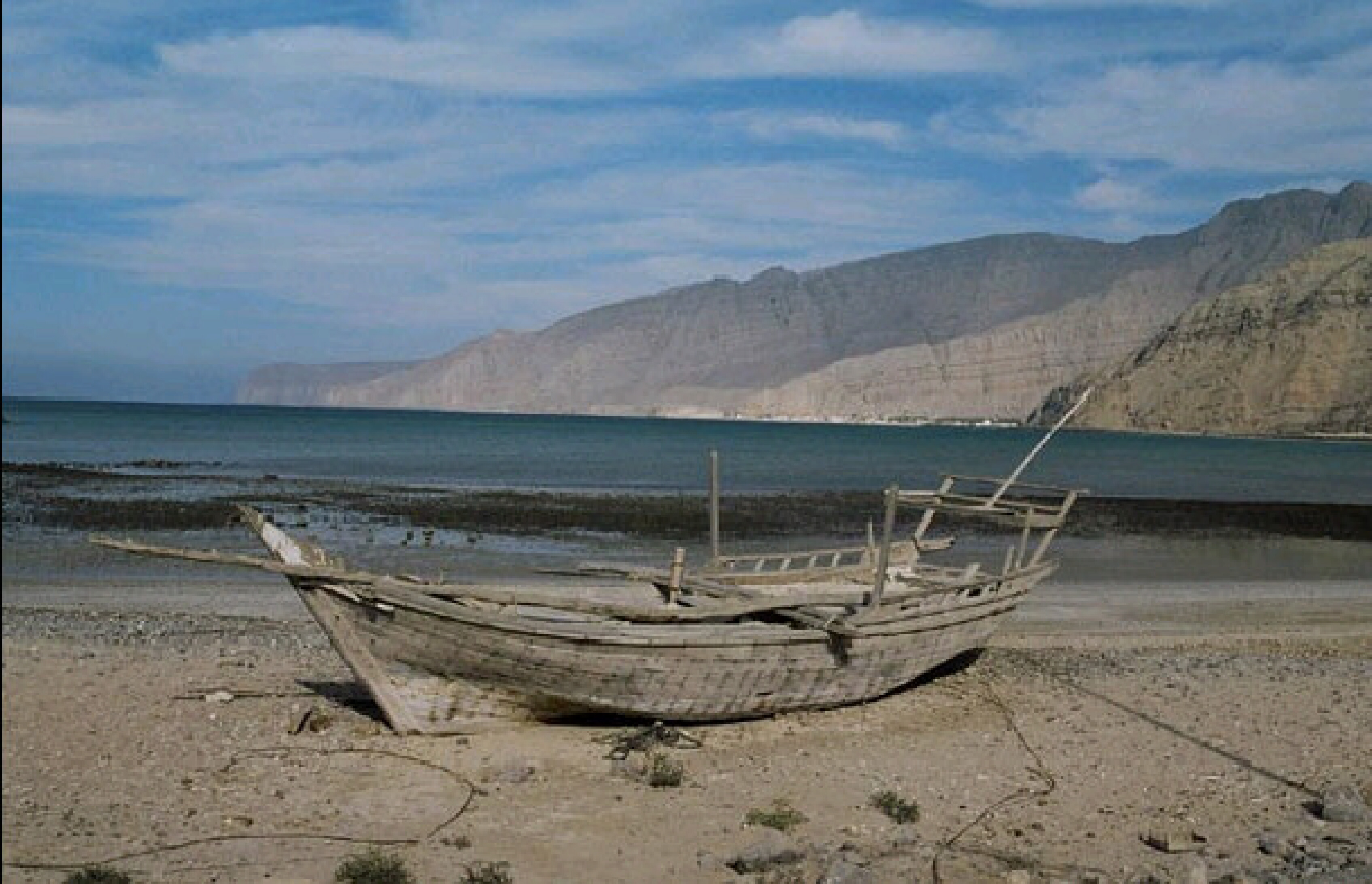
| Old Dhow in Bukha, Musandam Peninsula on the Persian Gulf- Oman's northernmost point |


| Abi's Home Page |
| Back to |
OMAN
Updated 14 March 2013
Updated 14 March 2013


| Adult Prevalence Rate: People Living with HIV/AIDS: HIV/AIDS Deaths: |
0.1% (2009 est.)
1,100
less then 100
1,100
less then 100

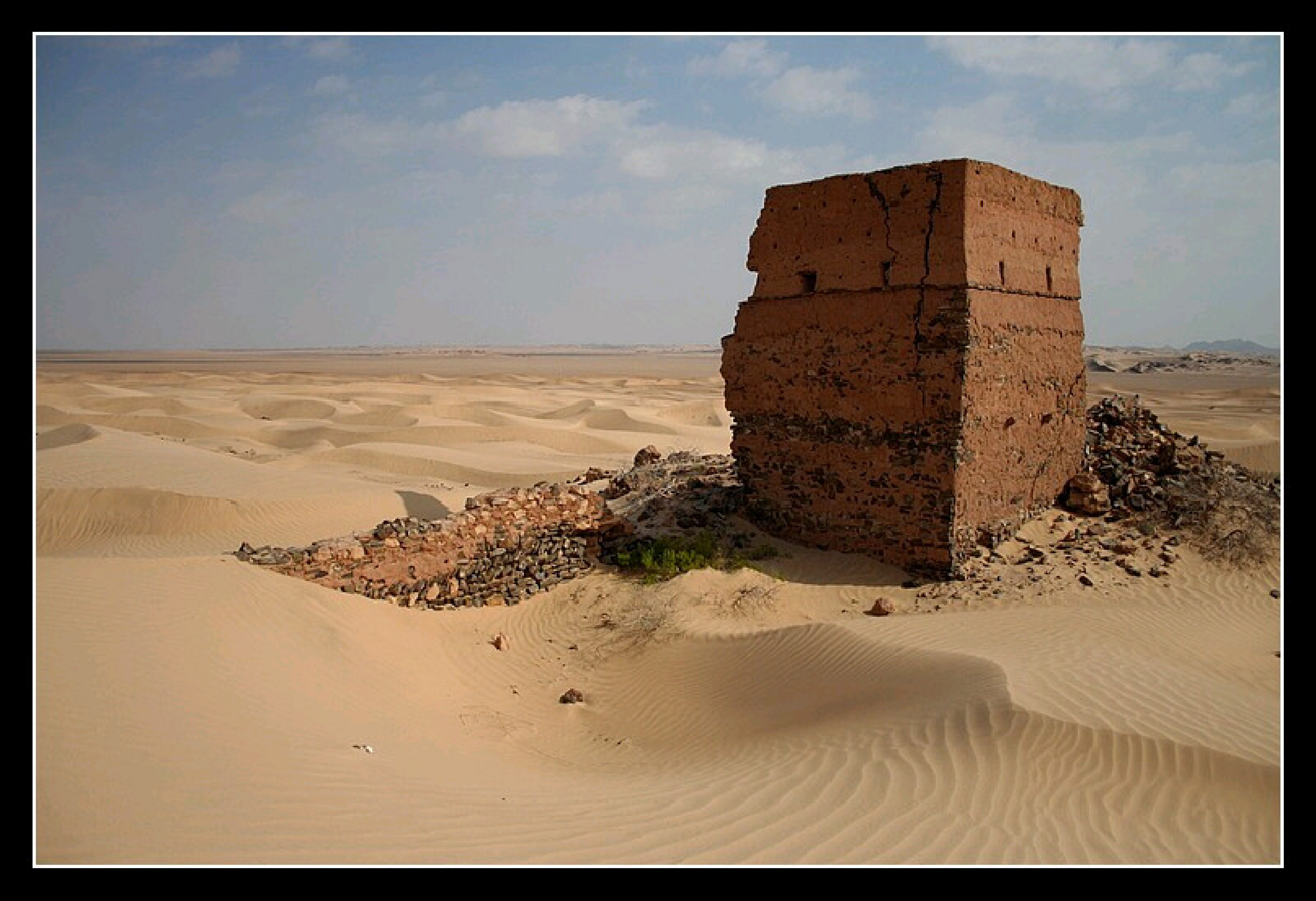
| Castle in Rab Al Khali Desert |
| Ruined city of Al Bathina |
| Fahl Rock- a favorite diving spot near Muscat |
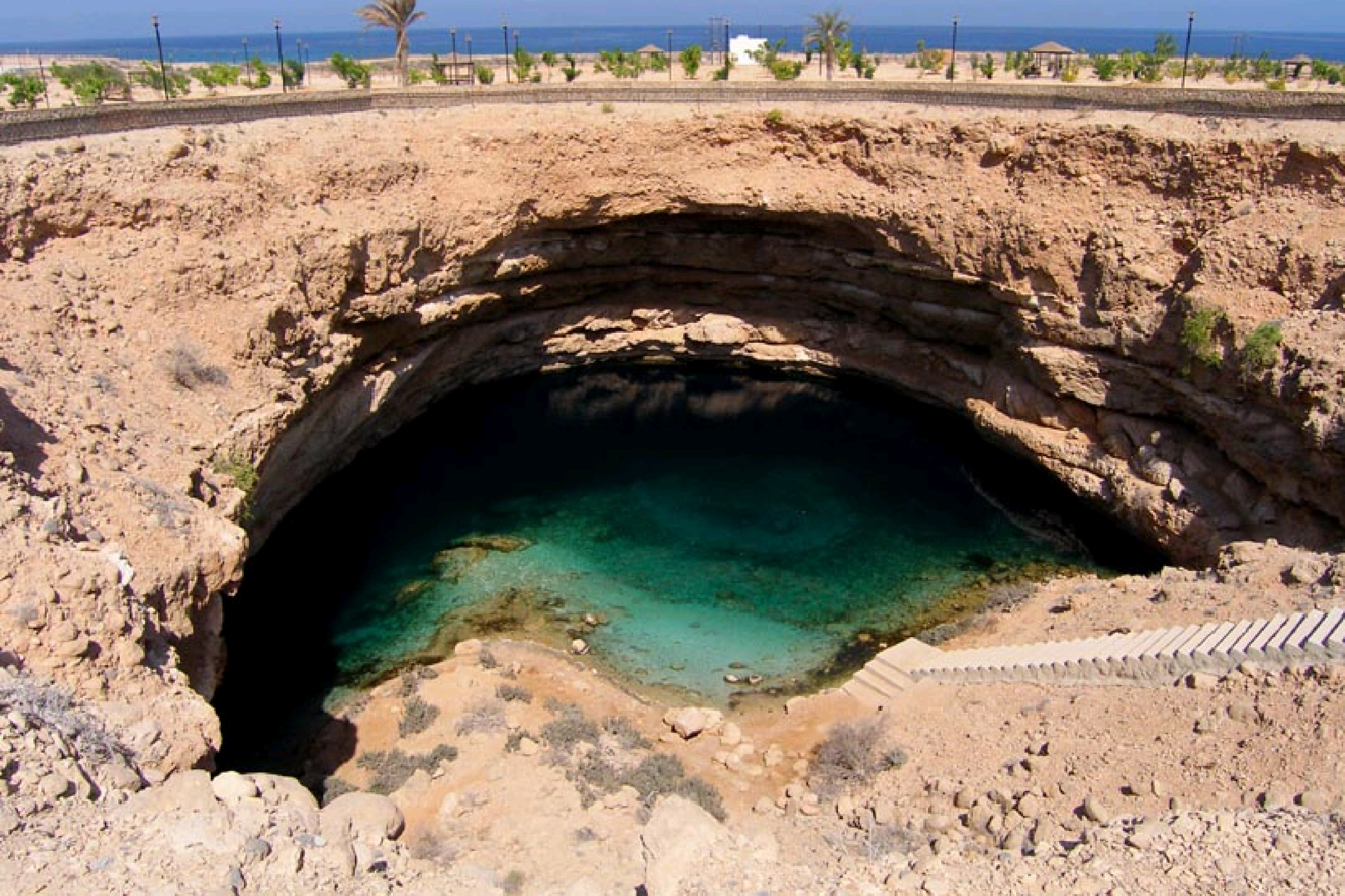
| Sinkhole in Tiwi |
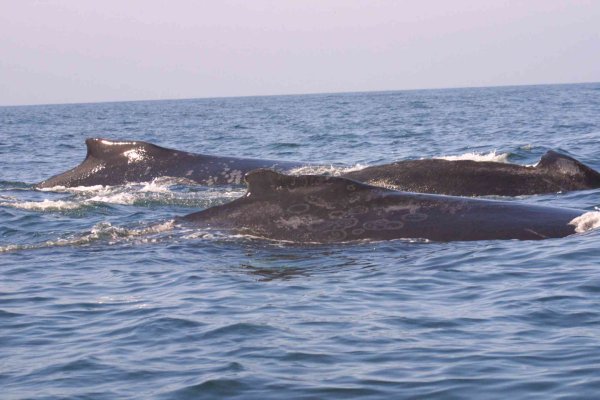
| Humpback whales off the coast of Duqm |
| Jabal Shams- Oman's highest point |
| Muscat Bay- Oman's capital and largest city |
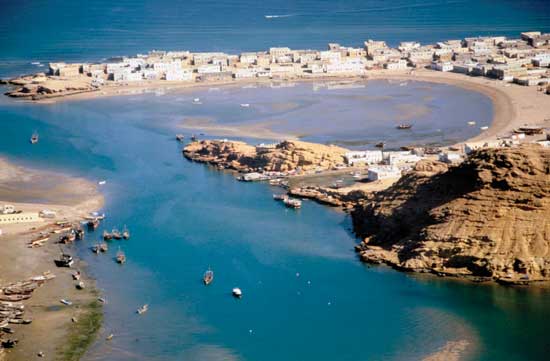
| Sur on the Gulf of Oman |

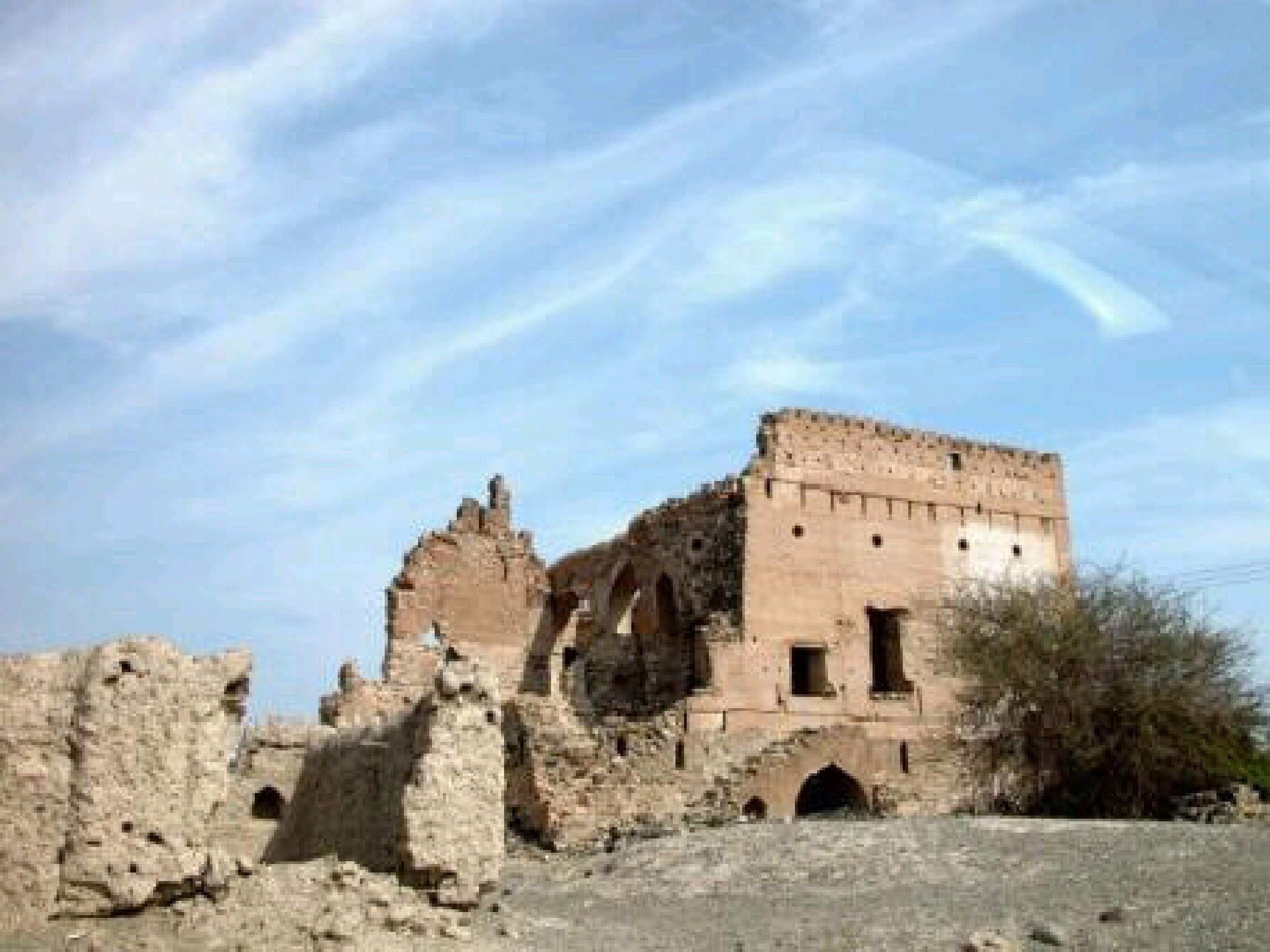
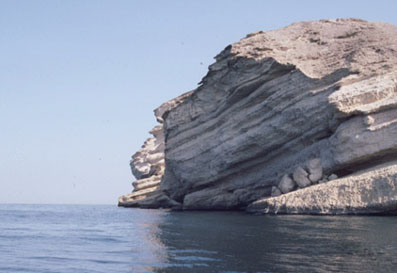

| Loggerhead Turtle on Masirah Island on the Arabian Sea- Oman's lowest point |
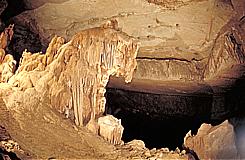
| Al Hotl Cave- one of the largest in the world and a key Oman attraction |
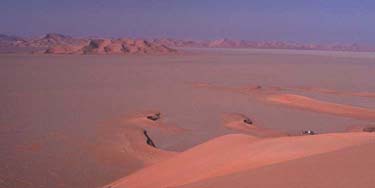
| Umm as Samim- a quicksand basin in the Rub' Al Khali desert of Oman and Saudi Arabia |
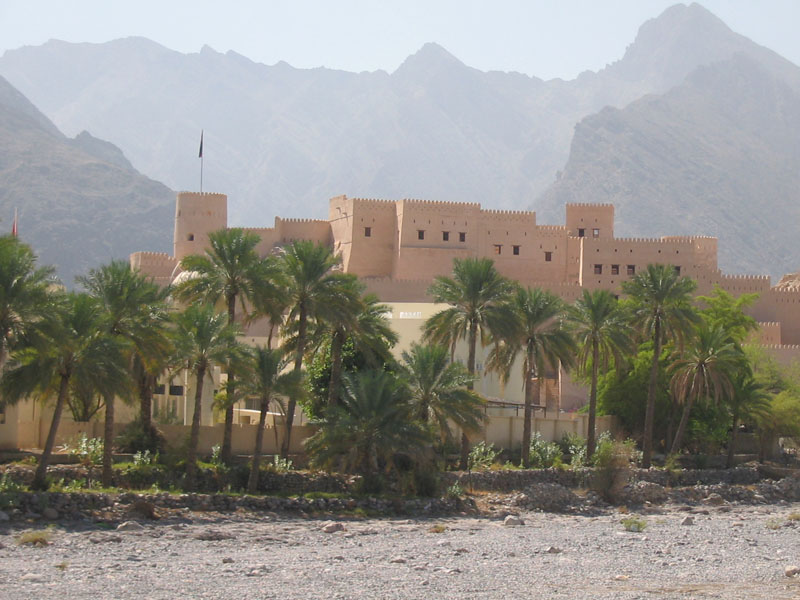
| Nakhal Fort at the foot of the Jebel Akhdar Mountains of Northwest Oman |
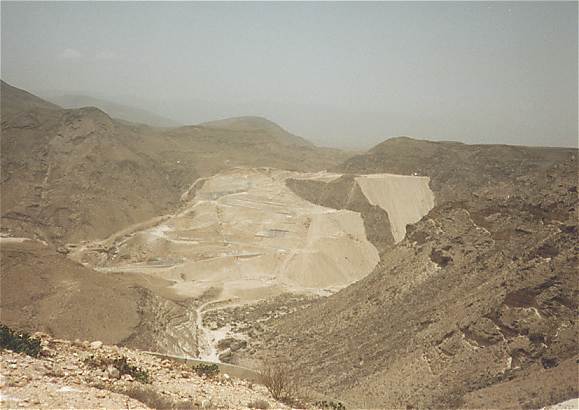
| A switchback road on the Oman/ Yemen frontier |
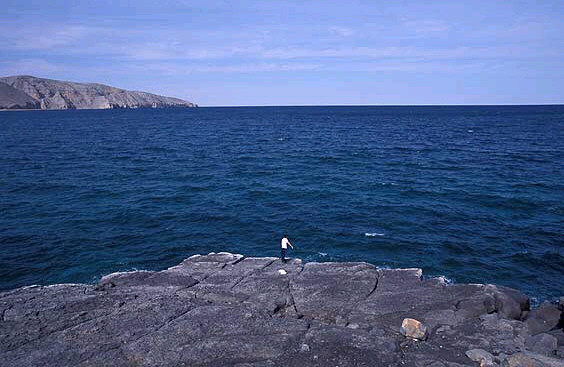
| Strait of Hormuz connects the Persian Gulf to the Gulf of Oman and the "superhighway" of Middle eastern oil |
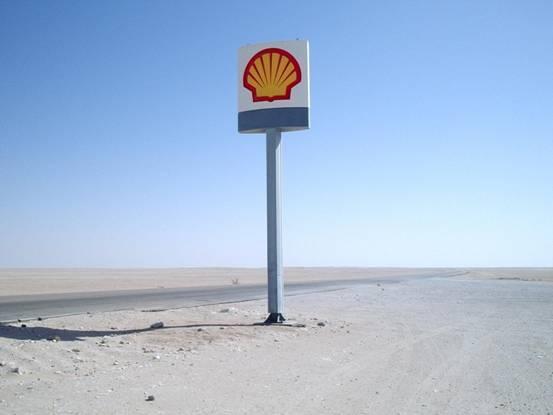
| The Empty Quarter- the easternmost point of Oman on the border with Saudi Arabia and Yemen |

| Qarat al-Qabil on Oman's border with United Arab Emirates |
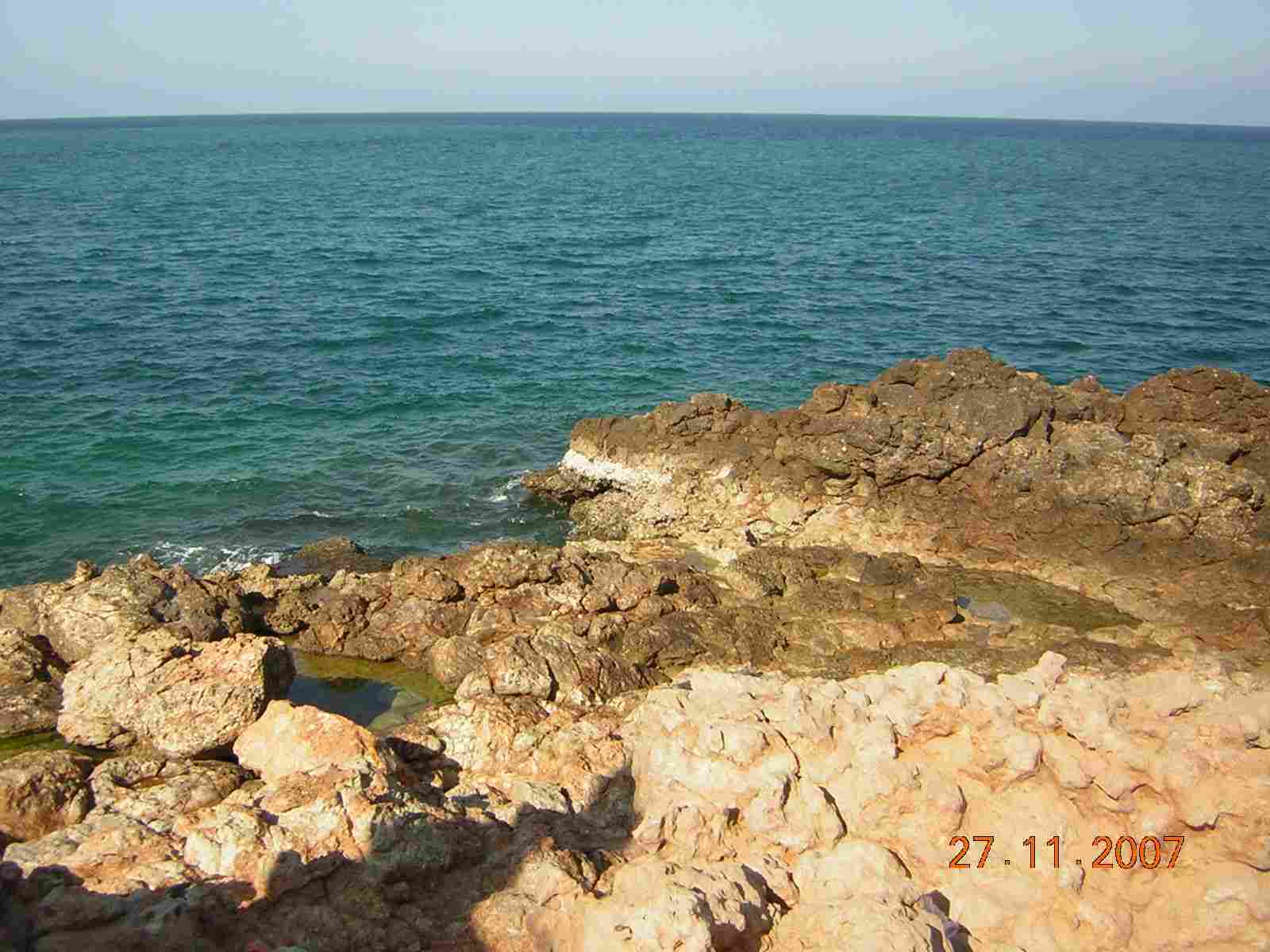
| Ras al-Hadd- Oman's easternmost point on the Gulf of Oman |
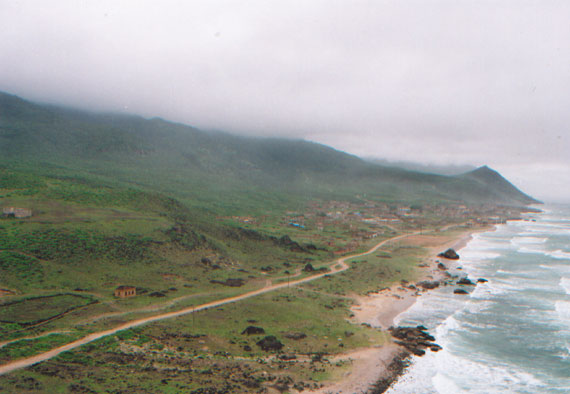
| Rub Darat All- Oman's southernmost point on the border with Yemen |
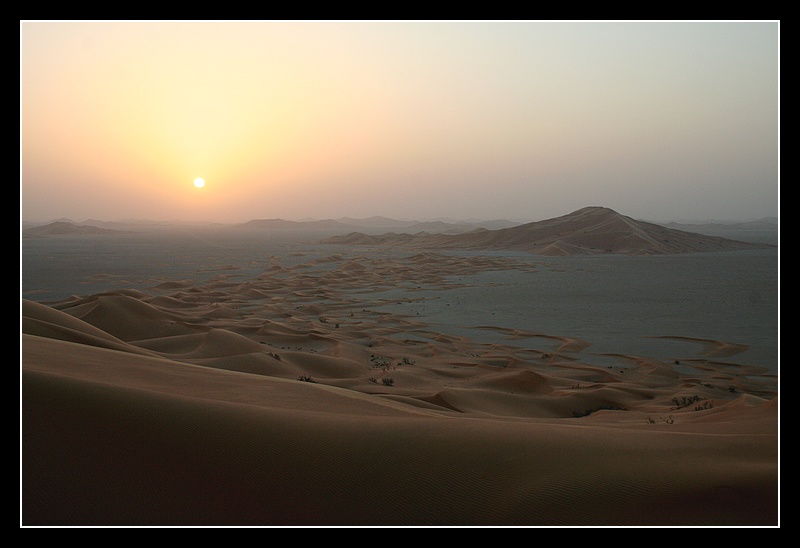
| Rub Oman |

Read about human rights in Pax
Gaea World Post Report!
Gaea World Post Report!