



| TURKMENISTAN Turkmenistan Turkmenistan Joined United Nations: 2 March 1992 Human Rights as assured by their constitution Click here Updated 12 July 2012 |

| CAPITAL |
| POPULATION |
| CHIEF OF STATE |
| SELECTION PROCESS |
Ashgabat (Ashkhabad)
5,054,828 (July 2011 est.)
Gurbanguly Berdimuhamedow
President since 14 February 2007
President since 14 February 2007
President elected by popular vote for a five-year term; election
last held 12 February 2012
Next scheduled election February 2017
last held 12 February 2012
Next scheduled election February 2017
HEAD OF GOVERNMENT
SELECTION PROCESS
According to the Turkmenistan Constitution, the president is
both the chief of state and head of government
both the chief of state and head of government
| DECLARATION OF HUMAN RIGHTS |
| ETHNIC GROUPS |
Turkmen 85%, Uzbek 5%, Russian 4%, other 6% (2003)
| RELIGIONS |
Muslim 89%, Eastern Orthodox 9%, unknown 2%
| GOVERNMENT STRUCTURE |
Republic; authoritarian presidential rule, with little power outside the executive branch; 5 provinces (welayatlar, singular - welayat)
Legal system is based on civil law system
Executive: President elected by popular vote for a five-year term; election last held 12 February 2012; next to be held:
February 2017
Legislative: unicameral parliament known as the National Assembly (Mejlis) (125 seats; members are elected by popular
vote to serve five-year terms)
elections: Mejlis - last held 14 December 2008 (next to be held December 2013)
Judicial: Supreme Court (judges are appointed by the president)
Legal system is based on civil law system
Executive: President elected by popular vote for a five-year term; election last held 12 February 2012; next to be held:
February 2017
Legislative: unicameral parliament known as the National Assembly (Mejlis) (125 seats; members are elected by popular
vote to serve five-year terms)
elections: Mejlis - last held 14 December 2008 (next to be held December 2013)
Judicial: Supreme Court (judges are appointed by the president)
| LANGUAGES |
Turkmen 72%, Russian 12%, Uzbek 9%, other 7%
| BRIEF HISTORY |
Tools from the Stone-Age have been discovered along the Caspian Sea shore and near the modern port of Turkmenbashi,
establishing the pre-historic presence of humans in the area that is today known as Turkmenistan. The remains of farming
settlements in the Kopet-Dag Mountains date back 8,000 years. By the 6th century B.C., the powerful Persian Empire had
established the provinces of Parthia and Margiana, in what is now Turkmenistan. In the 4th century B.C., the Persian Empire
was defeated by the army of Alexander the Great. In 330 B.C., Alexander marched northward into central Asia and
founded the city of Alexandria near the Murgab River. Located on an important trade route, Alexandria later became the
city of Merv (modern Mary). After Alexander's death in 323 B.C., his generals fought for control of his empire, which
quickly fell apart. The Scythians—fierce, nomadic warriors from the north—then established the kingdom of Parthia, which
covered present-day Turkmenistan and Iran. Parthia fell in A.D. 224 to the Sasanian rulers of Persia. At the same time,
several groups—including the Alans and the Huns—were moving into Turkmenistan from the east and north. A branch of
the Huns wrested control of southern Turkmenistan from the Sasanian Empire in the 5th century A.D. Although
Turkmenistan was still populated mostly by nomadic herders, permanent settlements were prospering in the fertile river
valleys. Central Asia came under Arab control after a series of invasions in the late 7th and early 8th centuries. Meanwhile,
the Oguz—the ancestors of the Turkmen—were migrating from eastern Asia into central Asia, the Middle East, and Asia
Minor (modern Turkey). The Arab conquest brought the Islamic religion to the Oguz and to the other peoples of central
Asia. By the 11th century, the Oguz were pushing to the south and west, and the Arabs were retreating from Turkmenistan.
In the 11th and 12th centuries, the main centers of Turkmen culture were at Khiva in the north (now in Uzbekistan) and at
Merv in the south. Khiva controlled the cities and farming estates of the lower Amu Darya Valley. Merv became a
crossroads of trade in silks and spices between Asia and the Middle East. This business created vast wealth in the ancient
city, where the Seljuk rulers built fabulous mosques and palaces. In 1157, during a revolt of powerful landowners, the
Seljuk Empire collapsed. The leaders of Khiva took control of Turkmenistan, but their reign was brief. In 1221, central Asia
suffered a disastrous invasion by Mongol warriors who were sweeping across the region from their base in eastern Asia.
Under their commander Genghis Khan, the Mongols conquered Khiva and burned the city of Merv to the ground. After
Genghis Khan's death in 1227, the Mongols lost control of Turkmenistan. Small, semi-independent states arose under the
rule of the region's landowners. In the 1370’s, the Mongol leader Timur (known as Tamerlane in Europe). Later, as the
Mongols retreated from Turkmenistan, the Turkmen fell under the control of Muslim khans (rulers) who established khanates
in Bukhara (in modern Uzbekistan) and Khiva. The rivalry between the khans and the rulers of Persia touched off centuries
of war in Turkmenistan. Persians, Turkmen, and the khans fought for the scattered oases in southern Turkmenistan. From
the 14th through the 17th century, Turkmenistan was in decline. To escape the conflicts, most Turkmen moved to the remote
deserts along the borders of Persia and Afghanistan. In the 18th century, after centuries of poverty and isolation, the
Turkmen began to rebuild their way of life. The poet Magtymguly created a literary language for the Turkmen and laid the
foundations for their modern culture and traditions. The Russian czar, Peter the Great sent the first Russian expeditions into
Turkmenistan. Peter was seeking a route for Russian trade with southern Asia and the Middle East. In 1716, however,
members of a Turkmen clan murdered the czar's representatives near Khiva. Russia waited for more than a century before
sending another mission into Turkmenistan. Nevertheless, trade between Turkmen merchants and Russia continued and was
helped by the building of a port on the Caspian Sea at Krasnovodsk, (modern Turkmenbashi). In 1802, members of several
Turkmen clans officially became Russian subjects. As a first step in the conquest of the region, the Russians agreed to
provide arms and food to the Turkmen rebels. Russia began sending military expeditions into Turkmenistan in the second
half of the 19th century. The building of the Transcaspian Railroad,which connected Krasnovodsk (modern Turkmenbashi),
Mary, and trading centers to the east, opened up the region for economic development. From 1890 to 1917, Turkmenistan
was part of Russian Turkestan, a province that included central Asia and its Muslim nationalities—the Kazakhs, the Uzbeks,
the Kyrgyz, the Taliks, and the Turkmen. A violent uprising broke out in 1916, when the Turkmen, led by Dzhunaid Khan,
defeated the Russians at Khiva. The Turkmen established a national government that lasted until 1918. In October 1917, the
Communist leader Vladimir Ilich Lenin overthrew the Russian government. The Communists succeeded in taking control of
Ashkhabad in the summer of 1918. In response, Dzhunaid Khan and forces loyal to the old Russian regime joined together
to drive out the Communists.In the late 1920s and early 1930s, the Soviet leader Joseph Stalin made harsh and sweeping
changes throughout the USSR. Private property was seized, and the Soviet government used brutal methods to punish
opposition. These policies sparked a rebellion in Turkmenistan, and in 1927 the Soviets lost control of the republic to a
national resistance movement called the Turkmen Freedom. The western Soviet Union was devastated by World War II
(1939-1945), when Germany invaded with a huge military force. After the war, the Soviets built new plants in central Asian
cities, including Ashkhabad and Chardzhou (modern Turkmenabat). A work force made up of ethnic Russians and ethnic
Ukrainians emigrated to the Turkmen SSR to take advantage of new jobs in the republic. The Soviet leader Mikhail
Gorbachev instituted several new policies after coming to power in 1985. Glasnost allowed more open criticism of the
Communist party and of the country's economic system. Perestroika eased government control over many small businesses,
which could now set their own wages, prices, and production schedules. The government established the office of president
and named Saparmurat Niyazov to the post. On October 27, 1991 Turkmenistan proclaimed its independence from the
United Soviet Socialist Republic. President Saparmurat Niyazov retains absolute control over the country and opposition is
not tolerated. Extensive hydrocarbon/natural gas reserves could prove a boon to this underdeveloped country if extraction
and delivery projects were to be expanded. The Turkmenistan Government is actively seeking to develop alternative
petroleum transportation routes in order to break Russia's pipeline monopoly. The sudden death of Niyazov in December
2006 led to the interim elevation of Gurbanguly Berdymukhammedov, who was elected on 11 February 2007. Recently,
Berdimuhamedow has restored the names of the months and days of the week (Niyazov had renamed them after himself and
his mother), and announced plans to move the infamous gold rotating statue of Niyazov from Ashgabat's central square. He
has not, however, moved toward Western-style democracy. In September 2008, a new constitution was accepted by the
People's Council. Parliamentary elections under this new constitution were held on December 14, 2008. In December 2008,
he also reversed the changes to the national anthem which made numerous references to former President Niyazov, releasing
the new anthem on December 21, 2008
Sources Turkmenistan Embassy Washington ; Wikipedia; History of Turkmenistan
establishing the pre-historic presence of humans in the area that is today known as Turkmenistan. The remains of farming
settlements in the Kopet-Dag Mountains date back 8,000 years. By the 6th century B.C., the powerful Persian Empire had
established the provinces of Parthia and Margiana, in what is now Turkmenistan. In the 4th century B.C., the Persian Empire
was defeated by the army of Alexander the Great. In 330 B.C., Alexander marched northward into central Asia and
founded the city of Alexandria near the Murgab River. Located on an important trade route, Alexandria later became the
city of Merv (modern Mary). After Alexander's death in 323 B.C., his generals fought for control of his empire, which
quickly fell apart. The Scythians—fierce, nomadic warriors from the north—then established the kingdom of Parthia, which
covered present-day Turkmenistan and Iran. Parthia fell in A.D. 224 to the Sasanian rulers of Persia. At the same time,
several groups—including the Alans and the Huns—were moving into Turkmenistan from the east and north. A branch of
the Huns wrested control of southern Turkmenistan from the Sasanian Empire in the 5th century A.D. Although
Turkmenistan was still populated mostly by nomadic herders, permanent settlements were prospering in the fertile river
valleys. Central Asia came under Arab control after a series of invasions in the late 7th and early 8th centuries. Meanwhile,
the Oguz—the ancestors of the Turkmen—were migrating from eastern Asia into central Asia, the Middle East, and Asia
Minor (modern Turkey). The Arab conquest brought the Islamic religion to the Oguz and to the other peoples of central
Asia. By the 11th century, the Oguz were pushing to the south and west, and the Arabs were retreating from Turkmenistan.
In the 11th and 12th centuries, the main centers of Turkmen culture were at Khiva in the north (now in Uzbekistan) and at
Merv in the south. Khiva controlled the cities and farming estates of the lower Amu Darya Valley. Merv became a
crossroads of trade in silks and spices between Asia and the Middle East. This business created vast wealth in the ancient
city, where the Seljuk rulers built fabulous mosques and palaces. In 1157, during a revolt of powerful landowners, the
Seljuk Empire collapsed. The leaders of Khiva took control of Turkmenistan, but their reign was brief. In 1221, central Asia
suffered a disastrous invasion by Mongol warriors who were sweeping across the region from their base in eastern Asia.
Under their commander Genghis Khan, the Mongols conquered Khiva and burned the city of Merv to the ground. After
Genghis Khan's death in 1227, the Mongols lost control of Turkmenistan. Small, semi-independent states arose under the
rule of the region's landowners. In the 1370’s, the Mongol leader Timur (known as Tamerlane in Europe). Later, as the
Mongols retreated from Turkmenistan, the Turkmen fell under the control of Muslim khans (rulers) who established khanates
in Bukhara (in modern Uzbekistan) and Khiva. The rivalry between the khans and the rulers of Persia touched off centuries
of war in Turkmenistan. Persians, Turkmen, and the khans fought for the scattered oases in southern Turkmenistan. From
the 14th through the 17th century, Turkmenistan was in decline. To escape the conflicts, most Turkmen moved to the remote
deserts along the borders of Persia and Afghanistan. In the 18th century, after centuries of poverty and isolation, the
Turkmen began to rebuild their way of life. The poet Magtymguly created a literary language for the Turkmen and laid the
foundations for their modern culture and traditions. The Russian czar, Peter the Great sent the first Russian expeditions into
Turkmenistan. Peter was seeking a route for Russian trade with southern Asia and the Middle East. In 1716, however,
members of a Turkmen clan murdered the czar's representatives near Khiva. Russia waited for more than a century before
sending another mission into Turkmenistan. Nevertheless, trade between Turkmen merchants and Russia continued and was
helped by the building of a port on the Caspian Sea at Krasnovodsk, (modern Turkmenbashi). In 1802, members of several
Turkmen clans officially became Russian subjects. As a first step in the conquest of the region, the Russians agreed to
provide arms and food to the Turkmen rebels. Russia began sending military expeditions into Turkmenistan in the second
half of the 19th century. The building of the Transcaspian Railroad,which connected Krasnovodsk (modern Turkmenbashi),
Mary, and trading centers to the east, opened up the region for economic development. From 1890 to 1917, Turkmenistan
was part of Russian Turkestan, a province that included central Asia and its Muslim nationalities—the Kazakhs, the Uzbeks,
the Kyrgyz, the Taliks, and the Turkmen. A violent uprising broke out in 1916, when the Turkmen, led by Dzhunaid Khan,
defeated the Russians at Khiva. The Turkmen established a national government that lasted until 1918. In October 1917, the
Communist leader Vladimir Ilich Lenin overthrew the Russian government. The Communists succeeded in taking control of
Ashkhabad in the summer of 1918. In response, Dzhunaid Khan and forces loyal to the old Russian regime joined together
to drive out the Communists.In the late 1920s and early 1930s, the Soviet leader Joseph Stalin made harsh and sweeping
changes throughout the USSR. Private property was seized, and the Soviet government used brutal methods to punish
opposition. These policies sparked a rebellion in Turkmenistan, and in 1927 the Soviets lost control of the republic to a
national resistance movement called the Turkmen Freedom. The western Soviet Union was devastated by World War II
(1939-1945), when Germany invaded with a huge military force. After the war, the Soviets built new plants in central Asian
cities, including Ashkhabad and Chardzhou (modern Turkmenabat). A work force made up of ethnic Russians and ethnic
Ukrainians emigrated to the Turkmen SSR to take advantage of new jobs in the republic. The Soviet leader Mikhail
Gorbachev instituted several new policies after coming to power in 1985. Glasnost allowed more open criticism of the
Communist party and of the country's economic system. Perestroika eased government control over many small businesses,
which could now set their own wages, prices, and production schedules. The government established the office of president
and named Saparmurat Niyazov to the post. On October 27, 1991 Turkmenistan proclaimed its independence from the
United Soviet Socialist Republic. President Saparmurat Niyazov retains absolute control over the country and opposition is
not tolerated. Extensive hydrocarbon/natural gas reserves could prove a boon to this underdeveloped country if extraction
and delivery projects were to be expanded. The Turkmenistan Government is actively seeking to develop alternative
petroleum transportation routes in order to break Russia's pipeline monopoly. The sudden death of Niyazov in December
2006 led to the interim elevation of Gurbanguly Berdymukhammedov, who was elected on 11 February 2007. Recently,
Berdimuhamedow has restored the names of the months and days of the week (Niyazov had renamed them after himself and
his mother), and announced plans to move the infamous gold rotating statue of Niyazov from Ashgabat's central square. He
has not, however, moved toward Western-style democracy. In September 2008, a new constitution was accepted by the
People's Council. Parliamentary elections under this new constitution were held on December 14, 2008. In December 2008,
he also reversed the changes to the national anthem which made numerous references to former President Niyazov, releasing
the new anthem on December 21, 2008
Sources Turkmenistan Embassy Washington ; Wikipedia; History of Turkmenistan
| ECONOMIC OVERVIEW |
Turkmenistan is largely a desert country with intensive agriculture in irrigated oases and sizeable gas and oil resources. The
two largest crops are cotton, most of which is produced for export, and wheat, which is domestically consumed. Although
agriculture accounts for roughly 10% of GDP, it continues to employ nearly half of the country's workforce. Turkmenistan's
authoritarian regime has taken a cautious approach to economic reform, hoping to use gas and cotton export revenues to
sustain its inefficient and highly corrupt economy. Privatization goals remain limited. From 1998-2005, Turkmenistan
suffered from the continued lack of adequate export routes for natural gas and from obligations on extensive short-term
external debt. At the same time, however, total exports rose by an average of roughly 15% per year from 2003-08, largely
because of higher international oil and gas prices. Additional pipelines to China and Iran, that began operation in early 2010,
have expanded Turkmenistan's export routes for its gas, although these new routes have not completely offset the sharp
drop in export revenue since early 2009 from decreased gas exports to Russia. Overall prospects in the near future are
discouraging because of endemic corruption, a poor educational system, government misuse of oil and gas revenues, and
Ashgabat's reluctance to adopt market-oriented reforms. The majority of Turkmenistan's economic statistics are state
secrets. The present government established a State Agency for Statistics, but GDP numbers and other publicized figures
are subject to wide margins of error. In particular, the rate of GDP growth is uncertain. Since his election, President
BERDIMUHAMEDOW unified the country's dual currency exchange rate, ordered the redenomination of the manat,
reduced state subsidies for gasoline, and initiated development of a special tourism zone on the Caspian Sea. Although
foreign investment is encouraged, and some improvements in macroeconomic policy have been made, numerous
bureaucratic obstacles impede international business activity.
two largest crops are cotton, most of which is produced for export, and wheat, which is domestically consumed. Although
agriculture accounts for roughly 10% of GDP, it continues to employ nearly half of the country's workforce. Turkmenistan's
authoritarian regime has taken a cautious approach to economic reform, hoping to use gas and cotton export revenues to
sustain its inefficient and highly corrupt economy. Privatization goals remain limited. From 1998-2005, Turkmenistan
suffered from the continued lack of adequate export routes for natural gas and from obligations on extensive short-term
external debt. At the same time, however, total exports rose by an average of roughly 15% per year from 2003-08, largely
because of higher international oil and gas prices. Additional pipelines to China and Iran, that began operation in early 2010,
have expanded Turkmenistan's export routes for its gas, although these new routes have not completely offset the sharp
drop in export revenue since early 2009 from decreased gas exports to Russia. Overall prospects in the near future are
discouraging because of endemic corruption, a poor educational system, government misuse of oil and gas revenues, and
Ashgabat's reluctance to adopt market-oriented reforms. The majority of Turkmenistan's economic statistics are state
secrets. The present government established a State Agency for Statistics, but GDP numbers and other publicized figures
are subject to wide margins of error. In particular, the rate of GDP growth is uncertain. Since his election, President
BERDIMUHAMEDOW unified the country's dual currency exchange rate, ordered the redenomination of the manat,
reduced state subsidies for gasoline, and initiated development of a special tourism zone on the Caspian Sea. Although
foreign investment is encouraged, and some improvements in macroeconomic policy have been made, numerous
bureaucratic obstacles impede international business activity.
| POLITICAL CLIMATE |
Since the death of Saparmurat Niyazov Turkmenistan's leadership made tentative moves to open up the country.
Berdimuhamedow repealed some of Niyazov's most idiosyncratic policies, including banning opera and the circus for being
"insufficiently Turkmen". In education, his government had increased basic education to 10 years from to nine years, and
higher education had been extended from two years to five. He has also increased contacts with the West, which is eager for
access to the country's natural gas riches - but fears were mounting that the government would revert to Niyazov's draconian
style of rule.
The constitution provides for freedom of the press, but the government does not practice it. The government controls all
media outlets. Only two newspapers, Adalat and Galkynysh, are nominally independent, but they were created by
presidential decree. Cable TV, which had existed in the late 1980s, was shut down.
Activities of all but the officially recognized Russian Orthodox and Sunni Muslim faiths are severely limited. Religious
congregations are required to register with the government, and individual parishes must have at least 500 members to
register. Severe measures are directed toward religious sects that have not been able to establish official ties of state
recognition, especially Baptists, Pentecostals, Seventh-day Adventists, Hare Krishna, Jehovah's Witnesses, and Bahá'ís.
Practitioners of these sects have allegedly been harassed, imprisoned, and/or tortured, according to some outside human
rights advocacy groups.
Corruption continues to be pervasive. Power is concentrated in the president; the judiciary is wholly subservient to the
regime, with all judges appointed for five-year terms by the president without legislative review. Little has been done to
prosecute corrupt officials. In September 2008, the People's Council unanimously passed a resolution adopting a new
Constitution. The latter resulted in the abolition of the Council and a significant increase in the size of Parliament in December
2008. ormally, according to the Constitution, citizens of Turkmenistan have the right to set up political parties and other
public associations
Berdimuhamedow repealed some of Niyazov's most idiosyncratic policies, including banning opera and the circus for being
"insufficiently Turkmen". In education, his government had increased basic education to 10 years from to nine years, and
higher education had been extended from two years to five. He has also increased contacts with the West, which is eager for
access to the country's natural gas riches - but fears were mounting that the government would revert to Niyazov's draconian
style of rule.
The constitution provides for freedom of the press, but the government does not practice it. The government controls all
media outlets. Only two newspapers, Adalat and Galkynysh, are nominally independent, but they were created by
presidential decree. Cable TV, which had existed in the late 1980s, was shut down.
Activities of all but the officially recognized Russian Orthodox and Sunni Muslim faiths are severely limited. Religious
congregations are required to register with the government, and individual parishes must have at least 500 members to
register. Severe measures are directed toward religious sects that have not been able to establish official ties of state
recognition, especially Baptists, Pentecostals, Seventh-day Adventists, Hare Krishna, Jehovah's Witnesses, and Bahá'ís.
Practitioners of these sects have allegedly been harassed, imprisoned, and/or tortured, according to some outside human
rights advocacy groups.
Corruption continues to be pervasive. Power is concentrated in the president; the judiciary is wholly subservient to the
regime, with all judges appointed for five-year terms by the president without legislative review. Little has been done to
prosecute corrupt officials. In September 2008, the People's Council unanimously passed a resolution adopting a new
Constitution. The latter resulted in the abolition of the Council and a significant increase in the size of Parliament in December
2008. ormally, according to the Constitution, citizens of Turkmenistan have the right to set up political parties and other
public associations
| INTERNATIONAL DISPUTES |
Cotton monoculture in Uzbekistan and Turkmenistan creates water-sharing difficulties for Amu Darya river states; field
demarcation of the boundaries with Kazakhstan commenced in 2005, but Caspian seabed delimitation remains stalled with
Azerbaijan, Iran, and Kazakhstan due to Turkmenistan's indecision over how to allocate the sea's waters and seabed
demarcation of the boundaries with Kazakhstan commenced in 2005, but Caspian seabed delimitation remains stalled with
Azerbaijan, Iran, and Kazakhstan due to Turkmenistan's indecision over how to allocate the sea's waters and seabed


| REFUGEES AND INTERNALLY DISPLACED PERSONS (IDP) |
Refugees (country of origin): 11,173 (Tajikistan); less than 1,000 (Afghanistan) (2007)
| ILLICIT DRUGS |
Transit country for Afghan narcotics bound for Russian and Western European markets; transit point for heroin precursor
chemicals bound for Afghanistan.
chemicals bound for Afghanistan.
| HUMAN RIGHTS STATEMENTS, ANALYSIS AND CRITIQUES |
2011 Human Rights Report: Turkmenistan
Bureau of Democracy, Human Rights, and Labor
2011 Country Reports on Human Rights Practices
May 25, 2012
EXECUTIVE SUMMARY
Although the constitution declares Turkmenistan to be a secular democracy and a presidential republic, the country has an
authoritarian government controlled by the president, Gurbanguly Berdimuhamedov, and his Democratic Party, the country’s only
political party. Immediately after the death of President Saparmurat Niyazov in 2006, Berdimuhamedov was inaugurated president
following presidential elections in February 2007, which did not meet international standards. December 2008 parliamentary
elections also fell short of international standards. Security forces reported to civilian authorities.
The three most important human rights problems were arbitrary arrest, torture, and disregard for civil liberties including restrictions
on freedoms of speech, press, assembly, religion, and movement.
Other continuing human rights problems included citizens’ inability to change their government; denial of due process and fair trial;
arbitrary interference with privacy, home, and correspondence; discrimination and violence against women; and restrictions on the
free association of workers.
Officials in the security services and elsewhere in the government acted with impunity. There were no prosecutions of government
officials for human rights abuses
Click here to read more »
Bureau of Democracy, Human Rights, and Labor
2011 Country Reports on Human Rights Practices
May 25, 2012
EXECUTIVE SUMMARY
Although the constitution declares Turkmenistan to be a secular democracy and a presidential republic, the country has an
authoritarian government controlled by the president, Gurbanguly Berdimuhamedov, and his Democratic Party, the country’s only
political party. Immediately after the death of President Saparmurat Niyazov in 2006, Berdimuhamedov was inaugurated president
following presidential elections in February 2007, which did not meet international standards. December 2008 parliamentary
elections also fell short of international standards. Security forces reported to civilian authorities.
The three most important human rights problems were arbitrary arrest, torture, and disregard for civil liberties including restrictions
on freedoms of speech, press, assembly, religion, and movement.
Other continuing human rights problems included citizens’ inability to change their government; denial of due process and fair trial;
arbitrary interference with privacy, home, and correspondence; discrimination and violence against women; and restrictions on the
free association of workers.
Officials in the security services and elsewhere in the government acted with impunity. There were no prosecutions of government
officials for human rights abuses
Click here to read more »
19 April 2012
Human Rights Committee
104th session
New York, 12–30 March 2012
Consideration of reports submitted by States parties under article 40 of the Covenant
Concluding observations of the Human Rights Committee
Turkmenistan
A. Introduction
2. The Committee welcomes the submission of the initial report of Turkmenistan and the information presented therein, although
the report has been due since 1998. It expresses appreciation for the opportunity to engage in a constructive dialogue with the State
party’s delegation on the measures that the State party has taken to implement the provisions of the Covenant since its accession to
the Covenant in 1997. The Committee appreciates the written replies (CCPR/C/TKM/Q/1/Add.1) to the list of issues, which were
supplemented by the oral responses provided by the delegation.
B. Positive aspects
3. The Committee welcomes the following legislative measures taken by the State party:
(a) The enactment of the International Treaties Act of 10 May 2010;
(b) The enactment of the State Guarantees of Women’s Equality Act of 14 December 2007;
(c) The adoption of the Law on Combating Trafficking in Persons on 17 December 2007.
C. Principal matters of concern and recommendations
5. While welcoming the accession by the State party to the Optional Protocol to the International Covenant on Civil and Political
Rights and the State party’s commitment to implement the Committee’s Views adopted under its individual complaints procedure,
the Committee is concerned at the lack of a mechanism in the State party to implement the Committee’s Views as well as at the
present non-satisfactory degree of implementation of the Views of the Committee concerning complaints related to the State party
(art. 2).
The Committee urges the State party to implement the Views of the Committee and to establish a mechanism with a mandate to
implement the Views adopted by the Committee concerning the State party. In this regard, the State party should include in its
second periodic report information on the measures that the State party has taken to implement the Committee’s Views in all
communications in which the Committee has found a violation of the rights under the Covenant.
Click here to read more »
Human Rights Committee
104th session
New York, 12–30 March 2012
Consideration of reports submitted by States parties under article 40 of the Covenant
Concluding observations of the Human Rights Committee
Turkmenistan
A. Introduction
2. The Committee welcomes the submission of the initial report of Turkmenistan and the information presented therein, although
the report has been due since 1998. It expresses appreciation for the opportunity to engage in a constructive dialogue with the State
party’s delegation on the measures that the State party has taken to implement the provisions of the Covenant since its accession to
the Covenant in 1997. The Committee appreciates the written replies (CCPR/C/TKM/Q/1/Add.1) to the list of issues, which were
supplemented by the oral responses provided by the delegation.
B. Positive aspects
3. The Committee welcomes the following legislative measures taken by the State party:
(a) The enactment of the International Treaties Act of 10 May 2010;
(b) The enactment of the State Guarantees of Women’s Equality Act of 14 December 2007;
(c) The adoption of the Law on Combating Trafficking in Persons on 17 December 2007.
C. Principal matters of concern and recommendations
5. While welcoming the accession by the State party to the Optional Protocol to the International Covenant on Civil and Political
Rights and the State party’s commitment to implement the Committee’s Views adopted under its individual complaints procedure,
the Committee is concerned at the lack of a mechanism in the State party to implement the Committee’s Views as well as at the
present non-satisfactory degree of implementation of the Views of the Committee concerning complaints related to the State party
(art. 2).
The Committee urges the State party to implement the Views of the Committee and to establish a mechanism with a mandate to
implement the Views adopted by the Committee concerning the State party. In this regard, the State party should include in its
second periodic report information on the measures that the State party has taken to implement the Committee’s Views in all
communications in which the Committee has found a violation of the rights under the Covenant.
Click here to read more »
Turkmenistan’s Sham Election Reinforces a Cult of Personality
March 7, 2012
written by Catherine A. Fitzpatrick- Guest Blogger
At a meeting of cultural workers on February 26, following his landslide reelection victory on February 12, President Gurbanguly
Berdymukhamedov announced that the Era of Might and Happiness has officially begun in Turkmenistan. Thus ends the Era of
Great Renewal, as the Turkmen leader dubbed the first five years of his reign. That in turn was preceded by the Golden Age of the
late president for life, Saparmurat Niyazov. Evidently, no more reform is needed, and the people are supposed to be happy with
what they have.
The presidential election was little more than a charade—but a carefully choreographed one. Election day was a festival, with hot
tea and snacks served on the streets and people dressed in traditional costumes. When Berdymukhamedov arrived at the polls with
his father, son, and grandson, he was greeted by trumpets and dancers. A woman sang an elaborate ode, and election workers
stood at attention and chanted in unison.
The independent news site Chronicles of Turkmenistan described inauguration rehearsals so long and grueling that on the day of the
show, some people fainted from exhaustion. Rows of rhythmically clapping elders in their bushy sheepskin hats stood for the
president, crying “Glory to Arkadag,” or Protector, as Berdymukhamedov is known.
At his swearing-in ceremony, the Turkmen leader first kissed the flag of Turkmenistan, then pressed its folds to his forehead.
Bedecked in a large medal with Turkmenistan’s state symbol, he approached a table with two ornate tomes. According to unofficial
reports from Ashgabat, for some reason the president put his left hand on the constitution of Turkmenistan, yet didn’t place his
other hand on the Koran at his right. Back in 2007, at his first inauguration, he had placed his right hand on the constitution, and
bowed in respect to the Koran and Niyazov’s cult book, the Ruhnama. This time the Ruhnama was missing entirely, and the
president’s attitude toward Islam was less clear.
Certainly Berdymukhamedov has been no friend to religious liberty. After releasing the former chief mufti from jail during his first
term, he has been willing to put many other believers of various faiths behind bars. Under international pressure, Protestant pastor
Ilmurad Nurliev was freed as part of a Flag Day amnesty on February 19, having been convicted on dubious charges of extortion in
2010. But no new law has been passed to guarantee religious freedom.
Click here to read more »
March 7, 2012
written by Catherine A. Fitzpatrick- Guest Blogger
At a meeting of cultural workers on February 26, following his landslide reelection victory on February 12, President Gurbanguly
Berdymukhamedov announced that the Era of Might and Happiness has officially begun in Turkmenistan. Thus ends the Era of
Great Renewal, as the Turkmen leader dubbed the first five years of his reign. That in turn was preceded by the Golden Age of the
late president for life, Saparmurat Niyazov. Evidently, no more reform is needed, and the people are supposed to be happy with
what they have.
The presidential election was little more than a charade—but a carefully choreographed one. Election day was a festival, with hot
tea and snacks served on the streets and people dressed in traditional costumes. When Berdymukhamedov arrived at the polls with
his father, son, and grandson, he was greeted by trumpets and dancers. A woman sang an elaborate ode, and election workers
stood at attention and chanted in unison.
The independent news site Chronicles of Turkmenistan described inauguration rehearsals so long and grueling that on the day of the
show, some people fainted from exhaustion. Rows of rhythmically clapping elders in their bushy sheepskin hats stood for the
president, crying “Glory to Arkadag,” or Protector, as Berdymukhamedov is known.
At his swearing-in ceremony, the Turkmen leader first kissed the flag of Turkmenistan, then pressed its folds to his forehead.
Bedecked in a large medal with Turkmenistan’s state symbol, he approached a table with two ornate tomes. According to unofficial
reports from Ashgabat, for some reason the president put his left hand on the constitution of Turkmenistan, yet didn’t place his
other hand on the Koran at his right. Back in 2007, at his first inauguration, he had placed his right hand on the constitution, and
bowed in respect to the Koran and Niyazov’s cult book, the Ruhnama. This time the Ruhnama was missing entirely, and the
president’s attitude toward Islam was less clear.
Certainly Berdymukhamedov has been no friend to religious liberty. After releasing the former chief mufti from jail during his first
term, he has been willing to put many other believers of various faiths behind bars. Under international pressure, Protestant pastor
Ilmurad Nurliev was freed as part of a Flag Day amnesty on February 19, having been convicted on dubious charges of extortion in
2010. But no new law has been passed to guarantee religious freedom.
Click here to read more »
Turkmenistan: Follow-up procedure to the forty-sixth session of the Committee Against Torture
1 May 2012
In June 2011 the Committee against Torture (the Committee) expressed deep concerns over the numerous and consistent
allegations about the widespread practice of torture and other ill-treatment of detainees in Turkmenistan.
Amnesty International submits this letter for the Committee’s consideration to illustrate ongoing areas of concern related to the
extracts for follow-up. We focus on paragraphs 9, 14 and 15 and hope that this information is of use to the Committee.
TORTURE AND ILL-TREATMENT
Amnesty International has received credible allegations of torture and other ill-treatment committed against human rights defenders,
journalists, members of certain religious minorities, conscientious objectors, and those labelled as “traitors to the motherland” in
connection with the alleged assassination attempt on former President Saparmurad Niyazov in November 2002.
The few remaining civil society activists in Turkmenistan report that people suspected of committing criminal offences are
routinely subjected to torture and other ill-treatment throughout the country. Perpetrators include police, officers of the Ministry of
National Security and prison personnel.
Torture appears to be used to extract confessions and other incriminating information and to intimidate detainees. Methods of
torture and other ill-treatment reported to Amnesty International have included the administration of electric shocks; asphyxiation
applied with a plastic bag or forcible wearing of a gas mask to which the air supply is cut; rape;forcibly administering psychotropic
drugs; beating with batons, truncheons, or plastic bottles filled with water; punching; kicking; depriving the detainee of food and
drink; and exposing them to extreme cold while removing warm clothes.
Impunity for torture and other ill-treatment is the norm in Turkmenistan, with complaints by victims rarely being pursued. A non-
governmental source in Turkmenistan told Amnesty International that only individuals who have “influential friends or relatives” are
able to have their claims of ill-treatment investigated.
Click here to read more »
1 May 2012
In June 2011 the Committee against Torture (the Committee) expressed deep concerns over the numerous and consistent
allegations about the widespread practice of torture and other ill-treatment of detainees in Turkmenistan.
Amnesty International submits this letter for the Committee’s consideration to illustrate ongoing areas of concern related to the
extracts for follow-up. We focus on paragraphs 9, 14 and 15 and hope that this information is of use to the Committee.
TORTURE AND ILL-TREATMENT
Amnesty International has received credible allegations of torture and other ill-treatment committed against human rights defenders,
journalists, members of certain religious minorities, conscientious objectors, and those labelled as “traitors to the motherland” in
connection with the alleged assassination attempt on former President Saparmurad Niyazov in November 2002.
The few remaining civil society activists in Turkmenistan report that people suspected of committing criminal offences are
routinely subjected to torture and other ill-treatment throughout the country. Perpetrators include police, officers of the Ministry of
National Security and prison personnel.
Torture appears to be used to extract confessions and other incriminating information and to intimidate detainees. Methods of
torture and other ill-treatment reported to Amnesty International have included the administration of electric shocks; asphyxiation
applied with a plastic bag or forcible wearing of a gas mask to which the air supply is cut; rape;forcibly administering psychotropic
drugs; beating with batons, truncheons, or plastic bottles filled with water; punching; kicking; depriving the detainee of food and
drink; and exposing them to extreme cold while removing warm clothes.
Impunity for torture and other ill-treatment is the norm in Turkmenistan, with complaints by victims rarely being pursued. A non-
governmental source in Turkmenistan told Amnesty International that only individuals who have “influential friends or relatives” are
able to have their claims of ill-treatment investigated.
Click here to read more »
Turkmenistan: Damning UN Report Shows Need for Urgent Action
EU, US Should Renew Push for Meaningful Human Rights Reforms
March 30, 2012
(New York) – The Turkmen government should urgently heed the calls by the UN Human Rights Committee to improve its
abysmal rights record, Human Rights Watch, International Partnership for Human Rights, and Turkmen Initiative for Human Rights
said today
Turkmenistan’s international partners, including the European Union and the United States, should seize the opportunity provided by
the review to reinvigorate their engagement with Turkmenistan on human rights and make compliance with the committee’s
recommendations a key priority in their relationships with Ashgabat, the groups said.
“The UN review leaves no doubt about the urgent need for human rights reform in Turkmenistan,” said Veronika Szente Goldston,
Europe and Central Asia advocacy director at Human Rights Watch. “What’s key now is to make sure the Turkmen government
does what it takes to rectify abuses.”
Given Turkmenistan’s exceptionally poor record of cooperation with the UN’s human rights bodies, sustained external pressure is
essential to enforce compliance, the organizations said.
The Human Rights Committee, a UN monitoring body consisting of 18 independent experts, scrutinized Turkmenistan’s rights
record earlier in March as part of its mandate to review governments’ compliance with the International Covenant on Civil and
Political Rights. Turkmenistan has been a party to the Covenant since 1997 but only submitted its initial report to the committee in
2010. The review was the committee’s first opportunity to scrutinize the Turkmen government’s record.
The review, held in New York, took the form of a direct exchange over two days between the committee and a delegation of
Turkmen government officials. The committee made its observations public on March 30, 2012, at the conclusion of its three-week
session.
The Turkmen government’s clampdown on freedom of expression and repression of civil society activism, torture and ill-treatment
in places of detention, and the lack of an independent judiciary topped the committee’s concerns. It directed the Turkmen
government to report back within one year on measures taken to address them.
On repression of free speech and civil society, the committee voiced concern about the fact that the government “systematically
does not respect the right to freedom of expression,” “harass[es] and intimidate[s] journalists and human rights defenders,” and
“monitors the use of the internet and blocks access to some websites.”
Click here to read more »
EU, US Should Renew Push for Meaningful Human Rights Reforms
March 30, 2012
(New York) – The Turkmen government should urgently heed the calls by the UN Human Rights Committee to improve its
abysmal rights record, Human Rights Watch, International Partnership for Human Rights, and Turkmen Initiative for Human Rights
said today
Turkmenistan’s international partners, including the European Union and the United States, should seize the opportunity provided by
the review to reinvigorate their engagement with Turkmenistan on human rights and make compliance with the committee’s
recommendations a key priority in their relationships with Ashgabat, the groups said.
“The UN review leaves no doubt about the urgent need for human rights reform in Turkmenistan,” said Veronika Szente Goldston,
Europe and Central Asia advocacy director at Human Rights Watch. “What’s key now is to make sure the Turkmen government
does what it takes to rectify abuses.”
Given Turkmenistan’s exceptionally poor record of cooperation with the UN’s human rights bodies, sustained external pressure is
essential to enforce compliance, the organizations said.
The Human Rights Committee, a UN monitoring body consisting of 18 independent experts, scrutinized Turkmenistan’s rights
record earlier in March as part of its mandate to review governments’ compliance with the International Covenant on Civil and
Political Rights. Turkmenistan has been a party to the Covenant since 1997 but only submitted its initial report to the committee in
2010. The review was the committee’s first opportunity to scrutinize the Turkmen government’s record.
The review, held in New York, took the form of a direct exchange over two days between the committee and a delegation of
Turkmen government officials. The committee made its observations public on March 30, 2012, at the conclusion of its three-week
session.
The Turkmen government’s clampdown on freedom of expression and repression of civil society activism, torture and ill-treatment
in places of detention, and the lack of an independent judiciary topped the committee’s concerns. It directed the Turkmen
government to report back within one year on measures taken to address them.
On repression of free speech and civil society, the committee voiced concern about the fact that the government “systematically
does not respect the right to freedom of expression,” “harass[es] and intimidate[s] journalists and human rights defenders,” and
“monitors the use of the internet and blocks access to some websites.”
Click here to read more »
On the principles of guaranteeing the human rights and freedoms
14.06.2012
World community considers the migratory processes as a phenomenon of humanitarian nature. Here, on the one hand, there the
question arises about rights and freedoms of people, on the other hand, a deep interconnection between security of a migrant and
universal security is retraced. In this connection, every state has its own legislation, on the basis of generally acknowledged norms
of international law set forth in the international documents.
At its 14th session, Parliament of Turkmenistan passed the Law “On migration”. Processes of migration in Turkmenistan are
regulated on the basis of embodied in the Constitution of the country human rights for free selection of place of residence, form of
occupation and profession, freedom of movement, inadmissibility of infringement of human rights and freedoms. Also in
developing new law, they were guided by generally acknowledged norms of the international law and international agreements of
Turkmenistan in the field of migration, and such principles as need for revelation and prevention of illegal migration in
Turkmenistan, respect and observance of the country’s legislation by migrants.
Main purpose of the law is improvement of the rule of entry to Turkmenistan, sojourn in its territory and exit from the country of
citizens of Turkmenistan, foreign citizens and stateless persons, determination of the legal relations in the field of migratory
processes in Turkmenistan, competence of state authorities on regulation of migratory processes.
The rule of entry to Turkmenistan, which is performed on the basis of visa and long stay in the country of the foreign citizens and
stateless persons – on the basis of residence permit, ranks among major migratory issues. For carrying out labor activity in
Turkmenistan, foreign citizens and stateless persons should have a permit for this. In prescribed by the legislation cases, entry and
exit can be refused to some of them. These cases are specified in detail in the law.
Foreign citizens and stateless persons, arriving in Turkmenistan, are registered in the State Migration Service, and persons, enjoying
the international protection and having special legal status - in the Ministry of Foreign Affairs, and persons, visiting the country as
tourists – in the State Committee for tourism and sports of Turkmenistan.
Click here to read more »
14.06.2012
World community considers the migratory processes as a phenomenon of humanitarian nature. Here, on the one hand, there the
question arises about rights and freedoms of people, on the other hand, a deep interconnection between security of a migrant and
universal security is retraced. In this connection, every state has its own legislation, on the basis of generally acknowledged norms
of international law set forth in the international documents.
At its 14th session, Parliament of Turkmenistan passed the Law “On migration”. Processes of migration in Turkmenistan are
regulated on the basis of embodied in the Constitution of the country human rights for free selection of place of residence, form of
occupation and profession, freedom of movement, inadmissibility of infringement of human rights and freedoms. Also in
developing new law, they were guided by generally acknowledged norms of the international law and international agreements of
Turkmenistan in the field of migration, and such principles as need for revelation and prevention of illegal migration in
Turkmenistan, respect and observance of the country’s legislation by migrants.
Main purpose of the law is improvement of the rule of entry to Turkmenistan, sojourn in its territory and exit from the country of
citizens of Turkmenistan, foreign citizens and stateless persons, determination of the legal relations in the field of migratory
processes in Turkmenistan, competence of state authorities on regulation of migratory processes.
The rule of entry to Turkmenistan, which is performed on the basis of visa and long stay in the country of the foreign citizens and
stateless persons – on the basis of residence permit, ranks among major migratory issues. For carrying out labor activity in
Turkmenistan, foreign citizens and stateless persons should have a permit for this. In prescribed by the legislation cases, entry and
exit can be refused to some of them. These cases are specified in detail in the law.
Foreign citizens and stateless persons, arriving in Turkmenistan, are registered in the State Migration Service, and persons, enjoying
the international protection and having special legal status - in the Ministry of Foreign Affairs, and persons, visiting the country as
tourists – in the State Committee for tourism and sports of Turkmenistan.
Click here to read more »
Acts : Show Trials in Turkmenistan
Posted by admin on 2012/7/1
Turkmen National Security Ministry, Ashgabat. (Photo: IWPR)1The Soviet-era practice of holding show trials for individuals
accused of relatively minor economic crimes is alive and well in Turkmenistan, and local observers say that once in the system,
defendants have no chance of a fair hearing. For the state, it is a demonstration of power, and for the security agencies, an
opportunity to show they are fighting crime.
The latest took place in the northern town of Dashoguz, and involved nine workers at a printing house, including the deputy
director, who were convicted and imprisoned for stealing paper and using it to do private print jobs.
“Those who steal millions at national level don’t get put in prison,” one local commentator said, “so instead there are especially
harsh punishments for petty theft, or for people who have just blundered into something by accident.”
Staging cases of this kind, imposing draconian sentences, and using the state-controlled media to highlight them were a feature of
life under the Soviet system, then under independent Turkmenistan’s first president Saparmyrat Niazov, and now continue under
his successor Gurbanguly Berdymuhammedov.
They give less sophisticated TV audiences someone to blame for the state of the country, and show that the government is doing
something about it. The commentator in Dashoguz recalled that when government ministers, provincial governors, bank and
university officials fell from grace under Niazov, the media reporting encouraged a kind of public schadenfreude.
“People used to really enjoy those TV programmes that showed the houses owned by the corrupt, the luxury cars, the kilograms of
gold and jewellery, the stacks of banknotes,” he said.
A lawyer in Dashoguz who was involved in another recent group trial, of 25 oil and gas company workers, says the prosecution
aims to get as many people into court as possible. The main actors often escape untouched while the rest are inevitably convicted,
even if their role in the alleged offence was unintentional and incidental.
Lawyers say that if the case is brought by the Ministry of National Security, MNB, rather than other agencies, the defendant has no
chance of an acquittal.
“In cases of that kind, even if the defence lawyer produces convincing evidence of his client’s innocent, the judge will use only the
prosecution’s findings,” one lawyer said.
Another lawyer, also speaking on condition of anonymity, described his experience of acting for one of 17 staff from a cotton-
ginning plant in Dashoguz in a collective trial.
“My client had been director of the plant for less than a year. I furnished the court with weighty evidence that all the wrongdoing
took place under his predecessor,” he said. “But the judge didn’t look into the details of the case, because the local MNB
department had already announced that it had solved a serious economic crime.”
The lawyer said that as a result, his client was convicted of a crime he did not commit.
Click here to read more »
Posted by admin on 2012/7/1
Turkmen National Security Ministry, Ashgabat. (Photo: IWPR)1The Soviet-era practice of holding show trials for individuals
accused of relatively minor economic crimes is alive and well in Turkmenistan, and local observers say that once in the system,
defendants have no chance of a fair hearing. For the state, it is a demonstration of power, and for the security agencies, an
opportunity to show they are fighting crime.
The latest took place in the northern town of Dashoguz, and involved nine workers at a printing house, including the deputy
director, who were convicted and imprisoned for stealing paper and using it to do private print jobs.
“Those who steal millions at national level don’t get put in prison,” one local commentator said, “so instead there are especially
harsh punishments for petty theft, or for people who have just blundered into something by accident.”
Staging cases of this kind, imposing draconian sentences, and using the state-controlled media to highlight them were a feature of
life under the Soviet system, then under independent Turkmenistan’s first president Saparmyrat Niazov, and now continue under
his successor Gurbanguly Berdymuhammedov.
They give less sophisticated TV audiences someone to blame for the state of the country, and show that the government is doing
something about it. The commentator in Dashoguz recalled that when government ministers, provincial governors, bank and
university officials fell from grace under Niazov, the media reporting encouraged a kind of public schadenfreude.
“People used to really enjoy those TV programmes that showed the houses owned by the corrupt, the luxury cars, the kilograms of
gold and jewellery, the stacks of banknotes,” he said.
A lawyer in Dashoguz who was involved in another recent group trial, of 25 oil and gas company workers, says the prosecution
aims to get as many people into court as possible. The main actors often escape untouched while the rest are inevitably convicted,
even if their role in the alleged offence was unintentional and incidental.
Lawyers say that if the case is brought by the Ministry of National Security, MNB, rather than other agencies, the defendant has no
chance of an acquittal.
“In cases of that kind, even if the defence lawyer produces convincing evidence of his client’s innocent, the judge will use only the
prosecution’s findings,” one lawyer said.
Another lawyer, also speaking on condition of anonymity, described his experience of acting for one of 17 staff from a cotton-
ginning plant in Dashoguz in a collective trial.
“My client had been director of the plant for less than a year. I furnished the court with weighty evidence that all the wrongdoing
took place under his predecessor,” he said. “But the judge didn’t look into the details of the case, because the local MNB
department had already announced that it had solved a serious economic crime.”
The lawyer said that as a result, his client was convicted of a crime he did not commit.
Click here to read more »
OSCE Centre in Ashgabat organizes visits to Estonia and Netherlands on handling individual complaints
ASHGABAT, 31 May 2012
Representatives of the Turkmen National Institute of Democracy and Human Rights under the President of Turkmenistan
completed today an OSCE-organized visit to Estonia and the Netherlands on practices in processing individual human rights
complaints and communications.
The two-day visit was organized by the OSCE Centre in Ashgabat in co-operation with the Office of the Chancellor of Justice of
Estonia and the Office of the National Ombudsman of The Netherlands. Experiences with handling human rights complaints and
communications were exchanged during the visit, with special emphasis placed on the electronic processing of individual
complaints and communications.
During the visit to the Office of the Chancellor of Justice of Estonia, the delegation was briefed on the mandate and structure of the
Office as well as its functions as an Ombudsman and a body in charge of constitutional review. The delegation also discussed
statistics on cases received by the Chancellor of Justice and institutional frameworks for the prevention of ill treatment.
In the Netherlands, they visited the Office of the National Ombudsman and discussed its mandate, methods of archiving human
rights complaints and receiving citizens’ complaints.
“The visits provided the delegation from Turkmenistan with an opportunity to get acquainted with the tools, experience and
practices in dealing with citizens’ complaints in two different OSCE participating States. This activity is part of a Centre’s project
aimed to further strengthen the capacity of the National Institute of Democracy and Human Rights in this direction,” said Begoña
Piñeiro Costas, the Human Dimension Officer of the OSCE Centre in Ashgabat.
Click here to read more »
ASHGABAT, 31 May 2012
Representatives of the Turkmen National Institute of Democracy and Human Rights under the President of Turkmenistan
completed today an OSCE-organized visit to Estonia and the Netherlands on practices in processing individual human rights
complaints and communications.
The two-day visit was organized by the OSCE Centre in Ashgabat in co-operation with the Office of the Chancellor of Justice of
Estonia and the Office of the National Ombudsman of The Netherlands. Experiences with handling human rights complaints and
communications were exchanged during the visit, with special emphasis placed on the electronic processing of individual
complaints and communications.
During the visit to the Office of the Chancellor of Justice of Estonia, the delegation was briefed on the mandate and structure of the
Office as well as its functions as an Ombudsman and a body in charge of constitutional review. The delegation also discussed
statistics on cases received by the Chancellor of Justice and institutional frameworks for the prevention of ill treatment.
In the Netherlands, they visited the Office of the National Ombudsman and discussed its mandate, methods of archiving human
rights complaints and receiving citizens’ complaints.
“The visits provided the delegation from Turkmenistan with an opportunity to get acquainted with the tools, experience and
practices in dealing with citizens’ complaints in two different OSCE participating States. This activity is part of a Centre’s project
aimed to further strengthen the capacity of the National Institute of Democracy and Human Rights in this direction,” said Begoña
Piñeiro Costas, the Human Dimension Officer of the OSCE Centre in Ashgabat.
Click here to read more »
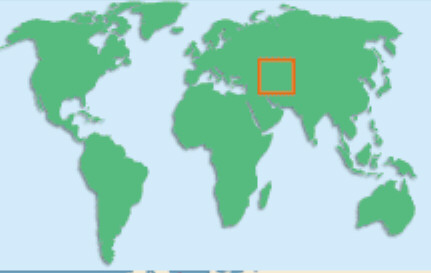
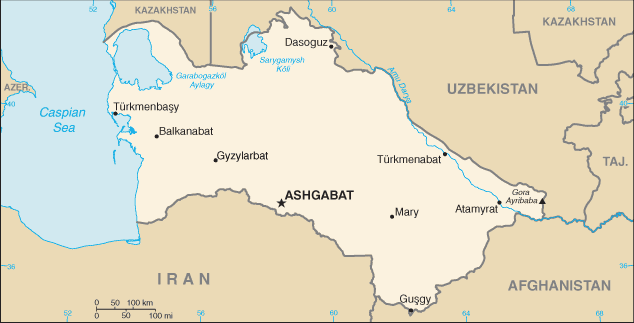
| Click map for larger view |
| Click flag for Country Report |




| TRAFFICKING IN PERSONS |
None reported.
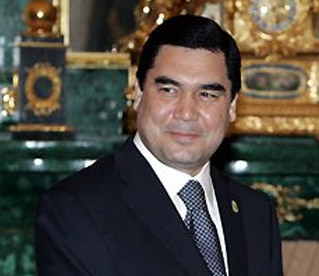
Gurbanguly Berdimuhamedow
President since 14 February 2007
President since 14 February 2007