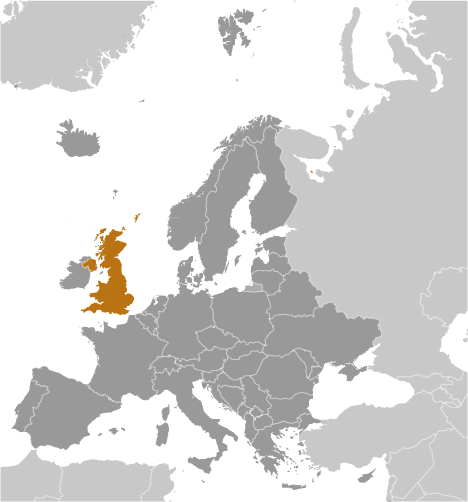

| UNITED KINGDOM United Kingdom of Great Britain and Northern Ireland United Kingdom of Great Britain and Northern Ireland Joined United Nations: 24 October 1945 Human Rights as assured by their constitution Click here Updated 19 December 2012 |

| CAPITAL |
| POPULATION |
| CHIEF OF STATE |
| SELECTION PROCESS |
London
63,047,162 (July 2012 est.)
David William Donald Cameron
Prime Minister since 11 May 2010
Prime Minister since 11 May 2010
The monarchy is hereditary
Next scheduled election: None
Next scheduled election: None
HEAD OF GOVERNMENT
SELECTION PROCESS
Following legislative elections, the leader of the majority party or
the leader of the majority coalition is usually appointed Prime
Minister by the Monarch Last election: 05 May 2010
Next scheduled election: 2015
the leader of the majority coalition is usually appointed Prime
Minister by the Monarch Last election: 05 May 2010
Next scheduled election: 2015
| DECLARATION OF HUMAN RIGHTS |
| ETHNIC GROUPS |
White (of which English 83.6%, Scottish 8.6%, Welsh 4.9%, Northern Irish 2.9%) 92.1%, black 2%, Indian 1.8%, Pakistani
1.3%, mixed 1.2%, other 1.6% (2001 census)
1.3%, mixed 1.2%, other 1.6% (2001 census)
| RELIGIONS |
Christian (Anglican, Roman Catholic, Presbyterian, Methodist) 71.6%, Muslim 2.7%, Hindu 1%, other 1.6%, unspecified or none
23.1% (2001 census)
23.1% (2001 census)
| GOVERNMENT STRUCTURE |
Constitutional monarchy with 47 boroughs, 36 counties, 29 London boroughs, 12 cities and boroughs, 10 districts, 12 cities, 3
royal boroughs; Legal system is based on common law tradition with early Roman and modern continental influences; has
nonbinding judicial review of Acts of Parliament under the Human Rights Act of 1998; accepts compulsory ICJ jurisdiction, with
reservations
Executive: The monarchy is hereditary; following legislative elections, the leader of the majority party or the leader of the majority
coalition is usually the prime minister; elections last held 5 May 2010 (next to be held by May 2015)
Legislative: bicameral Parliament consists of House of Lords (618 seats; consisting of approximately 500 life peers, 92 hereditary
peers, and 26 clergy) and House of Commons (646 seats since 2005 elections; members are elected by popular vote to serve
five-year terms unless the House is dissolved earlier)
elections: House of Lords - no elections (note - in 1999, as provided by the House of Lords Act, elections were held in the House
of Lords to determine the 92 hereditary peers who would remain there; elections are held only as vacancies in the hereditary
peerage arise); House of Commons - Last Held: 05 May 2010 (next to be held in 2015)
Judicial: House of Lords (highest court of appeal; several Lords of Appeal in Ordinary are appointed by the monarch for life);
Supreme Courts of England, Wales, and Northern Ireland (comprising the Courts of Appeal, the High Courts of Justice, and the
Crown Courts); Scotland's Court of Session and Court of the Justiciary
royal boroughs; Legal system is based on common law tradition with early Roman and modern continental influences; has
nonbinding judicial review of Acts of Parliament under the Human Rights Act of 1998; accepts compulsory ICJ jurisdiction, with
reservations
Executive: The monarchy is hereditary; following legislative elections, the leader of the majority party or the leader of the majority
coalition is usually the prime minister; elections last held 5 May 2010 (next to be held by May 2015)
Legislative: bicameral Parliament consists of House of Lords (618 seats; consisting of approximately 500 life peers, 92 hereditary
peers, and 26 clergy) and House of Commons (646 seats since 2005 elections; members are elected by popular vote to serve
five-year terms unless the House is dissolved earlier)
elections: House of Lords - no elections (note - in 1999, as provided by the House of Lords Act, elections were held in the House
of Lords to determine the 92 hereditary peers who would remain there; elections are held only as vacancies in the hereditary
peerage arise); House of Commons - Last Held: 05 May 2010 (next to be held in 2015)
Judicial: House of Lords (highest court of appeal; several Lords of Appeal in Ordinary are appointed by the monarch for life);
Supreme Courts of England, Wales, and Northern Ireland (comprising the Courts of Appeal, the High Courts of Justice, and the
Crown Courts); Scotland's Court of Session and Court of the Justiciary
| LANGUAGES |
English, Scots (about 30% of the population of Scotland), Scottish Gaelic (about 60,000 in Scotland), Welsh (about 20% of the
population of Wales), Irish (about 10% of the population of Northern Ireland), Cornish (some 2,000 to 3,000 in Cornwall)
population of Wales), Irish (about 10% of the population of Northern Ireland), Cornish (some 2,000 to 3,000 in Cornwall)
| BRIEF HISTORY |
England is the largest and most populous of the constituent countries of the United Kingdom. Archaeological evidence indicates that
what was southern old Britannia was colonised by humans long before the rest of the British Isles due to its more hospitable climate
between and during the various ice ages of the distant past. The area now known as Wales has been inhabited by modern humans
for at least 29,000 years, though continuous human habitation dates from the period after the last Ice age. The history of Scotland
begins around 10,000 years ago, when humans first began to inhabit Scotland after the end of the Devensian glaciation, the last ice
age. Few archaeological traces remain of this group, but their descendants and later Neolithic arrivals, particularly from the Iberian
Peninsula, were responsible for major Neolithic sites such as Newgrange. Up to and during the Roman occupation of Britain, Wales
was not a separate country; all the native inhabitants of Roman Britain spoke Brythonic languages (a sub-family of the Celtic
languages) and were regarded as Britons (or Brythons). Mediaeval Wales was rarely united but was under the rule of various native
principalities. When the land-hungry Normans invaded England, they naturally started pushing into the relatively weak Welsh
Marches, setting up a number of lordships in the Eastern part of the country and the border areas. In response, the usually fractious
Welsh, who still retained control of the north and west of Wales, started to unite around leaders such as Llywelyn the Great, who is
known to have described himself as "prince of all North Wales" by 1199. In 1282, King Edward I of England (1272–1307) finally
conquered the last remaining native Welsh principalities in north and west Wales[3] (an area roughly corresponding to the present
day counties of Anglesey, Caernarfonshire, Merionethshire, Ceredigion and Carmarthenshire). The Statute of Rhuddlan formally
established Edward's rule over Wales two years later. To appease the Welsh, Edward's son (later Edward II), who had been born
in Wales, was made Prince of Wales on 7 February 1301. Wales therefore took the status of Principality, which it held officially
between 1284 and 1536. The tradition of bestowing the style 'Prince[ess] of Wales' on the heir of the British Monarch continues to
the present day. The conquest of Ireland began in 1169 under Henry II (1154–89). At first, it was not strictly an English conquest,
as it was launched by a small group of Normans who were neither English nor acting on behalf of the English Crown. A
dispossessed Norman baron from Wales, Richard fitzGilbert de Clare ('Strongbow') teamed up with the exiled Irish king, Diarmuid
MacMorrough, to help him recover his kingdom of Leinster. The Normans consequently gained a territorial foothold in Ireland,
capturing Dublin in 1170. The success of Strongbow alarmed Henry II, who was worried that he was becoming too powerful.
Henry invaded Ireland himself in 1171. Dublin and the surrounding area came under his control. In 1541, the Irish Parliament was
ordered to change the status of Ireland to a kingdom, with King Henry VIII (1509–47) as its monarch; Henry, regarding the way he
styled himself as beyond the law of Parliament, and began to style himself as King of Ireland the next year. This created a union of
the Crowns. For the remainder of the 16th century, the Tudor monarchs expanded their control over Ireland from the small Pale
around Dublin to control over the whole island by 1603. The Tudor re-conquest of Ireland saw large-scale violence, culminating in
the Desmond Rebellions and the Nine Years War. Another feature of the sixteenth century was the creation of English Plantations of
Ireland, which attempted to extend English influence further into Ireland by confiscating land from Irish landowners and "planting"
colonies of English settlers in their place. Scotland was, (until 1707), an independent kingdom that for centuries had sought to resist
English attempts to interfere in her domestic and foreign affairs. Because of her climate, physical geography and population density,
the Kingdom of Scotland tended to be economically and militarily inferior to her southern neighbour, the Kingdom of England.
However, Scotland's "Auld Alliance" with France had been a cause of grave concern for successive English governments and
monarchs and the perceived need to isolate Scotland from Roman Catholic France was one of the driving forces in English foreign
policy towards Scotland, particularly during the Scottish Reformation. The accession of James VII's son, Charles I, in 1625 marked
the beginning of an intense schism between King and Parliament. Charles's adherence to the doctrine of the Divine Right of Kings
fuelled a vicious battle for supremacy between king and Parliament. The crisis culminated in the English Civil War (1642–49), saw
Charles's execution and ushered in a period of rule as a parliamentary Commonwealth (1649–53) followed by a period of personal
rule under the Parliamentarian veteran Oliver Cromwell as Lord Protector. Deeper political integration was a key policy of Queen
Anne, (1702–14), who succeeded to the throne in 1702 as the last Stuart monarch of England and Scotland (she became the only
Stuart monarch of Great Britain). Under the aegis of the Queen and her advisors a Bill of Union was drawn up and in 1706
negotiations between England and Scotland began in earnest. The circumstances of Scotland's acceptance of the Bill are to some
degree disputed. Scottish proponents believed that failure to accede to the Bill would result in the imposition of Union under less
favourable terms and months of fierce debate on both sides of the border were to follow, particularly in Scotland where debate
could often dissolve into civil disorder, most notably by the notorious 'Edinburgh Mob'. In 1707, the Acts of Union received their
Royal assent, thereby abolishing the Parliament of the Kingdom England and Parliament of the Kingdom of Scotland to create a
unified Kingdom of Great Britain with a single Parliament of Great Britain. Possibly influenced by the War of American
Independence (1775–1783), a united force of Irish volunteers used their influence to campaign for greater independence for the
Irish Parliament. The legislative union of Great Britain and Ireland was completed on 1 January 1801, in both the Irish and the
British parliaments, under the Act of Union 1800, changing the country's name to "United Kingdom of Great Britain and Ireland". A
unilaterally declared "Irish Republic" was proclaimed in Dublin in 1916 during the Easter Rising. The uprising was quelled swiftly by
British forces, and most of the leaders were shot. This led to a major increase in support in Ireland for the uprising, and in the
declaration of independence was ratified by Dáil Éireann, the self-declared Republic's parliament in 1919. An Anglo-Irish War was
fought between Crown forces and the Army of the Irish Republic between January 1919 and June 1921. The Anglo-Irish Treaty of
1921, negotiated between teams representing the British and Irish Republic's governments, and ratified by three parliaments,4
established the Irish Free State, which was initially a British Empire Dominion in the same vein as Canada or South Africa, but
subsequently left the British Commonwealth and became a republic after World War II, without constitutional ties with the United
Kingdom. Six northern, predominantly Protestant, Irish counties (Northern Ireland) have remained part of the United Kingdom.
Britain's control over its Empire loosened during the interwar period. Nationalism became stronger in other parts of the empire,
particularly in India and in Egypt. Between 1867 and 1910, the UK granted Australia, Canada, and New Zealand "Dominion"
status (near complete autonomy within the Empire). They became charter members of the British Commonwealth of Nations
(known as the Commonwealth of Nations since 1949), an informal but closely-knit association that succeeded the British Empire.
Beginning with the independence of India and Pakistan in 1947, the remainder of the British Empire was almost completely
dismantled. Today, most of Britain's former colonies belong to the Commonwealth, almost all of them as independent members.
There are, however, 13 former British colonies — including Bermuda, Gibraltar, the Falkland Islands, and others — which have
elected to continue their political links with London and are known as British Overseas Territories. After the difficult 70s and 80s
and a low point of Black Wednesday under the John Major government, the rest of the 1990s saw the beginning of a period of
continuous economic growth that has to date lasted over 15 years. The Good Friday Agreement saw what many believe to be the
beginning of the end of conflict in Northern Ireland; since this event, there has been very little armed violence over the issue. After
the economic boom of the 1980s a brief but severe recession occurred between 1990 and 1992 following the economic chaos of
Black Wednesday under government of John Major, who had succeeded Margaret Thatcher in 1990. However the rest of the
1990s saw the beginning of a period of continuous economic growth that lasted over 16 years and was greatly expanded under the
New Labour government of Tony Blair following his landslide election victory in 1997, with a rejuvenated party having abandoned
its commitment to policies including nuclear disarmament and nationalisation of key industries, and no reversal of the Thatcher-led
union reforms. On 11 September 1997, (on the 700th anniversary of the Scottish victory over the English at the Battle of Stirling
Bridge), a referendum was held on establishing a devolved Scottish Parliament. This resulted in an overwhelming 'yes' vote both to
establishing the parliament and granting it limited tax varying powers. Two weeks later, a referendum in Wales on establishing a
Welsh Assembly was also approved but with a very narrow majority. The first elections were held, and these bodies began to
operate, in 1999. In the 2001 General Election, the Labour Party won a second successive victory, though voter turnout dropped
to the lowest level for more than 80 years.Later that year, the September 11th attacks in the United States led to American
President George W. Bush launching the War on Terror, beginning with the invasion of Afghanistan aided by British troops in
October 2001. Thereafter, with the US focus shifting to Iraq, Tony Blair convinced the Labour and Conservative MPs to vote in
favour of supporting the 2003 invasion of Iraq, despite huge anti-war marches held in London and Glasgow. Forty-six thousand
British troops, one-third of the total strength of the Army's land forces, were deployed to assist with the invasion of Iraq and
thereafter British armed forces were responsible for security in southern Iraq. All British forces were withdrawn in 2010. The
Labour Party won the 2005 general election and a third consecutive term. Four Islamist home-grown terrorists plotted retaliation
and on 7 July 2005, a series of four suicide bombings struck London, killing 52 commuters, in addition to the four bombers . 2007
saw the first ever election victory for the pro-independence Scottish National Party (SNP) in the Scottish Parliament elections. They
formed a minority government with plans to hold a referendum before 2011 to seek a mandate "to negotiate with the Government of
the United Kingdom to achieve independence for Scotland." In the wake of the global economic crisis of 2008, the United
Kingdom economy contracted, experiencing negative economic growth throughout 2009. The announcement in November 2008
that the economy had shrunk for the first time since late 1992 brought an end to 16 years of continuous economic growth. The
United Kingdom General Election of 6 May 2010 resulted in the first hung parliament since 1974, with the Conservative Party
winning the largest number of seats, but falling short of the 326 seats required for an overall majority. Following this, the
Conservatives and the Liberal Democrats agreed to form the first coalition government for the UK since the end of the Second
World War, with David Cameron becoming Prime Minister and Nick Clegg Deputy Prime Minister. In late October 2011, the
Heads of Government of the Commonwealth of Nations voted to grant gender equality in the British royal succession, ending the
male-preference primogeniture that was mandated by the 1701 Act of Settlement. The amendment also ended the ban on the
monarch marrying a Catholic.
Source: Wikipedia: History of United Kingdom
what was southern old Britannia was colonised by humans long before the rest of the British Isles due to its more hospitable climate
between and during the various ice ages of the distant past. The area now known as Wales has been inhabited by modern humans
for at least 29,000 years, though continuous human habitation dates from the period after the last Ice age. The history of Scotland
begins around 10,000 years ago, when humans first began to inhabit Scotland after the end of the Devensian glaciation, the last ice
age. Few archaeological traces remain of this group, but their descendants and later Neolithic arrivals, particularly from the Iberian
Peninsula, were responsible for major Neolithic sites such as Newgrange. Up to and during the Roman occupation of Britain, Wales
was not a separate country; all the native inhabitants of Roman Britain spoke Brythonic languages (a sub-family of the Celtic
languages) and were regarded as Britons (or Brythons). Mediaeval Wales was rarely united but was under the rule of various native
principalities. When the land-hungry Normans invaded England, they naturally started pushing into the relatively weak Welsh
Marches, setting up a number of lordships in the Eastern part of the country and the border areas. In response, the usually fractious
Welsh, who still retained control of the north and west of Wales, started to unite around leaders such as Llywelyn the Great, who is
known to have described himself as "prince of all North Wales" by 1199. In 1282, King Edward I of England (1272–1307) finally
conquered the last remaining native Welsh principalities in north and west Wales[3] (an area roughly corresponding to the present
day counties of Anglesey, Caernarfonshire, Merionethshire, Ceredigion and Carmarthenshire). The Statute of Rhuddlan formally
established Edward's rule over Wales two years later. To appease the Welsh, Edward's son (later Edward II), who had been born
in Wales, was made Prince of Wales on 7 February 1301. Wales therefore took the status of Principality, which it held officially
between 1284 and 1536. The tradition of bestowing the style 'Prince[ess] of Wales' on the heir of the British Monarch continues to
the present day. The conquest of Ireland began in 1169 under Henry II (1154–89). At first, it was not strictly an English conquest,
as it was launched by a small group of Normans who were neither English nor acting on behalf of the English Crown. A
dispossessed Norman baron from Wales, Richard fitzGilbert de Clare ('Strongbow') teamed up with the exiled Irish king, Diarmuid
MacMorrough, to help him recover his kingdom of Leinster. The Normans consequently gained a territorial foothold in Ireland,
capturing Dublin in 1170. The success of Strongbow alarmed Henry II, who was worried that he was becoming too powerful.
Henry invaded Ireland himself in 1171. Dublin and the surrounding area came under his control. In 1541, the Irish Parliament was
ordered to change the status of Ireland to a kingdom, with King Henry VIII (1509–47) as its monarch; Henry, regarding the way he
styled himself as beyond the law of Parliament, and began to style himself as King of Ireland the next year. This created a union of
the Crowns. For the remainder of the 16th century, the Tudor monarchs expanded their control over Ireland from the small Pale
around Dublin to control over the whole island by 1603. The Tudor re-conquest of Ireland saw large-scale violence, culminating in
the Desmond Rebellions and the Nine Years War. Another feature of the sixteenth century was the creation of English Plantations of
Ireland, which attempted to extend English influence further into Ireland by confiscating land from Irish landowners and "planting"
colonies of English settlers in their place. Scotland was, (until 1707), an independent kingdom that for centuries had sought to resist
English attempts to interfere in her domestic and foreign affairs. Because of her climate, physical geography and population density,
the Kingdom of Scotland tended to be economically and militarily inferior to her southern neighbour, the Kingdom of England.
However, Scotland's "Auld Alliance" with France had been a cause of grave concern for successive English governments and
monarchs and the perceived need to isolate Scotland from Roman Catholic France was one of the driving forces in English foreign
policy towards Scotland, particularly during the Scottish Reformation. The accession of James VII's son, Charles I, in 1625 marked
the beginning of an intense schism between King and Parliament. Charles's adherence to the doctrine of the Divine Right of Kings
fuelled a vicious battle for supremacy between king and Parliament. The crisis culminated in the English Civil War (1642–49), saw
Charles's execution and ushered in a period of rule as a parliamentary Commonwealth (1649–53) followed by a period of personal
rule under the Parliamentarian veteran Oliver Cromwell as Lord Protector. Deeper political integration was a key policy of Queen
Anne, (1702–14), who succeeded to the throne in 1702 as the last Stuart monarch of England and Scotland (she became the only
Stuart monarch of Great Britain). Under the aegis of the Queen and her advisors a Bill of Union was drawn up and in 1706
negotiations between England and Scotland began in earnest. The circumstances of Scotland's acceptance of the Bill are to some
degree disputed. Scottish proponents believed that failure to accede to the Bill would result in the imposition of Union under less
favourable terms and months of fierce debate on both sides of the border were to follow, particularly in Scotland where debate
could often dissolve into civil disorder, most notably by the notorious 'Edinburgh Mob'. In 1707, the Acts of Union received their
Royal assent, thereby abolishing the Parliament of the Kingdom England and Parliament of the Kingdom of Scotland to create a
unified Kingdom of Great Britain with a single Parliament of Great Britain. Possibly influenced by the War of American
Independence (1775–1783), a united force of Irish volunteers used their influence to campaign for greater independence for the
Irish Parliament. The legislative union of Great Britain and Ireland was completed on 1 January 1801, in both the Irish and the
British parliaments, under the Act of Union 1800, changing the country's name to "United Kingdom of Great Britain and Ireland". A
unilaterally declared "Irish Republic" was proclaimed in Dublin in 1916 during the Easter Rising. The uprising was quelled swiftly by
British forces, and most of the leaders were shot. This led to a major increase in support in Ireland for the uprising, and in the
declaration of independence was ratified by Dáil Éireann, the self-declared Republic's parliament in 1919. An Anglo-Irish War was
fought between Crown forces and the Army of the Irish Republic between January 1919 and June 1921. The Anglo-Irish Treaty of
1921, negotiated between teams representing the British and Irish Republic's governments, and ratified by three parliaments,4
established the Irish Free State, which was initially a British Empire Dominion in the same vein as Canada or South Africa, but
subsequently left the British Commonwealth and became a republic after World War II, without constitutional ties with the United
Kingdom. Six northern, predominantly Protestant, Irish counties (Northern Ireland) have remained part of the United Kingdom.
Britain's control over its Empire loosened during the interwar period. Nationalism became stronger in other parts of the empire,
particularly in India and in Egypt. Between 1867 and 1910, the UK granted Australia, Canada, and New Zealand "Dominion"
status (near complete autonomy within the Empire). They became charter members of the British Commonwealth of Nations
(known as the Commonwealth of Nations since 1949), an informal but closely-knit association that succeeded the British Empire.
Beginning with the independence of India and Pakistan in 1947, the remainder of the British Empire was almost completely
dismantled. Today, most of Britain's former colonies belong to the Commonwealth, almost all of them as independent members.
There are, however, 13 former British colonies — including Bermuda, Gibraltar, the Falkland Islands, and others — which have
elected to continue their political links with London and are known as British Overseas Territories. After the difficult 70s and 80s
and a low point of Black Wednesday under the John Major government, the rest of the 1990s saw the beginning of a period of
continuous economic growth that has to date lasted over 15 years. The Good Friday Agreement saw what many believe to be the
beginning of the end of conflict in Northern Ireland; since this event, there has been very little armed violence over the issue. After
the economic boom of the 1980s a brief but severe recession occurred between 1990 and 1992 following the economic chaos of
Black Wednesday under government of John Major, who had succeeded Margaret Thatcher in 1990. However the rest of the
1990s saw the beginning of a period of continuous economic growth that lasted over 16 years and was greatly expanded under the
New Labour government of Tony Blair following his landslide election victory in 1997, with a rejuvenated party having abandoned
its commitment to policies including nuclear disarmament and nationalisation of key industries, and no reversal of the Thatcher-led
union reforms. On 11 September 1997, (on the 700th anniversary of the Scottish victory over the English at the Battle of Stirling
Bridge), a referendum was held on establishing a devolved Scottish Parliament. This resulted in an overwhelming 'yes' vote both to
establishing the parliament and granting it limited tax varying powers. Two weeks later, a referendum in Wales on establishing a
Welsh Assembly was also approved but with a very narrow majority. The first elections were held, and these bodies began to
operate, in 1999. In the 2001 General Election, the Labour Party won a second successive victory, though voter turnout dropped
to the lowest level for more than 80 years.Later that year, the September 11th attacks in the United States led to American
President George W. Bush launching the War on Terror, beginning with the invasion of Afghanistan aided by British troops in
October 2001. Thereafter, with the US focus shifting to Iraq, Tony Blair convinced the Labour and Conservative MPs to vote in
favour of supporting the 2003 invasion of Iraq, despite huge anti-war marches held in London and Glasgow. Forty-six thousand
British troops, one-third of the total strength of the Army's land forces, were deployed to assist with the invasion of Iraq and
thereafter British armed forces were responsible for security in southern Iraq. All British forces were withdrawn in 2010. The
Labour Party won the 2005 general election and a third consecutive term. Four Islamist home-grown terrorists plotted retaliation
and on 7 July 2005, a series of four suicide bombings struck London, killing 52 commuters, in addition to the four bombers . 2007
saw the first ever election victory for the pro-independence Scottish National Party (SNP) in the Scottish Parliament elections. They
formed a minority government with plans to hold a referendum before 2011 to seek a mandate "to negotiate with the Government of
the United Kingdom to achieve independence for Scotland." In the wake of the global economic crisis of 2008, the United
Kingdom economy contracted, experiencing negative economic growth throughout 2009. The announcement in November 2008
that the economy had shrunk for the first time since late 1992 brought an end to 16 years of continuous economic growth. The
United Kingdom General Election of 6 May 2010 resulted in the first hung parliament since 1974, with the Conservative Party
winning the largest number of seats, but falling short of the 326 seats required for an overall majority. Following this, the
Conservatives and the Liberal Democrats agreed to form the first coalition government for the UK since the end of the Second
World War, with David Cameron becoming Prime Minister and Nick Clegg Deputy Prime Minister. In late October 2011, the
Heads of Government of the Commonwealth of Nations voted to grant gender equality in the British royal succession, ending the
male-preference primogeniture that was mandated by the 1701 Act of Settlement. The amendment also ended the ban on the
monarch marrying a Catholic.
Source: Wikipedia: History of United Kingdom
| ECONOMIC OVERVIEW |
The UK, a leading trading power and financial center, is the third largest economy in Europe after Germany and France. Over the
past two decades, the government has greatly reduced public ownership and contained the growth of social welfare programs.
Agriculture is intensive, highly mechanized, and efficient by European standards, producing about 60% of food needs with less than
2% of the labor force. The UK has large coal, natural gas, and oil resources, but its oil and natural gas reserves are declining and
the UK became a net importer of energy in 2005. Services, particularly banking, insurance, and business services, account by far
for the largest proportion of GDP while industry continues to decline in importance. After emerging from recession in 1992, Britain's
economy enjoyed the longest period of expansion on record during which time growth outpaced most of Western Europe. In 2008,
however, the global financial crisis hit the economy particularly hard, due to the importance of its financial sector. Sharply declining
home prices, high consumer debt, and the global economic slowdown compounded Britain's economic problems, pushing the
economy into recession in the latter half of 2008 and prompting the then BROWN (Labour) government to implement a number of
measures to stimulate the economy and stabilize the financial markets; these include nationalizing parts of the banking system,
temporarily cutting taxes, suspending public sector borrowing rules, and moving forward public spending on capital projects. Facing
burgeoning public deficits and debt levels, in 2010 the CAMERON-led coalition government (between Conservatives and Liberal
Democrats) initiated a five-year austerity program, which aims to lower London's budget deficit from over 10% of GDP in 2010 to
nearly 1% by 2015. In November 2011, Chancellor of the Exchequer George OSBORNE announced additional austerity
measures through 2017 because of slower-than-expected economic growth and the impact of the euro-zone debt crisis. The
CAMERON government raised the value added tax from 17.5% to 20% in 2011. It has pledged to reduce the corporation tax rate
to 23% by 2015. The Bank of England (BoE) implemented an asset purchase program of up to £325 billion (approximately $525
billion) as of February 2011. During times of economic crisis, the BoE coordinates interest rate moves with the European Central
Bank, but Britain remains outside the European Economic and Monetary Union (EMU).
Source: CIA World Factbook (select United Kingdom)
past two decades, the government has greatly reduced public ownership and contained the growth of social welfare programs.
Agriculture is intensive, highly mechanized, and efficient by European standards, producing about 60% of food needs with less than
2% of the labor force. The UK has large coal, natural gas, and oil resources, but its oil and natural gas reserves are declining and
the UK became a net importer of energy in 2005. Services, particularly banking, insurance, and business services, account by far
for the largest proportion of GDP while industry continues to decline in importance. After emerging from recession in 1992, Britain's
economy enjoyed the longest period of expansion on record during which time growth outpaced most of Western Europe. In 2008,
however, the global financial crisis hit the economy particularly hard, due to the importance of its financial sector. Sharply declining
home prices, high consumer debt, and the global economic slowdown compounded Britain's economic problems, pushing the
economy into recession in the latter half of 2008 and prompting the then BROWN (Labour) government to implement a number of
measures to stimulate the economy and stabilize the financial markets; these include nationalizing parts of the banking system,
temporarily cutting taxes, suspending public sector borrowing rules, and moving forward public spending on capital projects. Facing
burgeoning public deficits and debt levels, in 2010 the CAMERON-led coalition government (between Conservatives and Liberal
Democrats) initiated a five-year austerity program, which aims to lower London's budget deficit from over 10% of GDP in 2010 to
nearly 1% by 2015. In November 2011, Chancellor of the Exchequer George OSBORNE announced additional austerity
measures through 2017 because of slower-than-expected economic growth and the impact of the euro-zone debt crisis. The
CAMERON government raised the value added tax from 17.5% to 20% in 2011. It has pledged to reduce the corporation tax rate
to 23% by 2015. The Bank of England (BoE) implemented an asset purchase program of up to £325 billion (approximately $525
billion) as of February 2011. During times of economic crisis, the BoE coordinates interest rate moves with the European Central
Bank, but Britain remains outside the European Economic and Monetary Union (EMU).
Source: CIA World Factbook (select United Kingdom)
| POLITICAL CLIMATE |
The UK is a multi-party system and since the 1920s, the two largest political parties have been the Conservative Party and the
Labour Party. Though coalition and minority governments have been an occasional feature of Parliamentary politics, the first-past-
the-post electoral system used for general elections tends to maintain the dominance of these two parties, though each has in the
past century relied upon a third party to deliver a working majority in Parliament.
The Liberal Democrats, a party formed by the merger of the former Liberal Party and Social Democratic Party in 1988, is the third
largest party in the British parliament. It seeks a reform of the electoral system to address the disproportionate dominance of the
two main parties that results from the current system.
The United Kingdom general election of 2010 was held on 6 May, to elect members to the House of Commons. The general
election took place in 649 constituencies across the United Kingdom, under the first-past-the-post system, for seats in the House
of Commons. The Conservative Party under David Cameron won the largest number of votes and seats, but fell short of the 326
seats needed to have an overall majority. It was the first time since 1974, and only the second time since the Second World War,
that a British general election returned a hung parliament.
The third largest party, the Liberal Democrats, suffered a net loss of five seats despite an apparent breakthrough in opinion polls,
which started after the first televised debate, when many thought leader Nick Clegg performed well by separating himself from the
two-party establishment. Nevertheless, Clegg's party still achieved their largest popular vote since their creation in 1988, and found
themselves in a pivotal role in the formation of the new government. On 11 May, as coalition talks between the Conservatives and
the Liberal Democrats seemed to be drawing to a successful conclusion, Labour leader Gordon Brown, whose party had slid from
first to second place, announced his resignation as Prime Minister. Within an hour, Conservative leader David Cameron took up
that role. Just after midnight on 12 May 2010, the Liberal Democrats emerged from the meeting of their Parliamentary party and
Federal Executive to announce that the coalition deal had been "approved overwhelmingly", meaning that David Cameron would be
leading a coalition government of the Liberal Democrats and Conservatives.
The election was unique in many ways. The Green Party won its first seat in the Commons, and the Alliance Party won its first seat
at the ballot box. 35% of voters supported a party other than Labour or the Conservatives—the highest such figure since the 1918
general election. It was the first time since 1979 that none of the three main party leaders had headed a previous general election
campaign. For the first time in a British election, the three main party leaders engaged in a series of televised debates.
The constitution is uncodified, being made up of constitutional conventions, statutes and other elements.
Source: Wikipedia: Politics of United Kingdom
Labour Party. Though coalition and minority governments have been an occasional feature of Parliamentary politics, the first-past-
the-post electoral system used for general elections tends to maintain the dominance of these two parties, though each has in the
past century relied upon a third party to deliver a working majority in Parliament.
The Liberal Democrats, a party formed by the merger of the former Liberal Party and Social Democratic Party in 1988, is the third
largest party in the British parliament. It seeks a reform of the electoral system to address the disproportionate dominance of the
two main parties that results from the current system.
The United Kingdom general election of 2010 was held on 6 May, to elect members to the House of Commons. The general
election took place in 649 constituencies across the United Kingdom, under the first-past-the-post system, for seats in the House
of Commons. The Conservative Party under David Cameron won the largest number of votes and seats, but fell short of the 326
seats needed to have an overall majority. It was the first time since 1974, and only the second time since the Second World War,
that a British general election returned a hung parliament.
The third largest party, the Liberal Democrats, suffered a net loss of five seats despite an apparent breakthrough in opinion polls,
which started after the first televised debate, when many thought leader Nick Clegg performed well by separating himself from the
two-party establishment. Nevertheless, Clegg's party still achieved their largest popular vote since their creation in 1988, and found
themselves in a pivotal role in the formation of the new government. On 11 May, as coalition talks between the Conservatives and
the Liberal Democrats seemed to be drawing to a successful conclusion, Labour leader Gordon Brown, whose party had slid from
first to second place, announced his resignation as Prime Minister. Within an hour, Conservative leader David Cameron took up
that role. Just after midnight on 12 May 2010, the Liberal Democrats emerged from the meeting of their Parliamentary party and
Federal Executive to announce that the coalition deal had been "approved overwhelmingly", meaning that David Cameron would be
leading a coalition government of the Liberal Democrats and Conservatives.
The election was unique in many ways. The Green Party won its first seat in the Commons, and the Alliance Party won its first seat
at the ballot box. 35% of voters supported a party other than Labour or the Conservatives—the highest such figure since the 1918
general election. It was the first time since 1979 that none of the three main party leaders had headed a previous general election
campaign. For the first time in a British election, the three main party leaders engaged in a series of televised debates.
The constitution is uncodified, being made up of constitutional conventions, statutes and other elements.
Source: Wikipedia: Politics of United Kingdom
| INTERNATIONAL DISPUTES |
in 2002, Gibraltar residents voted overwhelmingly by referendum to reject any "shared sovereignty" arrangement between the UK
and Spain; the Government of Gibraltar insisted on equal participation in talks between the two countries; Spain disapproved of UK
plans to grant Gibraltar greater autonomy; Mauritius and Seychelles claim the Chagos Archipelago (British Indian Ocean Territory);
in 2001, the former inhabitants of the archipelago, evicted 1967 - 1973, were granted U.K. citizenship and the right of return,
followed by Orders in Council in 2004 that banned rehabitation, a High Court ruling reversed the ban, a Court of Appeal refusal to
hear the case, and a Law Lords' decision in 2008 denied the right of return; in addition, the United Kingdom created the world's
largest marine protection area around the Chagos islands prohibiting the extraction of any natural resources therein; UK rejects
sovereignty talks requested by Argentina, which still claims the Falkland Islands (Islas Malvinas) and South Georgia and the South
Sandwich Islands; territorial claim in Antarctica (British Antarctic Territory) overlaps Argentine claim and partially overlaps Chilean
claim; Iceland, the UK, and Ireland dispute Denmark's claim that the Faroe Islands' continental shelf extends beyond 200 nm
and Spain; the Government of Gibraltar insisted on equal participation in talks between the two countries; Spain disapproved of UK
plans to grant Gibraltar greater autonomy; Mauritius and Seychelles claim the Chagos Archipelago (British Indian Ocean Territory);
in 2001, the former inhabitants of the archipelago, evicted 1967 - 1973, were granted U.K. citizenship and the right of return,
followed by Orders in Council in 2004 that banned rehabitation, a High Court ruling reversed the ban, a Court of Appeal refusal to
hear the case, and a Law Lords' decision in 2008 denied the right of return; in addition, the United Kingdom created the world's
largest marine protection area around the Chagos islands prohibiting the extraction of any natural resources therein; UK rejects
sovereignty talks requested by Argentina, which still claims the Falkland Islands (Islas Malvinas) and South Georgia and the South
Sandwich Islands; territorial claim in Antarctica (British Antarctic Territory) overlaps Argentine claim and partially overlaps Chilean
claim; Iceland, the UK, and Ireland dispute Denmark's claim that the Faroe Islands' continental shelf extends beyond 200 nm


| REFUGEES AND INTERNALLY DISPLACED PERSONS (IDPS) |
None reported.
| ILLICIT DRUGS |
Producer of limited amounts of synthetic drugs and synthetic precursor chemicals; major consumer of Southwest Asian heroin,
Latin American cocaine, and synthetic drugs; money-laundering center.
Latin American cocaine, and synthetic drugs; money-laundering center.
| HUMAN RIGHTS STATEMENTS, ANALYSIS AND CRITIQUES |
2011 Human Rights Report: United Kingdom
Bureau of Democracy, Human Rights, and Labor
2011 Country Reports on Human Rights Practices
May 25, 2012
The United Kingdom of Great Britain and Northern Ireland (the UK) is a constitutional monarchy with a multiparty, parliamentary form
of government. Citizens elect representatives to the House of Commons, the lower chamber of the bicameral Parliament. They last did so
in free and fair elections in May 2010. Members of the upper chamber, the House of Lords, occupy appointed or hereditary seats.
Scotland, Northern Ireland, and Wales each have elected legislative bodies and devolved administrations, with varying degrees of
legislative and executive powers. The UK has 14 overseas territories. Each of the overseas territories has its own constitution while the
UK government is responsible for issues relating to external affairs, security, and defense. Security forces throughout the UK and its
territories reported to civilian authorities.
During the year there were significant reported incidences of sexual crimes, including the sexual exploitation of children. Racial and
ethnic discrimination continued to be a problem in many areas. Child labor was a reported problem, both in the UK and in some of its
overseas territories.
Other human rights problems include reported deaths in prison, threatened eviction of rioters’ families from their public housing after the
August riots, unequal pay for equal work between men and women, child abuse, anti-Semitic crimes, relations with Travellers (a distinct
nomadic ethnic group with its own history and culture), trafficking in persons, homophobic crimes, and limitations on the freedom to
strike. In Bermuda the law provides no protection against discrimination based on sexual orientation or age.
The government investigated all allegations of official wrongdoing, and there were no reported cases of impunity.
Click here to read more »
Bureau of Democracy, Human Rights, and Labor
2011 Country Reports on Human Rights Practices
May 25, 2012
The United Kingdom of Great Britain and Northern Ireland (the UK) is a constitutional monarchy with a multiparty, parliamentary form
of government. Citizens elect representatives to the House of Commons, the lower chamber of the bicameral Parliament. They last did so
in free and fair elections in May 2010. Members of the upper chamber, the House of Lords, occupy appointed or hereditary seats.
Scotland, Northern Ireland, and Wales each have elected legislative bodies and devolved administrations, with varying degrees of
legislative and executive powers. The UK has 14 overseas territories. Each of the overseas territories has its own constitution while the
UK government is responsible for issues relating to external affairs, security, and defense. Security forces throughout the UK and its
territories reported to civilian authorities.
During the year there were significant reported incidences of sexual crimes, including the sexual exploitation of children. Racial and
ethnic discrimination continued to be a problem in many areas. Child labor was a reported problem, both in the UK and in some of its
overseas territories.
Other human rights problems include reported deaths in prison, threatened eviction of rioters’ families from their public housing after the
August riots, unequal pay for equal work between men and women, child abuse, anti-Semitic crimes, relations with Travellers (a distinct
nomadic ethnic group with its own history and culture), trafficking in persons, homophobic crimes, and limitations on the freedom to
strike. In Bermuda the law provides no protection against discrimination based on sexual orientation or age.
The government investigated all allegations of official wrongdoing, and there were no reported cases of impunity.
Click here to read more »
To the Committee on the Elimination of Racial Discrimination
Seventy-ninth session
August 8 / August - 2 September / September 2011
Consideration of reports submitted by States Parties under article 9 Of the Convention
Concluding Observations of the Committee on the Elimination of Racial Discrimination
United Kingdom of Great Britain and Northern Ireland
1 September 2011
A - Introduction
2 - The Committee welcomes the PAL detailed report submitted by the State party, despite some delays and expresses its appreciation
for the oral responses candid and constructive by the delegation during the consideration of the report.
3 - The Committee commends the State party to include in its periodic new information and specific For the implementation of the
Convention in the regions beyond the seas under their administration.
4 - The Committee also notes with appreciation the contribution to the deliberations of the Commission for Equality and Human
Rights, and human rights commissions in Scotland, Wales and Northern Ireland and non-governmental organizations
Others consulted in the preparation of the report.
B - Positive aspects
5 - The Committee welcomes the remarkable efforts made by the State party to address racial discrimination and inequality and
recognizes achieving significant progress in this regard.
6 - The Committee welcomes the enactment of the Equality Act 2010 as with what's in improving legislation Combat discrimination.
7 - The Committee notes with appreciation the establishment of the Commission for Equality and Human Rights under Law; Equality for
2006
8 - The Committee also notes with appreciation the adoption of the law on racial and religious hatred. For 2006, and the start of the
implementation of the Inter-Governmental Action Plan to combat hate crimes in 14 September / September 2009
C. Concerns and recommendations
9 - despite the fact that the underlying causes of the riots and vandalism in the State Party in August / August 2011 have not yet been
determined fully, noting the existence swab Ethnic this case should not be overlooked. The Committee regrets that some responses
Policy issued by the State party about the riots may disproportionately affect the The poor and groups belonging to ethnic minorities,
particularly abolition of welfare benefits plans Social for people who have been convicted of misdemeanors related to the riots, although
they Not imprisoned, and the evacuation of the families of persons pain Tortin in the riots of government housing. These measures
threaten to increase fueling ethnic relations and inequalities in the State party. (Articles 2, 4 and 6)
The Committee recommends that the State party to investigate fully the underlying causes of work Riots and vandalism, and to submit to
the Commission information on the results of its investigation as soon as Possible. The Committee urges the State party to ensure that in
the process of investigating issues related to Riots and sued, respect for the rule of law cam not due Legal and impartiality. The State
party should ensure that in the context of its response to take policies Prospective foster equality among ethnic groups and Oiamha in the
State party.
Click here to read more »
Seventy-ninth session
August 8 / August - 2 September / September 2011
Consideration of reports submitted by States Parties under article 9 Of the Convention
Concluding Observations of the Committee on the Elimination of Racial Discrimination
United Kingdom of Great Britain and Northern Ireland
1 September 2011
A - Introduction
2 - The Committee welcomes the PAL detailed report submitted by the State party, despite some delays and expresses its appreciation
for the oral responses candid and constructive by the delegation during the consideration of the report.
3 - The Committee commends the State party to include in its periodic new information and specific For the implementation of the
Convention in the regions beyond the seas under their administration.
4 - The Committee also notes with appreciation the contribution to the deliberations of the Commission for Equality and Human
Rights, and human rights commissions in Scotland, Wales and Northern Ireland and non-governmental organizations
Others consulted in the preparation of the report.
B - Positive aspects
5 - The Committee welcomes the remarkable efforts made by the State party to address racial discrimination and inequality and
recognizes achieving significant progress in this regard.
6 - The Committee welcomes the enactment of the Equality Act 2010 as with what's in improving legislation Combat discrimination.
7 - The Committee notes with appreciation the establishment of the Commission for Equality and Human Rights under Law; Equality for
2006
8 - The Committee also notes with appreciation the adoption of the law on racial and religious hatred. For 2006, and the start of the
implementation of the Inter-Governmental Action Plan to combat hate crimes in 14 September / September 2009
C. Concerns and recommendations
9 - despite the fact that the underlying causes of the riots and vandalism in the State Party in August / August 2011 have not yet been
determined fully, noting the existence swab Ethnic this case should not be overlooked. The Committee regrets that some responses
Policy issued by the State party about the riots may disproportionately affect the The poor and groups belonging to ethnic minorities,
particularly abolition of welfare benefits plans Social for people who have been convicted of misdemeanors related to the riots, although
they Not imprisoned, and the evacuation of the families of persons pain Tortin in the riots of government housing. These measures
threaten to increase fueling ethnic relations and inequalities in the State party. (Articles 2, 4 and 6)
The Committee recommends that the State party to investigate fully the underlying causes of work Riots and vandalism, and to submit to
the Commission information on the results of its investigation as soon as Possible. The Committee urges the State party to ensure that in
the process of investigating issues related to Riots and sued, respect for the rule of law cam not due Legal and impartiality. The State
party should ensure that in the context of its response to take policies Prospective foster equality among ethnic groups and Oiamha in the
State party.
Click here to read more »
Freedom In The World 2012 Report
Political Rights Score: 1
Civil Liberties Score: 1
Status: Free
Overview
In 2011, widespread telephone hacking by News of the World journalists was uncovered, leading the paper’s owner, U.S.-based News
Corporation, to close it in July. The ensuing investigations also revealed that police had failed to properly investigate earlier reports of
hacking, and that officers had received money from News of the World reporters. Separately, voters rejected altering the electoral
system in a national referendum held in May, and in July London and other cities were rocked by youth riots, which the police struggled
to contain.
The new government faced a daunting economic situation, including a ballooning budget deficit. In October, Prime Minister Cameron
announced a severe program of tax increases and spending cuts, prompting large public protests. The austerity measures came into full
swing in 2011, and economic growth barely remained in positive territory.
In March 2011, referendum voters in Wales endorsed a reform that increased the autonomy of the Welsh Assembly, giving it authority
to make laws in 20 subject areas without consulting Parliament.
In a national referendum in May, proposed by the Liberal Democrats and carried out as part of the coalition agreement, voters
considered a new “instant runoff” electoral system under which they would rank parliamentary candidates by preference, and a
candidate would have to receive more than 50 percent of the first-choice votes to win outright. Some 40 percent of eligible voters turned
out for the plebiscite, and two-thirds rejected the new method in favor of the existing first-past-the-post system. Elections were held the
same day for the legislatures of Northern Ireland and Scotland. Sinn Fein and the DUP consolidated their control in Northern Ireland, and
the ruling Scottish National Party (SNP) made major gains in Scotland.
In July, the weekly tabloid News of the World was closed by its owner—media mogul Rupert Murdoch’s News Corporation—amid
mounting allegations that its reporters had hacked into the telephone messages of hundreds of public figures and crime victims over the
past several years. Related investigations, including those by other media outlets, exposed corrupt links between reporters and police,
who had failed to adequately pursue previous reports of hacking or alert possible victims, and allegedly sold favors and information to
News of the World journalists in some cases.
Click here to read more »
Political Rights Score: 1
Civil Liberties Score: 1
Status: Free
Overview
In 2011, widespread telephone hacking by News of the World journalists was uncovered, leading the paper’s owner, U.S.-based News
Corporation, to close it in July. The ensuing investigations also revealed that police had failed to properly investigate earlier reports of
hacking, and that officers had received money from News of the World reporters. Separately, voters rejected altering the electoral
system in a national referendum held in May, and in July London and other cities were rocked by youth riots, which the police struggled
to contain.
The new government faced a daunting economic situation, including a ballooning budget deficit. In October, Prime Minister Cameron
announced a severe program of tax increases and spending cuts, prompting large public protests. The austerity measures came into full
swing in 2011, and economic growth barely remained in positive territory.
In March 2011, referendum voters in Wales endorsed a reform that increased the autonomy of the Welsh Assembly, giving it authority
to make laws in 20 subject areas without consulting Parliament.
In a national referendum in May, proposed by the Liberal Democrats and carried out as part of the coalition agreement, voters
considered a new “instant runoff” electoral system under which they would rank parliamentary candidates by preference, and a
candidate would have to receive more than 50 percent of the first-choice votes to win outright. Some 40 percent of eligible voters turned
out for the plebiscite, and two-thirds rejected the new method in favor of the existing first-past-the-post system. Elections were held the
same day for the legislatures of Northern Ireland and Scotland. Sinn Fein and the DUP consolidated their control in Northern Ireland, and
the ruling Scottish National Party (SNP) made major gains in Scotland.
In July, the weekly tabloid News of the World was closed by its owner—media mogul Rupert Murdoch’s News Corporation—amid
mounting allegations that its reporters had hacked into the telephone messages of hundreds of public figures and crime victims over the
past several years. Related investigations, including those by other media outlets, exposed corrupt links between reporters and police,
who had failed to adequately pursue previous reports of hacking or alert possible victims, and allegedly sold favors and information to
News of the World journalists in some cases.
Click here to read more »
15 October 2012
UK: New report slams secret justice ahead of debate on controversial bill
The United Kingdom government’s plans for a substantial extension of the use of secret evidence in the justice system have been heavily
criticized in a new Amnesty International report published today.
The proposals would allow the government to rely on secret evidence in civil cases, including cases of alleged government responsibility
for human rights violations such as torture and enforced disappearance.
The measures, contained in the Justice and Security Bill due to be debated in the House of Lords in the coming weeks, would allow the
government to use so-called “closed material procedures” to prevent individuals and their lawyers from seeing documents even when
they show the involvement of UK officials in wrongdoing, no matter how grave. If such disclosures are deemed to harm “national
security”, then the material can be withheld, potentially indefinitely, even if there is an overwhelming public interest in disclosure.
The government can already rely on secret evidence in at least 21 different contexts - including in appeals against the imposition of
highly restrictive Terrorist Prevention and Investigation Measures (the successor to “control orders”), and national security deportation
proceedings.
Amnesty International's 50-page report, Left In The Dark: the use of secret evidence in the United Kingdom, is highly critical of the
unprecedented growth in the use of secret justice measures in the UK in the last decade, seeing it as a “radical departure” from the basic
requirements of fairness in civil and criminal cases.
The report includes critical testimony from some 25 barristers and solicitors who have acted in such cases, and three “special
advocates” who are allowed to see secret evidence but not allowed to discuss it with the person affected.
One of the lawyers, Richard Hermer QC, said:
“The idea that you could go to court having had the most terrible things happen to you to sue for justice and be excluded from the
proceedings and at the end just be told you’ve lost without being given the reasons for that decision, runs contrary to all notions of
fairness, the rule of law and open justice.”
The report also includes testimony from a number of individuals who have been subjected to measures based on secret evidence, who
describe the severe impact of the measures on them and their families. One man, a 43-year-old - who can only be publicly identified as
“G” - has been subjected to detention or required to live under highly restrictive conditions over a ten-year period, based in large part on
secret evidence he has never seen. “G” told Amnesty:
Click here to read more »
UK: New report slams secret justice ahead of debate on controversial bill
The United Kingdom government’s plans for a substantial extension of the use of secret evidence in the justice system have been heavily
criticized in a new Amnesty International report published today.
The proposals would allow the government to rely on secret evidence in civil cases, including cases of alleged government responsibility
for human rights violations such as torture and enforced disappearance.
The measures, contained in the Justice and Security Bill due to be debated in the House of Lords in the coming weeks, would allow the
government to use so-called “closed material procedures” to prevent individuals and their lawyers from seeing documents even when
they show the involvement of UK officials in wrongdoing, no matter how grave. If such disclosures are deemed to harm “national
security”, then the material can be withheld, potentially indefinitely, even if there is an overwhelming public interest in disclosure.
The government can already rely on secret evidence in at least 21 different contexts - including in appeals against the imposition of
highly restrictive Terrorist Prevention and Investigation Measures (the successor to “control orders”), and national security deportation
proceedings.
Amnesty International's 50-page report, Left In The Dark: the use of secret evidence in the United Kingdom, is highly critical of the
unprecedented growth in the use of secret justice measures in the UK in the last decade, seeing it as a “radical departure” from the basic
requirements of fairness in civil and criminal cases.
The report includes critical testimony from some 25 barristers and solicitors who have acted in such cases, and three “special
advocates” who are allowed to see secret evidence but not allowed to discuss it with the person affected.
One of the lawyers, Richard Hermer QC, said:
“The idea that you could go to court having had the most terrible things happen to you to sue for justice and be excluded from the
proceedings and at the end just be told you’ve lost without being given the reasons for that decision, runs contrary to all notions of
fairness, the rule of law and open justice.”
The report also includes testimony from a number of individuals who have been subjected to measures based on secret evidence, who
describe the severe impact of the measures on them and their families. One man, a 43-year-old - who can only be publicly identified as
“G” - has been subjected to detention or required to live under highly restrictive conditions over a ten-year period, based in large part on
secret evidence he has never seen. “G” told Amnesty:
Click here to read more »
UN Human Rights Council: Adoption of the Outcome of the United Kingdom's UPR
Oral Statement Under Item 6
September 20, 2012
The Universal Periodic Review of the United Kingdom addressed a range of concerns including counterterrorism legislation and policies,
as well as ways in which the UK is failing to its obligations to promote and protect women’s human rights.
The UK rightly indicated its support for the recommendation that it ensure full compliance of its counterterrorism measures with
international human rights, and we acknowledge a number of recent counterterrorism reforms. These reforms have not however
addressed the range of human rights concerns arising from the UK’s counterterrorism approach.
Control orders can no longer require an individual to be forcibly relocated and are subject to stricter time limits. Secret evidence may
still be partially relied on to impose such orders, however, and the government has tabled draft legislation that would allow for enhanced
control measures in exceptional circumstances.
Legislation enacted this year reduced pre-charge detention in terrorism cases to 14 days—a positive step—but this is still far longer
the 96-hour period allowed for other serious crimes. The government also reserved the right to seek to quickly reinstate temporarily 28-
day pre-charge detention in urgent circumstances.
The UK indicated its support for a recommendation to ensure that “secret evidence” is only used in exceptional cases. However, a
draft law currently before the UK Parliament would expand the use of secret evidence in civil court proceedings on national security
grounds in ways that run counter to the principles of open justice. The UN Special Rapporteur on Torture has expressed concern that
the draft law would inhibit accountability for torture by UK officials.
We deeply regret that the UK rejected the recommendation to abandon its policy of deportation of foreign terrorism suspects with
diplomatic assurances. These no-torture promises are inherently unreliable. In most cases it is practically impossible to determine
whether a breach has occurred and neither the sending nor the receiving country has any incentive to carry out serious investigations.
Nor does post-return monitoring offer an effective safeguard, since the risk of reprisals makes it unlikely detainees will report abuse.
We welcome that the UK government accepted the recommendation to investigate arbitrary detention and torture in the fight against
terrorism, and we encourage swift action to establish a credible, judge-led inquiry into the policy framework and failures that may have
led to the UK's involvement in torture and rendition. The first inquiry, which was abandoned in January 2012, lacked the necessary
independence and powers, with NGOs and lawyers for victims boycotting it as a result. A fresh, credible government inquiry is an
essential step to restoring the UK’s moral authority and to prevent such abuses from recurring. We note also that the UK rejected the
recommendation to consider any person detained by its armed forces to be under its jurisdiction despite the rulings of the European
Court of Human Rights on this issue.
Click here to read more »
Oral Statement Under Item 6
September 20, 2012
The Universal Periodic Review of the United Kingdom addressed a range of concerns including counterterrorism legislation and policies,
as well as ways in which the UK is failing to its obligations to promote and protect women’s human rights.
The UK rightly indicated its support for the recommendation that it ensure full compliance of its counterterrorism measures with
international human rights, and we acknowledge a number of recent counterterrorism reforms. These reforms have not however
addressed the range of human rights concerns arising from the UK’s counterterrorism approach.
Control orders can no longer require an individual to be forcibly relocated and are subject to stricter time limits. Secret evidence may
still be partially relied on to impose such orders, however, and the government has tabled draft legislation that would allow for enhanced
control measures in exceptional circumstances.
Legislation enacted this year reduced pre-charge detention in terrorism cases to 14 days—a positive step—but this is still far longer
the 96-hour period allowed for other serious crimes. The government also reserved the right to seek to quickly reinstate temporarily 28-
day pre-charge detention in urgent circumstances.
The UK indicated its support for a recommendation to ensure that “secret evidence” is only used in exceptional cases. However, a
draft law currently before the UK Parliament would expand the use of secret evidence in civil court proceedings on national security
grounds in ways that run counter to the principles of open justice. The UN Special Rapporteur on Torture has expressed concern that
the draft law would inhibit accountability for torture by UK officials.
We deeply regret that the UK rejected the recommendation to abandon its policy of deportation of foreign terrorism suspects with
diplomatic assurances. These no-torture promises are inherently unreliable. In most cases it is practically impossible to determine
whether a breach has occurred and neither the sending nor the receiving country has any incentive to carry out serious investigations.
Nor does post-return monitoring offer an effective safeguard, since the risk of reprisals makes it unlikely detainees will report abuse.
We welcome that the UK government accepted the recommendation to investigate arbitrary detention and torture in the fight against
terrorism, and we encourage swift action to establish a credible, judge-led inquiry into the policy framework and failures that may have
led to the UK's involvement in torture and rendition. The first inquiry, which was abandoned in January 2012, lacked the necessary
independence and powers, with NGOs and lawyers for victims boycotting it as a result. A fresh, credible government inquiry is an
essential step to restoring the UK’s moral authority and to prevent such abuses from recurring. We note also that the UK rejected the
recommendation to consider any person detained by its armed forces to be under its jurisdiction despite the rulings of the European
Court of Human Rights on this issue.
Click here to read more »
Conference on freedom of religion or belief
4 December 2012
The Foreign Office, the Canadian High Commission and Wilton Park are holding a conference on combating intolerance and promoting
freedom of religion or belief for all.
In March 2011 the UN Human Rights Council adopted Resolution 16/18 on “Combating Intolerance, Negative Stereotyping and
Stigmatization of, and Discrimination, Incitement to Violence and Violence Against, Persons Based on Religion or Belief.” The resolution
focuses on a number of concrete, practical measures that states can take to combat religious intolerance.
This week’s conference brings together experts from governments and civil society across the world to share knowledge and skills
focusing on particular parts of resolution 16/18, including;
overcoming obstacles to the equal participation of all groups in society
combating intolerance through education
developing collaborative networks between government and civil society
Promoting the right to freedom of religion or belief is a key human rights priority for the British government. Freedom of thought,
conscience, religion or belief is one of the fundamental freedoms that underpins other human rights and is a key building block of any
democracy. It is not only vital to the identity of believers, but to those without a faith too.
Where individuals are not free to practice their faith, generally other freedoms are under attack too. Governments have a key role to play
in creating the conditions for all to practice their religion freely.
Click here to read more »
4 December 2012
The Foreign Office, the Canadian High Commission and Wilton Park are holding a conference on combating intolerance and promoting
freedom of religion or belief for all.
In March 2011 the UN Human Rights Council adopted Resolution 16/18 on “Combating Intolerance, Negative Stereotyping and
Stigmatization of, and Discrimination, Incitement to Violence and Violence Against, Persons Based on Religion or Belief.” The resolution
focuses on a number of concrete, practical measures that states can take to combat religious intolerance.
This week’s conference brings together experts from governments and civil society across the world to share knowledge and skills
focusing on particular parts of resolution 16/18, including;
overcoming obstacles to the equal participation of all groups in society
combating intolerance through education
developing collaborative networks between government and civil society
Promoting the right to freedom of religion or belief is a key human rights priority for the British government. Freedom of thought,
conscience, religion or belief is one of the fundamental freedoms that underpins other human rights and is a key building block of any
democracy. It is not only vital to the identity of believers, but to those without a faith too.
Where individuals are not free to practice their faith, generally other freedoms are under attack too. Governments have a key role to play
in creating the conditions for all to practice their religion freely.
Click here to read more »
Bill of Rights Commission report
18 December 2012
Commenting in response to the Bill of Rights Commission's report published today, Mark Hammond, CEO of the Equality and Human
Rights Commission said,
'The Human Rights Act has provided essential human rights protection to everyone in Britain and complements our long history of
constitutional traditions and protection of people in vulnerable situations.'
'The Commission believes that if a Bill of Rights were developed it should not water down any human rights protection contained in the
Human Rights Act, but use it as a starting point to see where additional, essential protections could be brought in.'
'The Human Rights Act has shown its value by providing an essential safeguard in areas such as protecting older people and disabled
people receiving care, British servicemen and women fighting abroad and the freedom of our press. It has also enabled British people to
make claims in British courts rather than having to go through the costly and time-consuming process of going to a European court.'
'The Commission welcomes a debate on such an important issue, but would not support a reversal of the leading global role Britain has
long played in promoting and protecting human rights'
For more press information contact the Commission's media office on 020 3117 0255, out of hours 07767 272 818.
Notes to Editors
The Commission is a statutory body established under the Equality Act 2006, which took over the responsibilities of Commission for
Racial Equality, Disability Rights Commission and Equal Opportunities Commission. It is the independent advocate for equality and
human rights in Britain. It aims to reduce inequality, eliminate discrimination, strengthen good relations between people, and promote and
protect human rights. The Commission enforces equality legislation on age, disability, gender, race, religion or belief, sexual orientation
or transgender status, and encourages compliance with the Human Rights Act. It also gives advice and guidance to businesses, the
voluntary and public sectors, and to individuals.
Click here to read more »
18 December 2012
Commenting in response to the Bill of Rights Commission's report published today, Mark Hammond, CEO of the Equality and Human
Rights Commission said,
'The Human Rights Act has provided essential human rights protection to everyone in Britain and complements our long history of
constitutional traditions and protection of people in vulnerable situations.'
'The Commission believes that if a Bill of Rights were developed it should not water down any human rights protection contained in the
Human Rights Act, but use it as a starting point to see where additional, essential protections could be brought in.'
'The Human Rights Act has shown its value by providing an essential safeguard in areas such as protecting older people and disabled
people receiving care, British servicemen and women fighting abroad and the freedom of our press. It has also enabled British people to
make claims in British courts rather than having to go through the costly and time-consuming process of going to a European court.'
'The Commission welcomes a debate on such an important issue, but would not support a reversal of the leading global role Britain has
long played in promoting and protecting human rights'
For more press information contact the Commission's media office on 020 3117 0255, out of hours 07767 272 818.
Notes to Editors
The Commission is a statutory body established under the Equality Act 2006, which took over the responsibilities of Commission for
Racial Equality, Disability Rights Commission and Equal Opportunities Commission. It is the independent advocate for equality and
human rights in Britain. It aims to reduce inequality, eliminate discrimination, strengthen good relations between people, and promote and
protect human rights. The Commission enforces equality legislation on age, disability, gender, race, religion or belief, sexual orientation
or transgender status, and encourages compliance with the Human Rights Act. It also gives advice and guidance to businesses, the
voluntary and public sectors, and to individuals.
Click here to read more »
Joint Committee on Human Rights publishes Report on Defamation Bill
12 December 2012
The Joint Committee on Human Rights (JCHR) today publishes a Report on the Defamation Bill, ahead of the Bill's Committee stage in
the House of Lords on 17 December.
Report: Legislative Scrutiny: Defamation Bill
Bills before Parliament: Defamation Bill
Joint Committee on Human Rights legislative scrutiny: Defamation Bill
Joint Committee on Human Rights
One of the Bill's main provisions is the introduction of a statutory defence for responsible publication in the public interest, which would
put in place a checklist of factors for consideration by the court. The Committee considers the proposed defence to be inflexible, and
thinks that it would both fail to rebalance the law of defamation in favour of freedom of speech and perpetuate existing problems. The
Committee recommends that the checklist be abandoned in favour of a clear, unambiguous defence of public interest, which gives
proper consideration to editorial judgment. The Committee therefore suggests an alternative formulation which would use a test of
"reasonable belief that the publication was in the public interest", that it believes will provide greater clarity and flexibility.
The Committee is concerned that another proposed defence for website operators - available where they do not author content and either
facilitate contact with the author or remove material where they cannot establish contact - could create a 'chilling effect' for material
online. It recommends that the threshold for such material be raised from defamatory to unlawful to protect against that threat. (A
defamatory statement if one that damages the reputation of an identifiable person or company. It is only unlawful, though, if there are no
defences that can be made against a claim for defamation, such as if the statement is true or if there is a public interest that the
information should be published and the publisher has acted responsibly in testing the truthfulness of it). As the obligation to remove
material could put universities and colleges in a position of potential conflict, because of their duties to protect freedom of speech, the
Committee also recommends that there should be statutory guidance to help educational institutions decide what they should do.
The Committee also
Calls for the Government to provide reassurance that those publishing defamatory material will be properly protected by the proposed
clause establishing a "single publication rule". If it cannot, the Committee encourages the Government to explore an alternative defence of
"non-culpable republication";
Recommends that the Bill be amended to ensure that corporate claimants can sue only where there is substantial financial loss
incurred, an issue not addressed in the Bill at present; and
Welcomes the Government's work with the Civil Justice Council to consider the legal aid regime in the area, but stresses the need for
a solution to ensure that all persons, regardless of financial means, can access justice in defamation proceedings.
Click here to read more>>
12 December 2012
The Joint Committee on Human Rights (JCHR) today publishes a Report on the Defamation Bill, ahead of the Bill's Committee stage in
the House of Lords on 17 December.
Report: Legislative Scrutiny: Defamation Bill
Bills before Parliament: Defamation Bill
Joint Committee on Human Rights legislative scrutiny: Defamation Bill
Joint Committee on Human Rights
One of the Bill's main provisions is the introduction of a statutory defence for responsible publication in the public interest, which would
put in place a checklist of factors for consideration by the court. The Committee considers the proposed defence to be inflexible, and
thinks that it would both fail to rebalance the law of defamation in favour of freedom of speech and perpetuate existing problems. The
Committee recommends that the checklist be abandoned in favour of a clear, unambiguous defence of public interest, which gives
proper consideration to editorial judgment. The Committee therefore suggests an alternative formulation which would use a test of
"reasonable belief that the publication was in the public interest", that it believes will provide greater clarity and flexibility.
The Committee is concerned that another proposed defence for website operators - available where they do not author content and either
facilitate contact with the author or remove material where they cannot establish contact - could create a 'chilling effect' for material
online. It recommends that the threshold for such material be raised from defamatory to unlawful to protect against that threat. (A
defamatory statement if one that damages the reputation of an identifiable person or company. It is only unlawful, though, if there are no
defences that can be made against a claim for defamation, such as if the statement is true or if there is a public interest that the
information should be published and the publisher has acted responsibly in testing the truthfulness of it). As the obligation to remove
material could put universities and colleges in a position of potential conflict, because of their duties to protect freedom of speech, the
Committee also recommends that there should be statutory guidance to help educational institutions decide what they should do.
The Committee also
Calls for the Government to provide reassurance that those publishing defamatory material will be properly protected by the proposed
clause establishing a "single publication rule". If it cannot, the Committee encourages the Government to explore an alternative defence of
"non-culpable republication";
Recommends that the Bill be amended to ensure that corporate claimants can sue only where there is substantial financial loss
incurred, an issue not addressed in the Bill at present; and
Welcomes the Government's work with the Civil Justice Council to consider the legal aid regime in the area, but stresses the need for
a solution to ensure that all persons, regardless of financial means, can access justice in defamation proceedings.
Click here to read more>>
| Click map for larger view |
| Click flag for Country Report |



Elizabeth II
Queen since 6 February 1952
Queen since 6 February 1952
Charles
Prince and Heir Apparent since 14
November 1948
Prince and Heir Apparent since 14
November 1948
| TRAFFICKING IN PERSONS |
None reported.

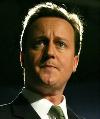
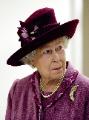
Nicholas William Peter "Nick" Clegg
Deputy Prime Minister since 11 May 2010
Deputy Prime Minister since 11 May 2010