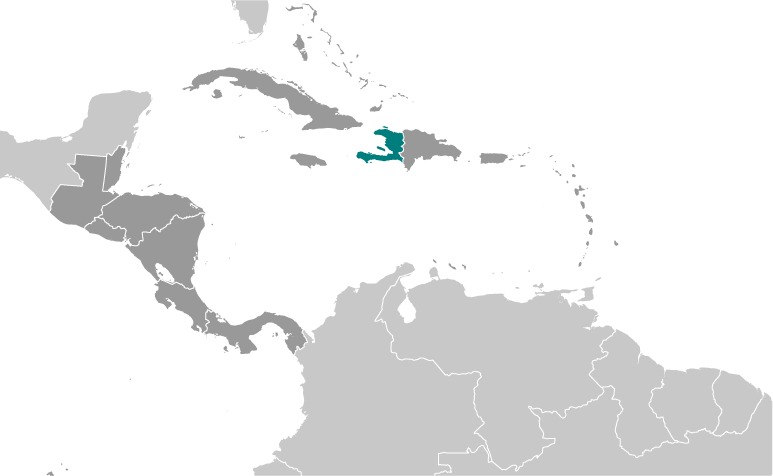
Republic of Haiti is located in the Caribbean Sea of the North American Continent, with a population of 9,801,664,
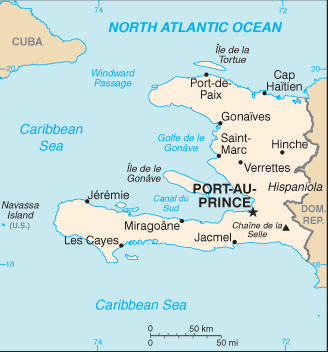
making it the 88th largest national population. Its capital and largest city is Port-Au-Prince with a total population of
927 575. The country encompasses 27,750 square kilometers making it the 148th largest country in total area. It
shares boundaries with North Atlantic Ocean, Dominican Republic and the Caribbean Sea.
President Michel Martelly is recognized as the Chief of State and achieves that status through popular vote and holds
that position for five years and may not serve consecutive terms. Prime Minister Laurent Lamothe is recognized as the
Head of Government and achieves that status through appointment by the president and ratification by the National
Assembly and holds that position for four years. Its form of government is an elected government and they celebrate
the creation of their constitution on 1 March 1987.
The languages commonly or officially spoken are French and Creole. It counts among its major religions Roman
Catholic, Protestant and other and no faiths. As sources of mass communication it has 41 AM, 26 FM and 2
Television stations.
Major geographical features are Chaine de la Selle, its highest point at 2,680 meters and the Caribbean Sea, its lowest
point at 0 meters. Its principal waterway is Caribbean Sea, which measures 1,771 kilometers of Coastline.
Major industries providing for the bulk of their Gross Domestic Product (GDP) are sugar refining, flour milling,
textiles, cement and light assembly industries based on imported parts. Its official currency is Haitian Gourde.
Here’s something you may not know about Haiti. Haiti is the world's oldest black republic and the second-oldest
republic in the Western Hemisphere, after the United States.
making it the 88th largest national population. Its capital and largest city is Port-Au-Prince with a total population of
927 575. The country encompasses 27,750 square kilometers making it the 148th largest country in total area. It
shares boundaries with North Atlantic Ocean, Dominican Republic and the Caribbean Sea.
President Michel Martelly is recognized as the Chief of State and achieves that status through popular vote and holds
that position for five years and may not serve consecutive terms. Prime Minister Laurent Lamothe is recognized as the
Head of Government and achieves that status through appointment by the president and ratification by the National
Assembly and holds that position for four years. Its form of government is an elected government and they celebrate
the creation of their constitution on 1 March 1987.
The languages commonly or officially spoken are French and Creole. It counts among its major religions Roman
Catholic, Protestant and other and no faiths. As sources of mass communication it has 41 AM, 26 FM and 2
Television stations.
Major geographical features are Chaine de la Selle, its highest point at 2,680 meters and the Caribbean Sea, its lowest
point at 0 meters. Its principal waterway is Caribbean Sea, which measures 1,771 kilometers of Coastline.
Major industries providing for the bulk of their Gross Domestic Product (GDP) are sugar refining, flour milling,
textiles, cement and light assembly industries based on imported parts. Its official currency is Haitian Gourde.
Here’s something you may not know about Haiti. Haiti is the world's oldest black republic and the second-oldest
republic in the Western Hemisphere, after the United States.
| Artibonito River- Haiti's westernmost point on the border with the Dominican Republic |
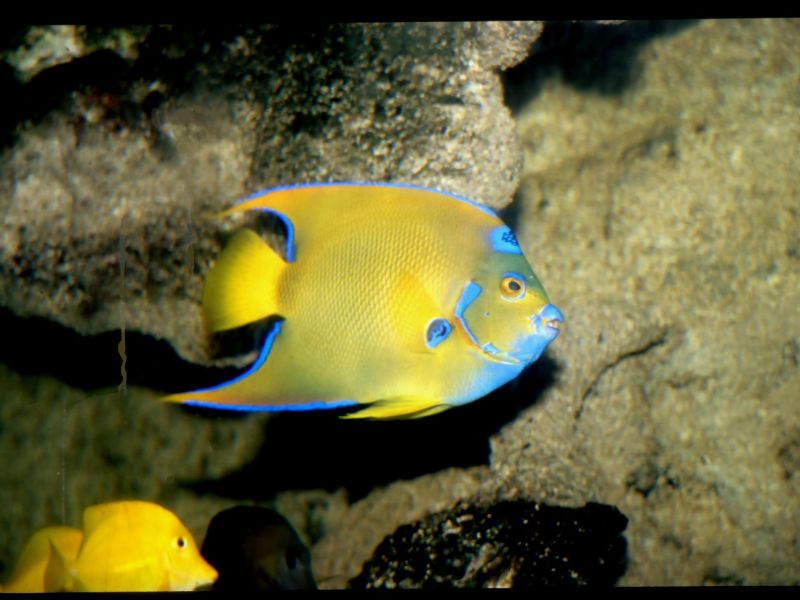
| Fish-one source of food |
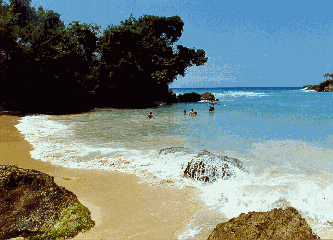
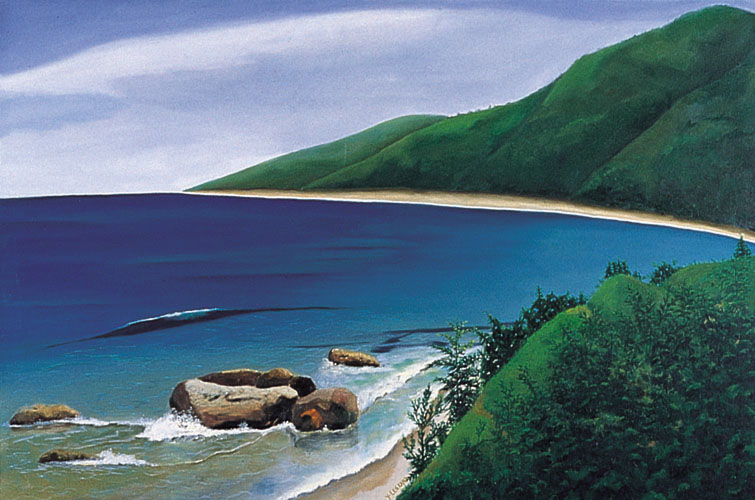
| Cyvadier Beach on the Caribbean Sea- Haiti's lowest point |
| Happy Haitian children |
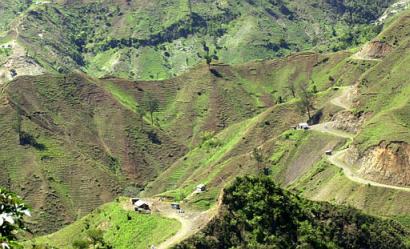
| Massif De La Selle- Haiti's highest point |
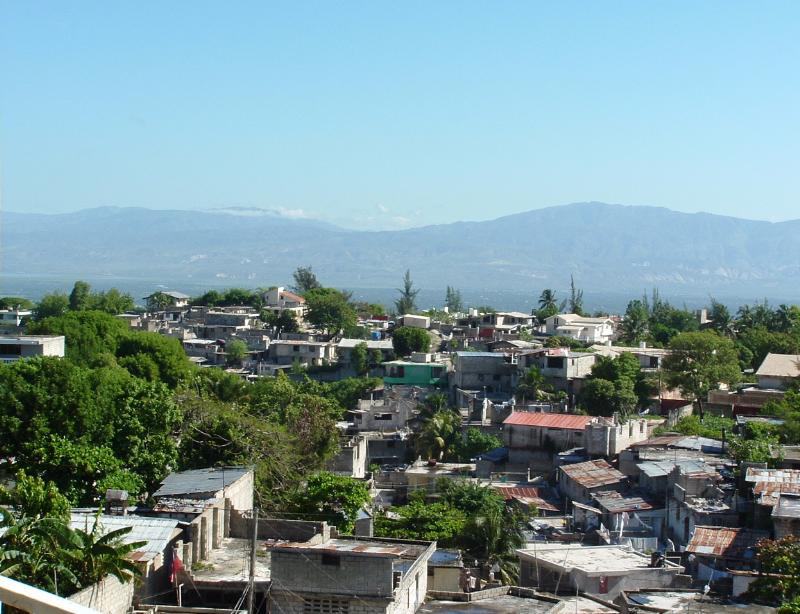
| Port-au-Prince- Haiti's capital and largest city |
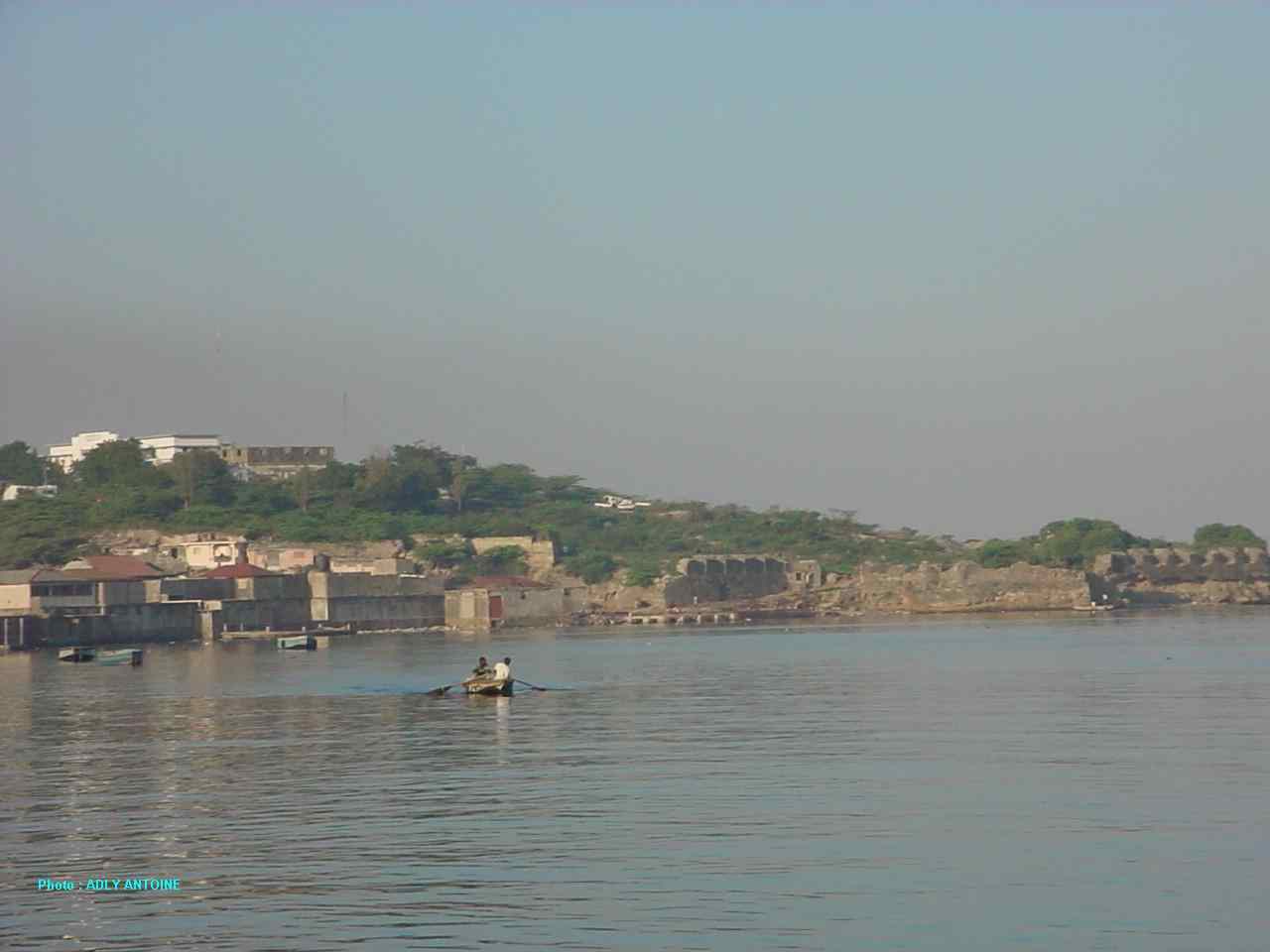
| Saint-Marc on the Golfe de le Gonave |
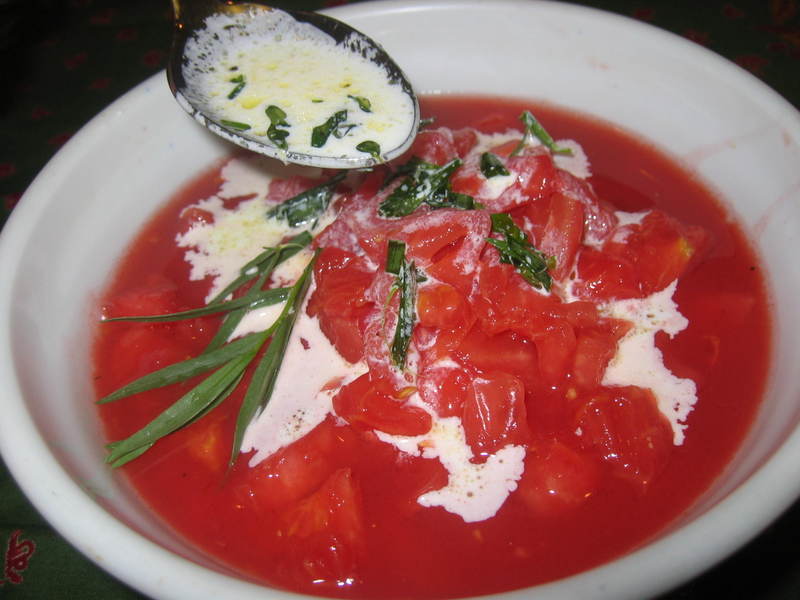
| Tomato Soup with Tarragon Sauce- a Haitian favorite |
| Port-de-Paix on the Atlantic Ocean |


| Abi's Home Page |
| Back to |
| NEWSPAPERS Le Matin Le Nouvelliste Haiti News.net |
HAITI
Updated 16 December 2012
Updated 16 December 2012


| Adult Prevalence Rate: People Living with HIV/AIDS: HIV/AIDS Deaths: |
1.9% (2009 est.)
120,000
7,100
120,000
7,100



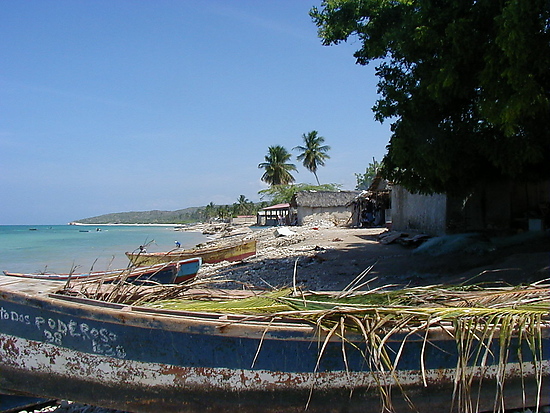
| Anse d'Hinault- Haiti's westernmost point on the Caribbean Sea |
| Anse-a-Pitre, Haiti's southernmost point on the border of the Dominican Republic |

| Cap-Haitien on Haiti's Atlantic coast |
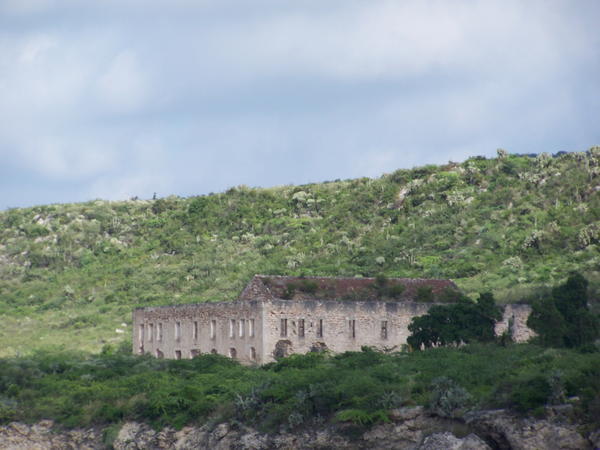
| Ruins of a fort constructed by Christopher Columbus at Mole Saint Nicholas |
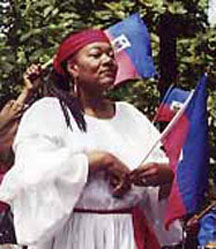
| Woman in Haitian folk dress |
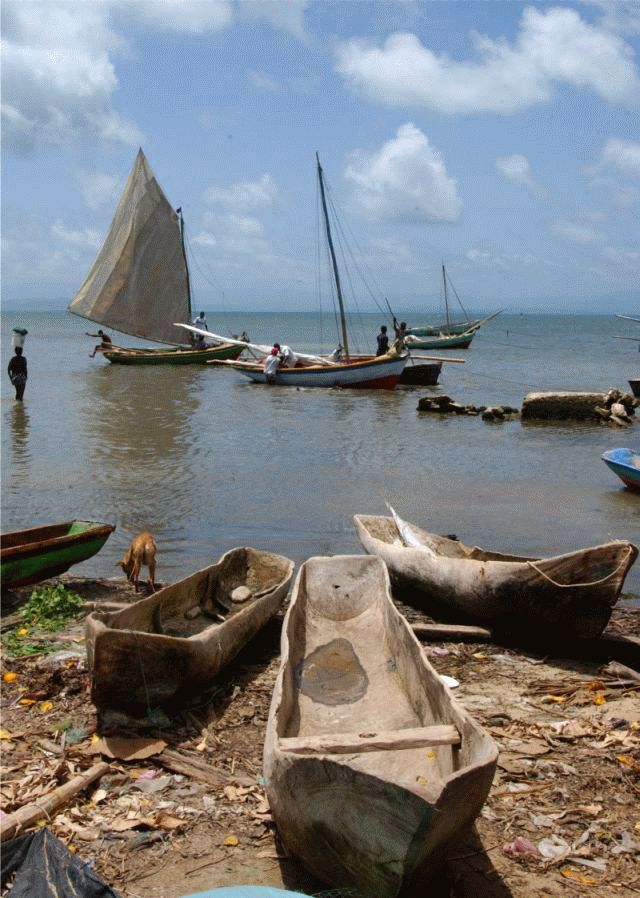
| Ile a Vache on the Caribbean Sea |
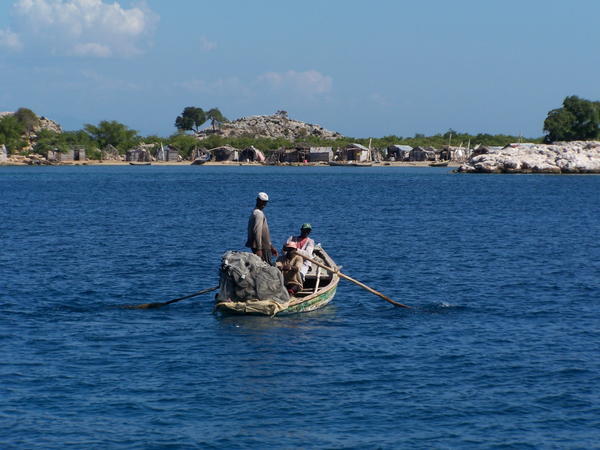
| Ile de la Gonave fishermen |
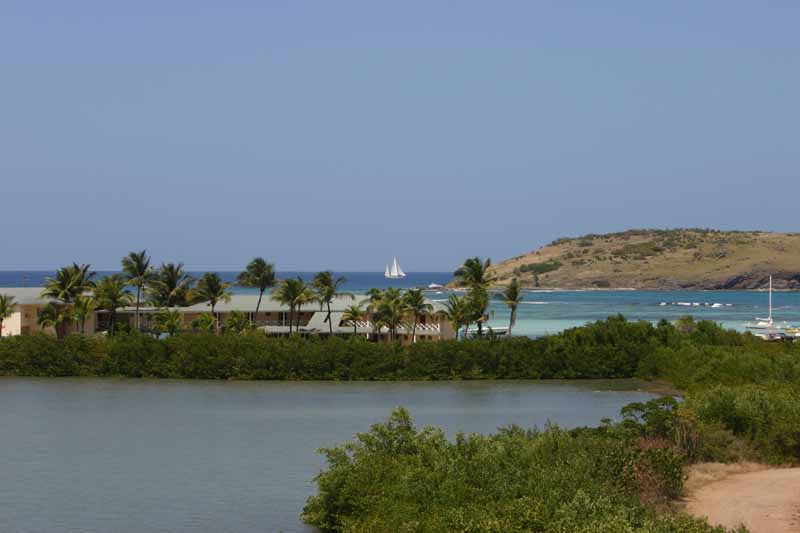
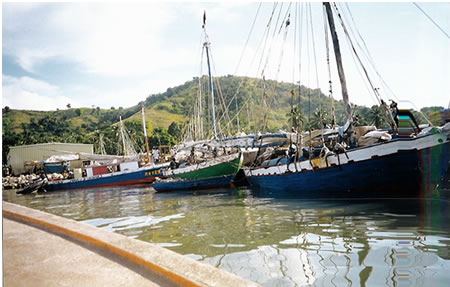
| Vila Bateau on Ile de la Tortue (Tortuga)- Haiti's northernmost point |
Read about human rights in Pax
Gaea World Post Report!
Gaea World Post Report!
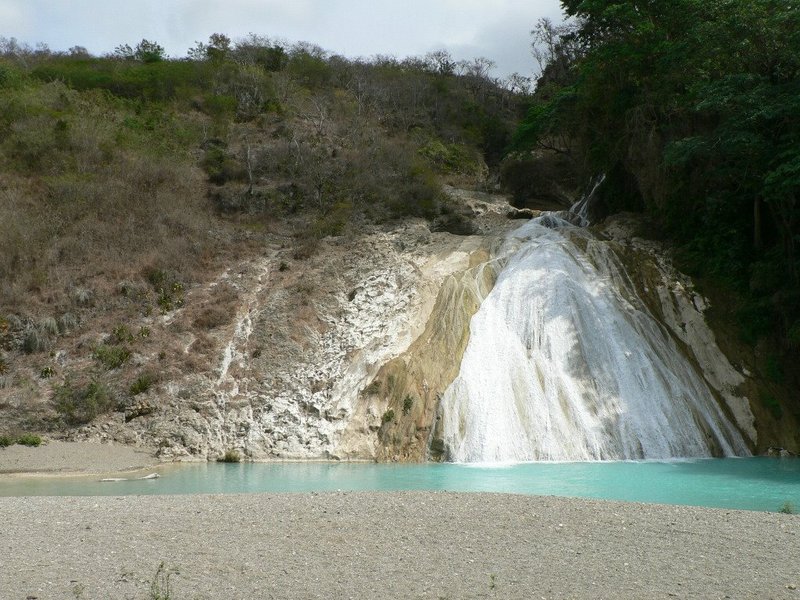
| Bassin Zim Waterfall in Hinche |
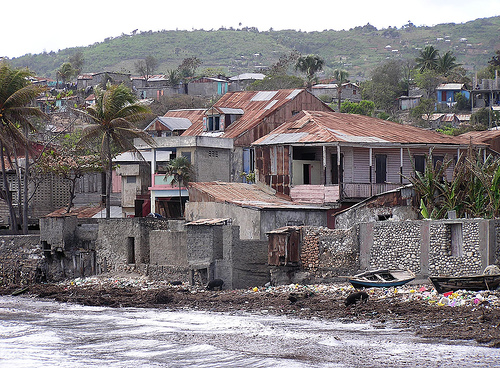
| Jeremie |
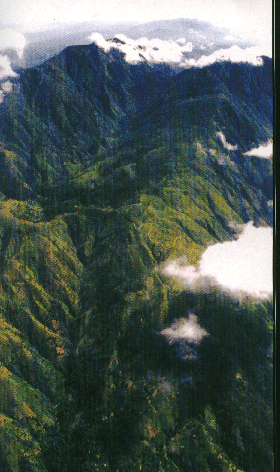
| Pic Macaya National Park |
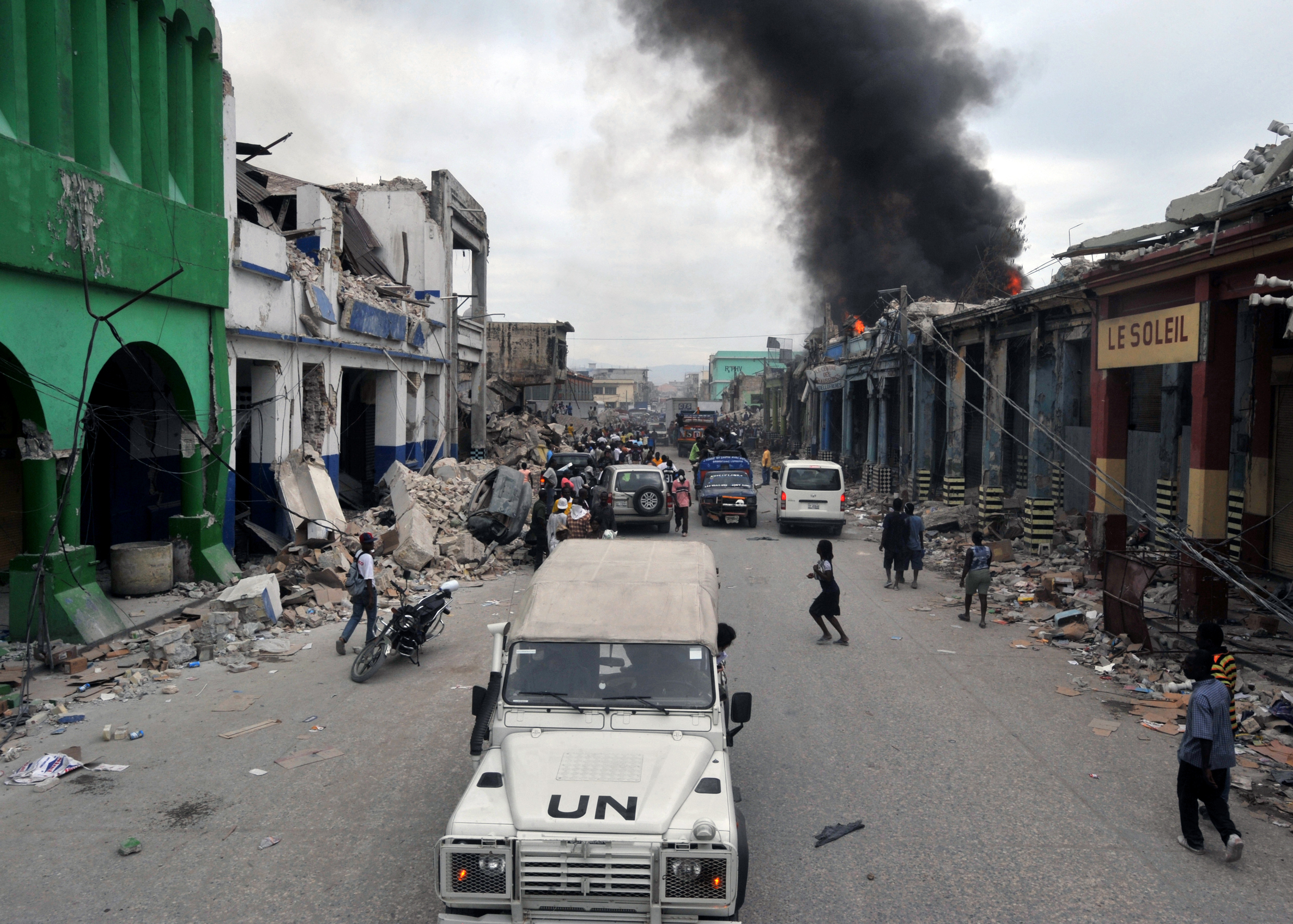
| Downtown Port-Au-Prince after the earthquake |
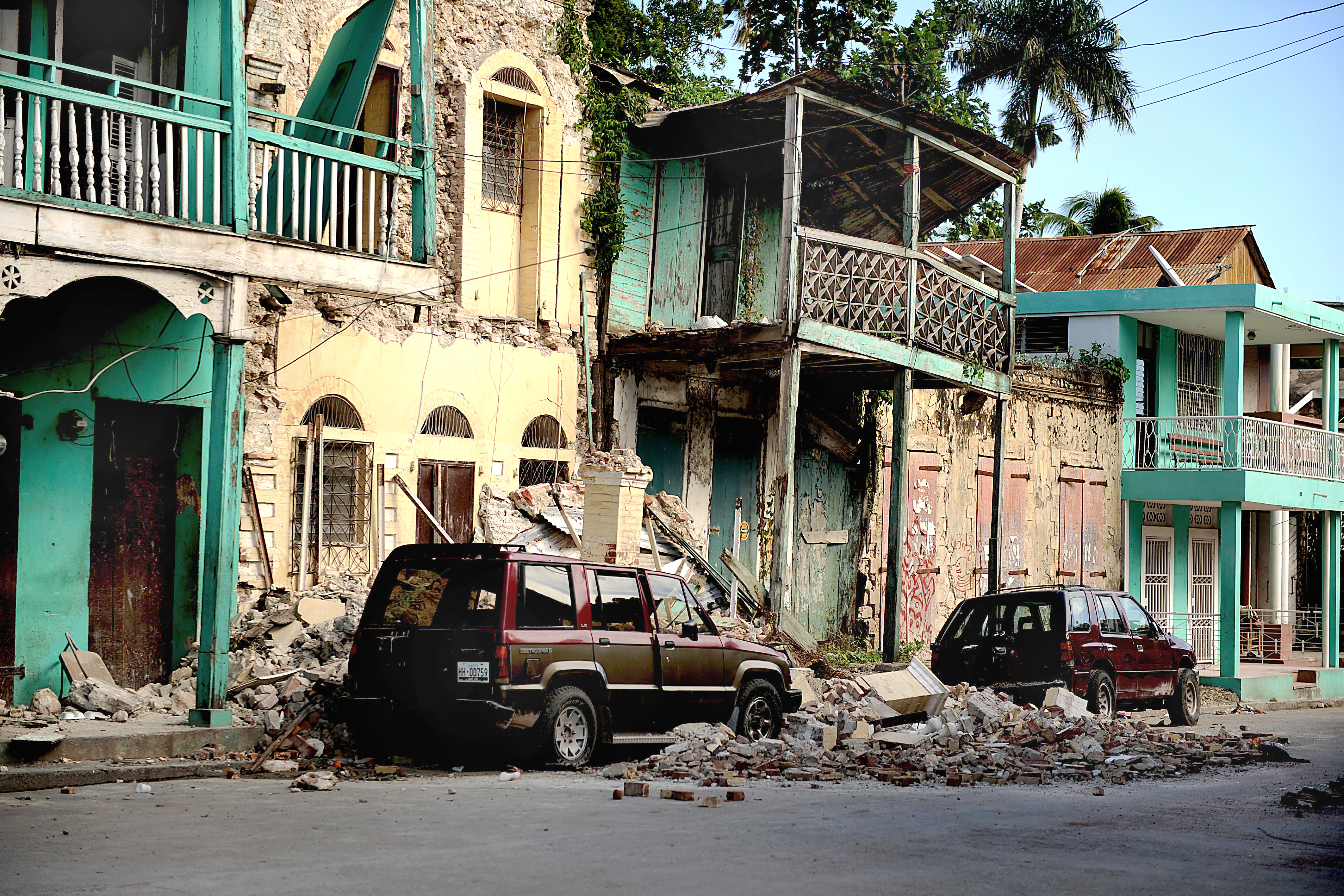
| Earthquake damage at Jacmel |
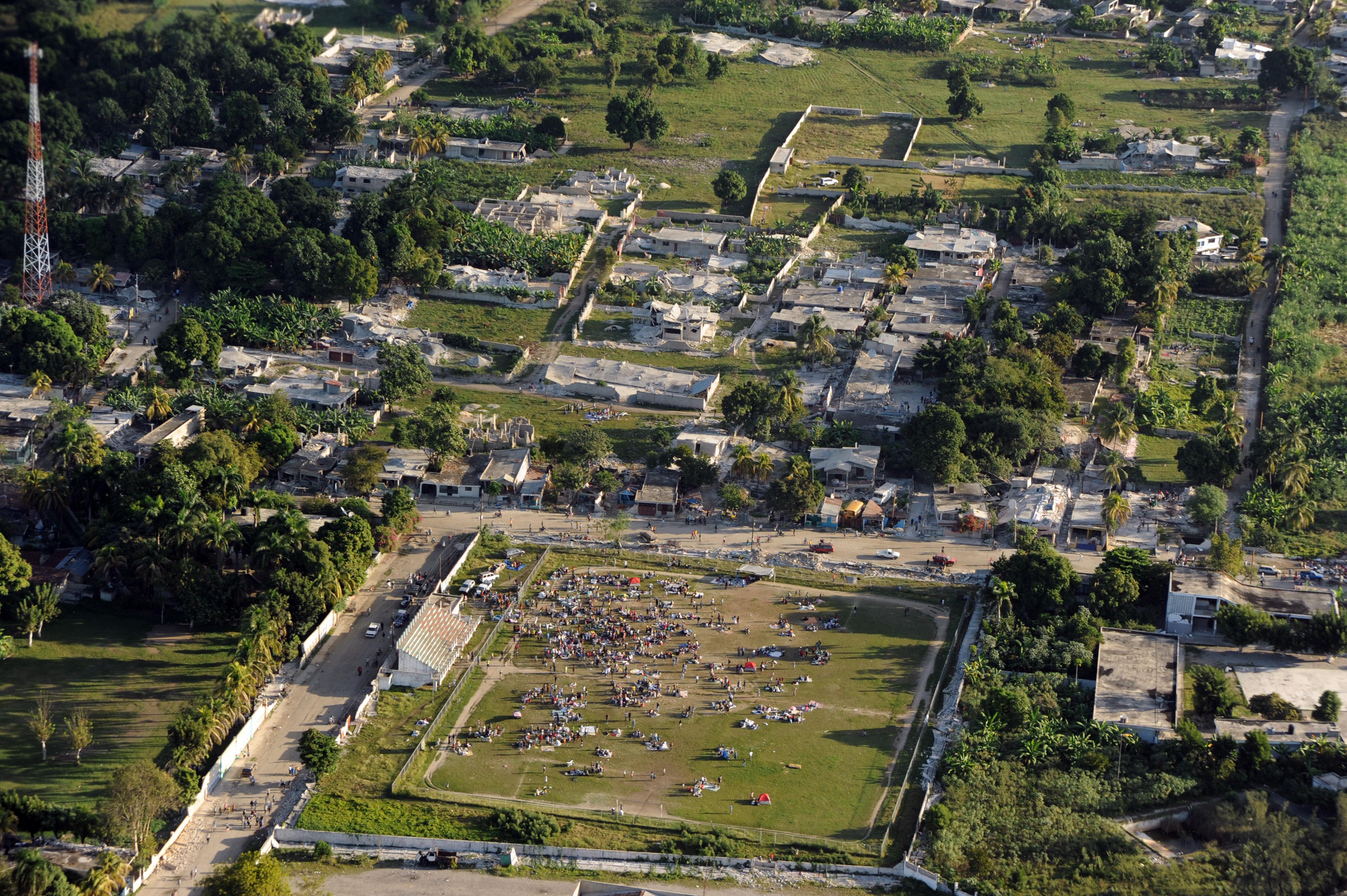
| Leogane- near the epicenter of the earthquake |
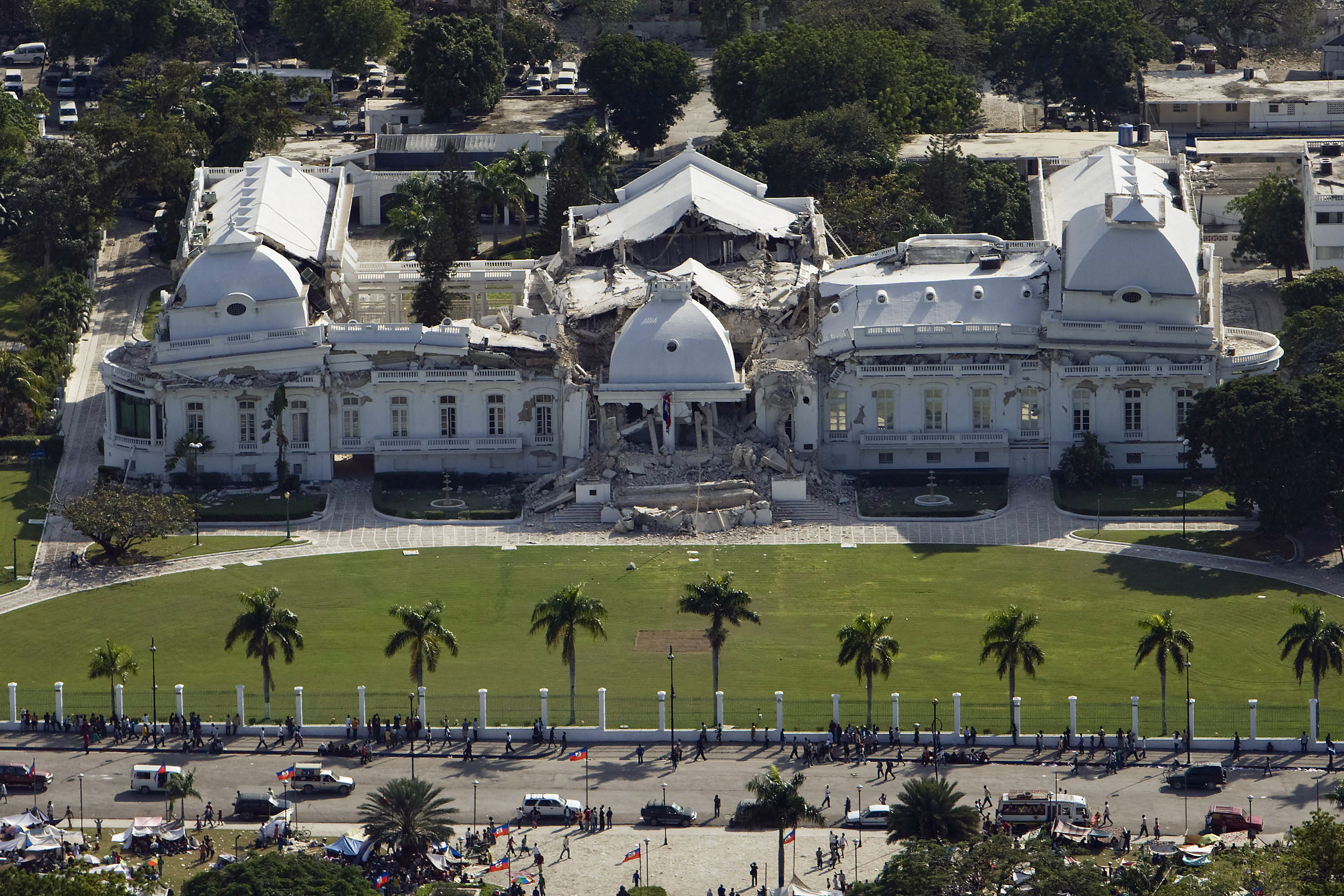
| Haiti's Presidential Palace in Port-Au-Prince after the quake |